Canada Interest Rates: Guide to BoC Policy & Market Impact
The Canadian financial landscape in March 2026 is characterized by a profound and delicate equilibrium, shaped by the collision of domestic structural adjustments, shifting labor market dynamics, and extraordinary exogenous geopolitical shocks. At the absolute center of this intricate macroeconomic matrix is the Bank of Canada, which announced on January 28, 2026, that it would hold its target for the overnight rate steady at 2.25%. This holding pattern, widely anticipated by institutional market analysts and accurately priced into forward swap markets, represents a critical juncture following a prolonged period of aggressive monetary tightening that peaked in late 2023 and 2024, followed by successive easing cycles throughout 2025.
The prevailing monetary policy stance in Canada is currently dictated by two dominant, counteracting economic forces. On the domestic front, the Canadian economy is actively absorbing the structural damage inflicted by sustained United States trade tariffs and the ongoing, painful reconfiguration of North American supply chains. This severe trade friction has suppressed potential output and necessitated structural transitions across vital export sectors, creating an environment of excess supply that exerts downward pressure on inflation. Conversely, international geopolitical instability—most notably the outbreak of armed conflict in Iran and the effective closure of the Strait of Hormuz in late February 2026—has triggered an acute global energy price shock. The resulting surge in crude oil prices has reignited localized and global inflationary fears, strictly curtailing the Bank of Canada’s capacity to introduce further stimulative rate cuts.
This exhaustive research report dissects the foundational mechanics of Canadian interest rates, evaluates the macroeconomic undercurrents shaping the central bank’s current trajectory, analyzes the cascading effects on the Canadian dollar and sovereign bond yields, and provides a granular assessment of the downstream implications for the domestic housing market, household debt servicing, and retail wealth management strategies.
The Architecture and Mechanics of Canadian Monetary Policy
To accurately contextualize the interest rate environment, it is first imperative to understand the technical architecture through which the Bank of Canada implements monetary policy and transmits its mandate of price stability. The central bank’s primary objective is to maintain Consumer Price Index inflation near a rigorously defined 2% target, while simultaneously fostering an environment conducive to maximum sustainable employment and economic output.
The Target for the Overnight Rate, Bank Rate, and Deposit Rate
The primary mechanism for monetary policy execution in Canada is the target for the overnight rate, which is universally referred to in public discourse as the “policy rate” or “benchmark rate”. This rate dictates the interest charged when major financial institutions lend and borrow funds among themselves on a one-day basis to settle their daily transaction balances. Every business day, Canada’s financial institutions move vast sums of money back and forth among themselves for their customers, encompassing everything from debit card transactions to massive corporate wire transfers. At the end of each day, institutions that have sent out more in payments than they received must borrow to balance their books, while those with surplus funds lend them out in the overnight market.
The Bank of Canada enforces its target for the overnight rate through an “operating band,” which is currently 30 basis points wide. The precise parameters of this operating band are defined by two secondary, yet vital, interest rates. The first is the Bank Rate, currently set at 2.50%, which represents the absolute upper limit of the operating band. This is the interest rate the Bank of Canada charges chartered banks that require emergency overnight liquidity loans to balance their daily settlements. The second is the Deposit Rate, currently set at 2.20%, representing the interest rate the Bank of Canada pays to financial institutions that choose to park their surplus overnight balances safely at the central bank.
The target for the overnight rate currently sits at 2.25%, deliberately positioned near the absolute bottom of this operating band.
The Transition to the Floor System and the Role of CORRA
A critical structural shift in Canadian monetary operations occurred during the COVID-19 pandemic when the Bank of Canada transitioned from a traditional corridor system to a “floor system” for implementing monetary policy. In a traditional corridor system, the target rate is designed to sit perfectly in the middle of the operating band. However, under the current floor system architecture, the target rate of 2.25% is situated just 5 basis points above the deposit rate of 2.20%. Until January 2025, the deposit rate was exactly equal to the target rate; the 5-basis-point downward adjustment was specifically engineered to optimize the monetary policy implementation framework and encourage interbank liquidity rather than institutional hoarding of reserves at the central bank.
The real-world manifestation of these policy rates is tracked meticulously via the Canadian Overnight Repo Rate Average (CORRA), which measures the cost of overnight general collateral funding in Canadian dollars using Government of Canada securities. CORRA serves as Canada’s definitive risk-free reference rate for financial derivatives and commercial lending. As of early March 2026, CORRA trading volumes have consistently yielded a trimmed mean rate of roughly 2.28% to 2.30%, demonstrating a tight alignment with the Bank of Canada’s policy objectives while reflecting minor, natural liquidity premiums in the private repo market. Furthermore, short-term money market yields, such as 1-month to 3-month Treasury bills, have settled tightly around 2.19% to 2.20%, perfectly encapsulating the market’s digestion of the central bank’s baseline rates.
| Policy Instrument / Market Rate | March 2026 Value | Function and Market Role |
|---|---|---|
| Target for the Overnight Rate | 2.25% | The primary benchmark policy rate guiding all domestic lending. |
| Bank Rate | 2.50% | The upper limit of the operating band; penalty rate for borrowing from BoC. |
| Deposit Rate | 2.20% | The lower limit of the operating band; yield on reserves held at the BoC. |
| CORRA (Trimmed Mean) | ~2.28% - 2.30% | The actual observed risk-free rate in the overnight repo market. |
| 3-Month Treasury Bill Yield | 2.20% | Short-term sovereign debt yield reflecting near-term rate expectations. |
Neutral Interest Rate Calibration and Policy Constraints
The assessment of whether a 2.25% policy rate is economically “restrictive” or “stimulative” relies entirely on the complex macroeconomic calculation of the neutral interest rate. The neutral interest rate is the theoretical rate at which monetary policy neither restricts nor stimulates economic growth; it is the exact equilibrium point where the economy operates at full capacity while maintaining stable inflation.
According to the comprehensive January 2026 Monetary Policy Report, the Bank of Canada assumes the nominal neutral interest rate in Canada falls within an estimated range of 2.25% to 3.25%. Consequently, the current policy rate of 2.25% sits exactly at the absolute bottom threshold of the neutral range, placing monetary policy firmly on the stimulative side of neutral parameters.
This theoretical positioning presents a severe, tangible tactical constraint for the Governing Council. Because the policy is already fundamentally stimulative, any further rate cuts run the risk of acting as a potent accelerant to aggregate demand and, by extension, inflation. The Governing Council has explicitly acknowledged that while the current setting is appropriate for aiding the economy through a period of intense structural adjustment, the lack of monetary restriction significantly limits their maneuverability in the face of exogenous inflationary shocks.
Historical Trajectory and the Path to 2.25%
To fully grasp the gravity of the March 2026 interest rate environment, it is essential to trace the historical evolution of the Bank of Canada’s policy decisions.
Between 1990 and 2026, the benchmark interest rate in Canada averaged 5.75%, reaching an all-time historical high of 16.00% in February 1991 and recording an all-time low of 0.25% in April 2009 during the aftermath of the Global Financial Crisis. The 0.25% emergency lower bound was revisited during the COVID-19 pandemic, resulting in an unprecedented expansion of the money supply and a subsequent explosion in consumer price inflation.
To combat the rampant inflation of the post-pandemic recovery, the Bank of Canada embarked on one of the most aggressive tightening cycles in its history, driving the policy rate up to a peak of 5.00% by late 2023. This elevated rate deliberately suppressed domestic demand, cooled an overheated housing market, and successfully brought core inflation metrics back toward the 2% target. Recognizing that the restrictive policy had achieved its primary objective, the Bank of Canada initiated a persistent easing cycle throughout late 2024 and 2025.
The central bank executed four significant rate cuts in 2025 alone, effectively slashing 100 basis points from the benchmark rate. The rate was lowered to 3.00% in January 2025, down to 2.75% by March 2025, and further reduced to 2.50% in September 2025. A final 25-basis-point reduction occurred in October 2025, bringing the rate to its current 2.25% level, where it was subsequently held in both the December 2025 and January 2026 monetary policy meetings. This historical context proves that the current 2.25% rate is not a neutral starting point, but rather the hard-fought destination of a multi-year macroeconomic stabilization effort.
The Macroeconomic Crucible of 2026: The US Trade War and Supply Adjustments
The trajectory of Canadian interest rates is inextricably linked to two monumental macroeconomic disruptions currently gripping the global economy: the severe reconfiguration of global trade stemming from United States protectionism, and the inflation-inducing energy shock originating in the Middle East.
The US Tariff Shock and Structural Reconfiguration
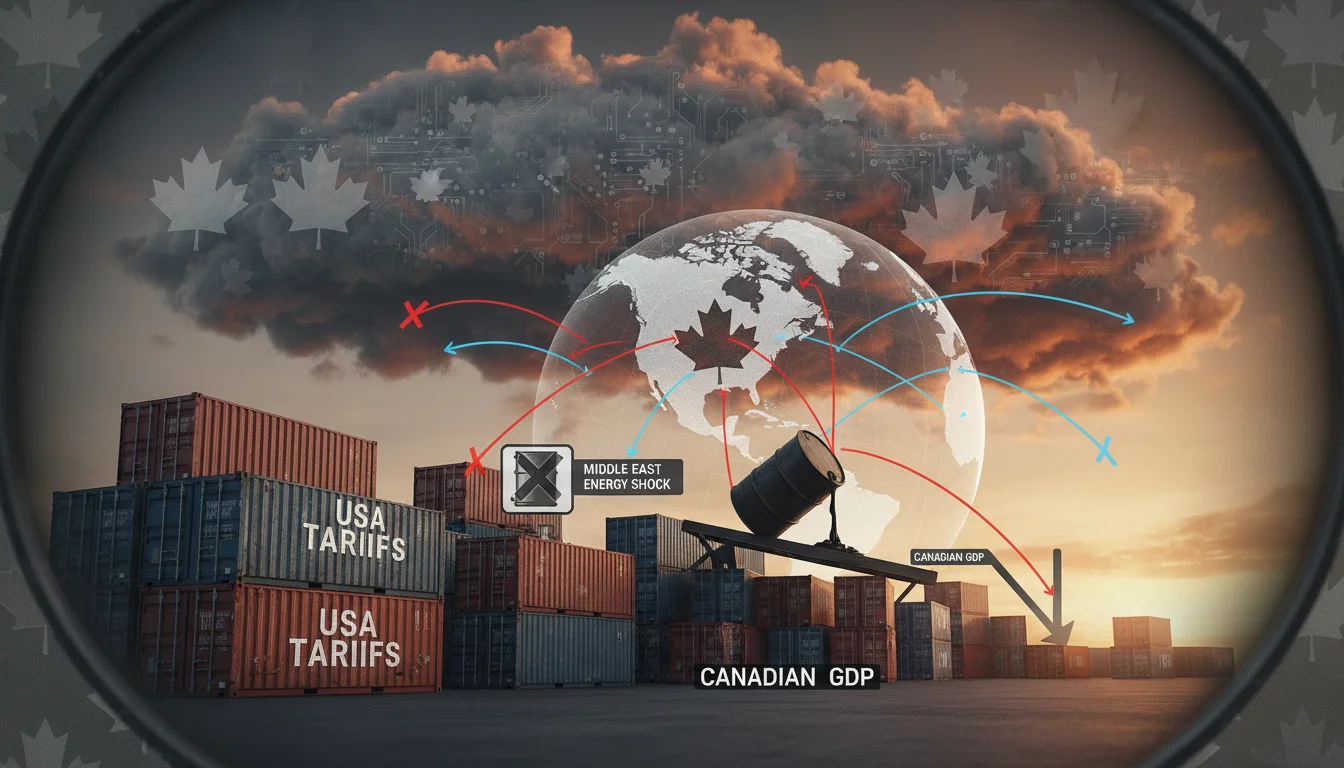
Beginning in 2025, the resurgence of aggressive United States trade policies introduced profound, systemic friction into the deeply integrated North American economy. Sweeping tariffs on Canadian imports disrupted legacy supply chains, forcing Canadian businesses into a painful period of structural adjustment as they sought to reroute trade volumes away from the United States and avoid punitive border levies.
The industrial and macroeconomic damage modeled by the central bank is both quantifiable and severe. The Bank of Canada officially estimates that US tariffs and retaliatory measures will persistently suppress Canadian potential output. By the end of 2026, the Canadian gross domestic product is projected to be approximately 1.5% lower than baseline forecasts formulated in early 2025. Roughly half of this economic shortfall is attributed directly to reduced potential output—representing a permanent loss in long-run productivity—while the remainder reflects a cyclical increase in excess supply resulting from dampened consumer and commercial demand. Independent models, such as those produced by CIRANO, suggest an even more pessimistic outlook, forecasting GDP declines ranging from 3.2% to 4.2% depending on the severity of retaliatory measures.
The automotive, steel, and aluminum sectors have unequivocally borne the brunt of these disruptions due to their highly integrated cross-border supply chains. A motor vehicle manufactured in North America often sees its raw components and sub-assemblies cross the Canada-US border multiple times before final assembly. If tariffs are applied at each individual border crossing, the compounded taxation geometrically amplifies production costs, ultimately increasing the final prices paid by consumers on both sides of the border and fundamentally degrading the global competitiveness of the North American auto sector.
Furthermore, tariffs have stymied crucial domestic business investment. Canadian enterprises face significantly elevated costs for machinery and equipment imported from the United States, which historically comprise roughly half of Canada’s overall business capital expenditures in the manufacturing space.
Canadian Retaliation and Federal Industrial Policy
In response to the initial wave of US protectionism in early 2025, the Government of Canada deployed robust counter-tariffs on billions of dollars in US goods, ranging from technological infrastructure like computer servers to agricultural products. However, in a strategic effort to stabilize trade relations, lower domestic input costs, and recognize US compliance under the Canada-United States-Mexico Agreement (CUSMA), Canada unilaterally removed broad counter-tariffs on $44 billion worth of goods in September 2025. Despite this de-escalation, reciprocal 25% tariffs remain firmly in place against US steel, aluminum, and non-CUSMA compliant automotive imports, reflecting an ongoing, tense industrial policy standoff.
To mitigate the domestic fallout of this trade war, the Canadian federal government enacted substantial fiscal interventions. This includes $500 million funneled directly into the Business Development Bank of Canada (BDC) Softwood Lumber Guarantee Program, massive tariff loan facilities for large enterprises, and over $100 million earmarked for work-sharing agreements designed to prevent mass layoffs in vulnerable sectors. While this massive fiscal impulse—estimated by Oxford Economics to be the largest since 1980 outside of the pandemic—has effectively buoyed aggregate demand, it has also shifted the burden of economic stabilization away from monetary policy and onto fiscal deficit spending.
From the Bank of Canada’s perspective, this trade conflict yields a highly paradoxical monetary scenario. On one hand, tariffs act as an immediate inflationary tax on consumers via direct and indirect pass-through effects on imported goods, exerting distinct upward pressure on the Consumer Price Index. Simultaneously, tariffs suppress export volumes and force domestic businesses to lower production, creating economic slack and excess supply, which exerts downward pressure on prices. The Bank of Canada’s base case heading into 2026 was that these two opposing macroeconomic forces would roughly offset each other, allowing inflation to hover near the 2% target without requiring aggressive interest rate movements in either direction.
Geopolitical Shocks: The Iran Conflict, Oil Markets, and Inflation Resurgence
The fragile, carefully engineered equilibrium managed by the Bank of Canada was violently disrupted in late February 2026 with the outbreak of severe armed conflict involving Iran. The effective closure of the Strait of Hormuz—the world’s most critical maritime chokepoint for international petroleum transit—instantly injected a massive, unquantifiable geopolitical risk premium into global energy markets.
By early March 2026, the price of Brent crude briefly eclipsed $100 USD per barrel before stabilizing just below $90. Meanwhile, West Texas Intermediate (WTI) experienced extreme, violent volatility, touching highs above $113 per barrel before retreating to the $83 to $91 range amid intense rumors of coordinated emergency reserve releases by G7 nations and the International Energy Agency.
This sudden energy shock presents a severe complication for Canadian interest rate forecasts and monetary stability. Higher crude prices translate instantly to higher prices at the gasoline pump for Canadian consumers, acting as a direct tax on disposable income and rapidly reducing purchasing power for non-energy goods and services. If the Middle Eastern conflict is prolonged, policymakers fear the emergence of “second-round inflationary pressures,” whereby sustained high transportation and logistics costs filter relentlessly into the broader economy, driving up prices for groceries, retail goods, and vital services.
Historical macroeconomic precedent is highly instructive here, though it requires careful and nuanced contextualization. During the 2015 global oil price collapse, the Bank of Canada swiftly cut the overnight rate by 50 basis points to shield the domestic economy from a severe negative terms-of-trade shock as petroleum revenues vanished. In 2026, macro strategists at RBC Economics note that the current environment requires the exact opposite restraint. Because the 2026 oil price spike is fundamentally inflationary, the central bank cannot responsibly cut rates to stimulate the broader economy; doing so would pour monetary gasoline on an already burning inflation fire.
Currently, the Bank of Canada is adopting a “look-through” approach, characteristic of its historical handling of short-lived, supply-driven commodity shocks. Central bank officials, including Deputy Governor Sharon Kozicki, have signaled that unless the oil shock permanently alters long-term consumer inflation expectations, the Bank prefers to hold the rate at 2.25% rather than reacting to transient volatility. However, if the Strait of Hormuz remains violently contested and crude prices stay persistently elevated, the resulting inflation spike will completely erode expectations of any rate cuts through the entirety of 2026. If secondary price pressures take root, the central bank could eventually be forced into a preemptive rate hike to cool the economy, severely weakening domestic activity in the process.
Labor Market Dynamics and Output Gaps
The domestic labor market perfectly reflects the broader economic stagnation and the structural drag imposed by international trade friction.
Employment Landscape and Bank of Canada Stance
Statistics Canada data from early 2026 paints a vivid picture of a softening, highly vulnerable employment landscape that justifies the Bank of Canada’s reluctance to raise rates despite the oil shock.
While the headline unemployment rate technically decreased to 6.5% in January 2026 (down from 6.8% in December 2025), a deeper analysis reveals that this decline was largely a statistical anomaly driven by a shrinking overall labor force rather than robust, organic job creation. In January 2026, the Canadian economy shed a net 25,000 jobs, dropping total employment to 21.12 million. This loss was heavily concentrated in precarious part-time employment, which saw a decline of nearly 70,000 positions, only partially offset by full-time employment gains of roughly 45,000.
Crucially, the aggregate labor force contracted by 94,000 individuals in a single month, pushing the national participation rate down to a concerning 65.0% from 65.4% the previous month.
Canadian Labor Market Metric
| Metric | December 2025 | January 2026 | Net Monthly Change |
|---|---|---|---|
| National Unemployment Rate | 6.8% | 6.5% | -0.3% |
| Total Net Employment | 21,146,000 | 21,121,200 | -24,800 |
| Full-Time Employment | 17,279,700 | 17,324,600 | +44,900 |
| Part-Time Employment | 3,866,300 | 3,796,600 | -69,700 |
| Labor Force Participation Rate | 65.4% | 65.0% | -0.4% |
This softening labor market, combined with weak demographic absorption and the immense corporate stress of navigating cross-border tariffs, ensures that aggregate domestic demand remains subdued. The distinct lack of wage-driven inflationary pressure gives the Bank of Canada the necessary macroeconomic breathing room to maintain the 2.25% hold, rather than reacting aggressively to the transient headline inflation caused by the Middle Eastern oil shock.
Sovereign Bond Markets, Yield Curve Inversions, and the Canadian Dollar
Interest rates do not exist in a vacuum; while the Bank of Canada’s overnight rate anchors the extreme short end of the yield curve, the free market dictates the medium and long ends based on forward-looking expectations of inflation, growth, and sovereign risk.
Bond Yield Inversions and Geopolitical Pricing
The Government of Canada (GoC) bond market acts as the foundational pricing mechanism for the vast majority of fixed-rate consumer and corporate debt in the country. Throughout early 2026, GoC bond yields have been highly reactive to the chaotic geopolitical environment.
Under normal macroeconomic conditions, the sudden outbreak of international war triggers an immediate “flight to safety,” where institutional capital flows out of risk-on equities and into secure sovereign bonds. This surge in bond demand inherently pushes bond prices up, which conversely drives their yields down. However, the March 2026 Iran conflict generated a highly atypical market response. Because the war directly threatens global oil supplies, institutional investors correctly assessed that inflation would remain structurally elevated for the foreseeable future. Consequently, the inflation premium completely outweighed the traditional safe-haven demand, causing yields on both US Treasuries and Canadian sovereign bonds to spike unexpectedly.
In early March, Government of Canada 1-to-3 Year Marketable Bond yields hovered around 2.61%. While this remains slightly inverted relative to the 2.25% overnight rate, the sudden upward pressure on the 3-year and 5-year segments of the yield curve has been palpable. This dynamic suggests that fixed-income markets are actively pricing out the possibility of any BoC rate cuts in 2026 and are beginning to aggressively price in a “higher for longer” environment dictated by energy-driven inflation.
The Petro-Currency Buffer and the Canadian Dollar (CAD)
The Canadian dollar serves as a vital, automatic macroeconomic stabilizer for the domestic economy. The valuation of the CAD is heavily influenced by two primary factors: interest rate differentials with the US Federal Reserve, and the global spot price of crude oil, which remains Canada’s premier export commodity.
The violent March 2026 oil price surge highlighted Canada’s unique geopolitical position as a safe, reliable, and contiguous energy supplier to the United States. Under standard economic modeling, a sustained $10 to $20 per barrel spike in oil prices triggers a rapid appreciation of the CAD as the national terms of trade improve and petro-revenues flood the domestic economy. Economic models from Scotiabank estimate that a persistent $10/bbl increase in WTI crude can organically boost Canadian GDP by 0.5% in the second year of the shock, while simultaneously prompting a CAD appreciation of roughly 3%.
However, the current CAD exchange rate is experiencing a severe, bidirectional tug-of-war. While skyrocketing oil prices provide fundamental, structural support to the currency, the overarching geopolitical terror has sent massive safe-haven capital flows directly into the US Dollar. Consequently, while the CAD has notably outperformed oil-importing currencies like the Euro (EUR) and the Japanese Yen (JPY), it has struggled to gain meaningful ground against the greenback, trading stubbornly in the 1.3570 to 1.3630 range (USD/CAD) through early March.
For the Bank of Canada, this tempered currency response is effectively a mixed blessing. A rapidly appreciating CAD would devastatingly hurt non-energy exports (which are already struggling under the weight of US tariffs), but a moderately stable CAD prevents excessive imported inflation, easing the burden on the central bank to hike rates.
The Canadian Housing and Mortgage Market Dynamics
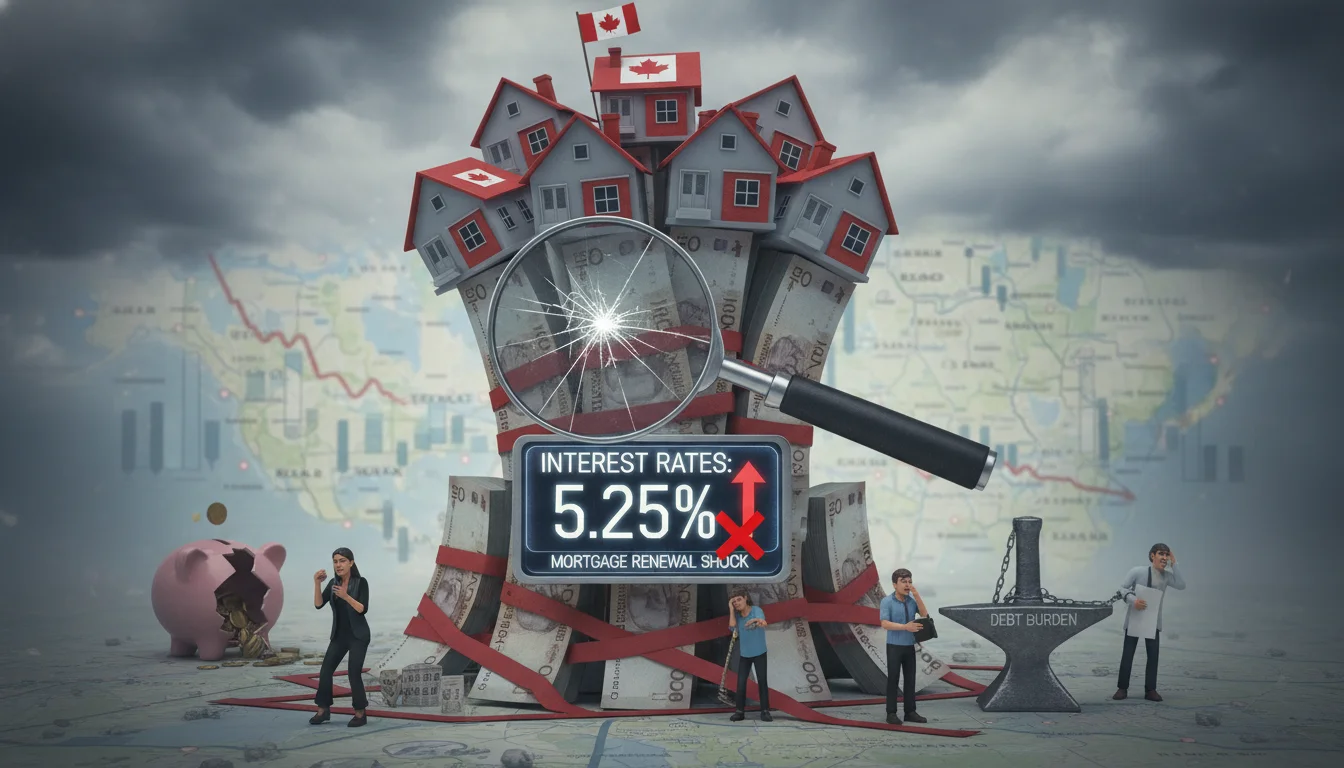
The residential real estate sector is arguably the most interest-rate-sensitive component of the Canadian economy, carrying immense implications for both household wealth and systemic financial stability. The rapid escalation of the BoC policy rate from 0.25% to 5.00% in 2022 and 2023 induced widespread panic regarding a systemic “mortgage renewal shock” that many feared would collapse the housing market. As of 2026, the empirical data suggests this crisis has been largely averted, though substantial, localized pain points remain.
The Amelioration of the Mortgage Renewal Shock
Between 2024 and 2026, millions of fixed-rate mortgages originated during the height of the pandemic (at historically anomalous rates near 1.50% to 2.00%) matured, forcing borrowers to renew at significantly higher prevailing rates (often between 4.50% and 6.00%). In late 2024, the Bank of Canada warned that households renewing by the end of 2026 could see payment increases of up to 6% on aggregate.
However, deep reporting and data analysis in Q1 2026 indicates that Canadian consumers have navigated this massive financial headwind with surprising resilience. According to analysis by TD Economics, the debt service ratio (DSR)—which measures the proportion of household disposable income devoted to obligated principal and interest payments—actually declined to 14.64% in the third quarter of 2025, down from post-pandemic highs and significantly below the severe 2022 peak of 17.41%.
This resilience is attributed to two primary macroeconomic shock absorbers:
- Robust Income Growth: Personal disposable income grew faster than total debt obligations over the preceding two years, acting as the “main mountaineer” helping households climb the renewal payment hill.
- Amortization Extensions: Borrowers renewing their mortgages systematically extended their amortization periods to artificially lower monthly payments. Internal banking data shows that the average mortgage amortization length increased by roughly 16 months compared to pre-pandemic baselines, effectively diluting the monthly payment shock at the ultimate cost of massive long-term interest accumulation.
While aggregate systemic risk to the banking sector has faded, the sheer volume of total mortgage debt remains staggering, hovering near $1.95 trillion as of late 2025.
Regional Disparities in Delinquency Risk
The comforting national averages mask profound and dangerous regional vulnerabilities. The Canada Mortgage and Housing Corporation (CMHC) highlights that the Greater Toronto Area (GTA) faces the strongest, most persistent, and most dangerous increase in mortgage delinquency risk in the country.
Arrears in Toronto have more than quadrupled from their post-pandemic lows. This localized centralization of financial distress is driven by concentrated “mom-and-pop” real estate investor activity rather than primary homeowners. These highly leveraged investors are facing a toxic combination of rising carrying costs (due to elevated renewal rates) and softening local rental markets, leading to severe negative cash flow on their properties. Furthermore, declining asset prices and poor resale liquidity in the GTA prevent these distressed borrowers from selling quickly to cover their mounting debts, trapping them in a cycle of delinquency.
Conversely, housing markets like Montreal remain highly stable, with risk profiles driven more by standard consumer credit stress rather than core mortgage defaults. Vancouver demonstrates a moderate rise in arrears due to softening liquidity, while the Prairies (particularly Calgary) maintain much lower risk profiles, buoyed by the localized economic benefits and employment gains associated with higher oil prices.
Fixed vs. Variable Rate Pricing in a Volatile Climate
The pricing of retail mortgages in March 2026 clearly reflects the tense divergence between the Bank of Canada’s stalled policy rate and the bond market’s aggressive reaction to global inflation risks.
Variable-Rate Mortgages: Variable mortgages are priced at a set discount to the lender’s Prime Rate.
As of March 10, 2026, the Canadian Prime Rate stands uniformly at 4.45% across major financial institutions (RBC, CIBC, BMO, Scotiabank, National Bank), with TD Bank utilizing a slightly varied prime of 4.60% for its specific variable mortgage products. Because the Bank of Canada held its policy rate firmly at 2.25%, the Prime Rate has remained firmly anchored. Consequently, five-year variable rates currently range between 3.34% and 3.98% depending on the lender, the borrower’s creditworthiness, and whether the mortgage is default-insured.
Fixed-Rate Mortgages
Conversely, fixed mortgages are priced directly off Government of Canada bond yields of matching durations. When the Iran conflict drove 3-year and 5-year yields upward, lenders immediately passed these wholesale funding costs onto consumers. By mid-March 2026, fixed rates crept upward by roughly 0.25%, with the absolute lowest five-year fixed rates hovering around 3.64% to 3.69%, while institutional posted rates sit rigidly between 6.09% and 6.49%.
| Major Financial Institution | 5-Year Fixed (Discounted Uninsured) | 5-Year Variable (Discounted Uninsured) | Institutional Prime Rate |
|---|---|---|---|
| Royal Bank of Canada (RBC) | 4.62% | 3.98% | 4.45% |
| CIBC | 4.56% | Variable by Profile | 4.45% |
| National Bank | 4.58% | Variable by Profile | 4.45% |
| Toronto-Dominion (TD) | 4.61% | Variable by Profile | 4.60% |
Data sourced from NerdWallet Canada and WoWACanada rate aggregators as of March 2026. Note: Heavily discounted monoline broker rates may fall below these institutional averages.
The immense unpredictability of the global oil market makes renewal negotiations highly fraught for consumers. Economists and mortgage brokers currently note that entering a variable-rate contract provides strategic flexibility; borrowers can ride out the current uncertainty and utilize the option to lock into a fixed rate at absolutely no cost if and when global bond yields stabilize later in 2026.
Household Debt, Insolvency Risk, and Consumer Sentiment
While systemic mortgage failure has been avoided, the burden of maintaining these debt obligations in a 2.25% environment has taken a severe psychological and financial toll on the Canadian populace. The normalization of interest rates has permanently altered consumer spending behaviors and broader economic sentiment.
According to the latest MNP Consumer Debt Index released in early 2026, a staggering 71% of Canadians anticipate the cost of living will worsen throughout the year. This deep-seated pessimism extends beyond mere grocery prices, reflecting a broader anxiety regarding economic security. The data indicates that 59% of Canadians believe the overall economy will deteriorate, and an identical 59% expect housing affordability to worsen. Furthermore, 54% of respondents cite rising pressure from interest rates and inflation as a primary source of financial strain.
Most alarmingly from a financial stability perspective, credit bureaus and insolvency firms note that two in five Canadians (41%) report being $200 or less away from complete financial insolvency at the end of each month. This metric underscores a severe, growing inequality in how interest rate pain is distributed. While wealthy homeowners and those with significant equity benefit from asset price inflation and high yields on savings, renters and heavily leveraged recent homebuyers are being fundamentally crushed by the cost of debt servicing. This bifurcated reality ensures that domestic consumer spending—a massive driver of the Canadian GDP—will remain highly constrained throughout 2026, further justifying the Bank of Canada’s reluctance to raise rates despite external oil shocks.
Retail Wealth Management: Yield Strategies and Tax Shelters
The normalization of the Bank of Canada’s policy rate to the 2.25% neutral baseline has dramatically reshaped the strategic landscape for fixed-income investors and conservative savers. Those who previously enjoyed essentially risk-free yields approaching 6% during the absolute peak of the inflation fight in 2023 and 2024 must now navigate a much lower-yield environment.
The State of Guaranteed Investment Certificates (GICs) and HISAs
By early 2026, the yield curve for retail deposits flattened considerably, accurately reflecting the market expectation of long-term macroeconomic sluggishness and sustained lower overnight rates. However, strategic investors can still secure yields that comfortably outpace the 2% CPI inflation target, thereby preserving real purchasing power.
Guaranteed Investment Certificates (GICs): Non-redeemable GICs, which lock in capital for a specified duration, offer peak yields in the mid-to-high 3% range. As of March 2026, alternative credit unions and digital banks continue to offer substantial yield premiums over the traditional “Big Six” chartered banks, as they compete aggressively for deposit capital. Achieva Financial and WealthONE Bank of Canada currently lead the national market, offering 3.65% on 1-year terms and scaling up to an impressive 3.85% on 5-year terms. Conversely, institutional posted rates from major banks like TD and RBC lag significantly, offering roughly 2.45% to 2.60% for equivalent 1-year terms.
| Investment Term | Highest Available Rate (Alternative Banks) | Major Bank Posted Average |
|---|---|---|
| 1-Year GIC | 3.65% (WealthONE) | ~2.50% |
| 2-Year GIC | 3.80% (Achieva) | ~2.60% |
| 3-Year GIC | 3.70% (Achieva, Saven, EQ) | ~2.55% |
| 5-Year GIC | 3.85% (Achieva) | ~2.75% |
Data compiled from Ratehub, NerdWallet, and Bank of Canada institutional statistics as of March 2026. Note: GIC deposits are generally CDIC-insured up to $100,000.
High-Interest Savings Accounts (HISAs): HISAs remain an essential vehicle for maintaining absolute liquidity in a volatile geopolitical environment where cash may be needed instantly. Base rates at digital institutions like EQ Bank hover at a highly competitive 2.75% to 3.00%, with no minimum balance requirements. Furthermore, promotional or tiered structures at larger institutions, such as the BMO Savings Amplifier Account and the CIBC eAdvantage Account, offer conditional yields up to 4.50% and 4.60% respectively, though these often require specific deposit minimums or direct payroll routing.
Registered Account Strategic Allocations (TFSA, RRSP, FHSA)
Optimizing tax-sheltered accounts is critical in a lower-yield environment, as minimizing tax drag mathematically equates to generating higher gross returns. The Canada Revenue Agency (CRA) updated all major contribution limits for the 2026 fiscal year, expanding the capacity for household wealth sheltering:
- Tax-Free Savings Account (TFSA): The annual contribution limit for 2026 remains static at $7,000. All interest, dividends, and capital gains earned within this vehicle are entirely tax-exempt, making it an ideal holding environment for high-yield GICs or aggressive growth equities. Unused contribution room from previous years carries forward indefinitely, allowing older Canadians to shelter massive sums of wealth.
- Registered Retirement Savings Plan (RRSP): The maximum RRSP contribution limit for 2026 has increased to $33,810. Crucially, individual contribution room is legally capped at 18% of earned income from the previous tax year. To achieve the absolute maximum $33,810 threshold in 2026, a taxpayer would require a verified earned income of approximately $188,000 in 2025. Contributions directly reduce taxable income, providing immediate, powerful tax relief, while investments compound tax-deferred until withdrawal in retirement.
- First Home Savings Account (FHSA): Prospective first-time homebuyers can contribute $8,000 annually to the FHSA in 2026, with a strict lifetime maximum of $40,000. This vehicle uniquely combines the best elements of both legacy programs: it offers the tax-deductible contributions of an RRSP with the completely tax-free withdrawals of a TFSA (provided the funds are explicitly used for a qualifying home purchase).
Additionally, for highly sophisticated retirement and estate planning, the CRA announced that the 2026 Advanced Life Deferred Annuity (ALDA) limit has been expanded to $180,000, while the Year’s Maximum Pensionable Earnings (YMPE) is set at $74,600.
Strategic Forward Outlook and Market Forecasts
As the Canadian economy pushes deeper into 2026, the overarching macroeconomic narrative is one of monetary paralysis. The Bank of Canada’s 2.25% target for the overnight rate successfully navigated the impossibly narrow path of suppressing domestic demand just enough to wrangle core inflation back to the 2% target, without precipitating a catastrophic wave of mortgage defaults or a deep, systemic recession.
However, this positioning offers absolutely zero margin for error moving forward. Positioned at the absolute mathematical floor of the estimated neutral rate (2.25% - 3.25%), the Bank of Canada cannot aggressively cut rates to offset the severe 1.5% structural GDP drag imposed by US tariffs without risking rapid, uncontrollable economic overheating. Furthermore, the massive fiscal stimulus deployed by the federal government to prop up the forestry, steel, and manufacturing sectors fundamentally negates the academic argument for monetary easing, as government spending is already artificially buoying demand.
More critically, the sudden eruption of conflict in the Middle East has definitively chained the central bank’s hands. The surge in global oil prices acts as a massive, uncontrollable exogenous inflationary shock.
While Canada’s status as a petro-state buffers the national GDP through improved terms of trade, the immediate, painful reality for domestic consumers is drastically higher energy and transportation costs.
Looking toward the remainder of 2026 and into 2027, the Bank of Canada is highly likely to maintain its strict “wait-and-see” approach. Forward swap markets, specifically CORRA futures as of March 2026, price in an overwhelming 99% probability that the policy rate will remain anchored at 2.25% through the March meeting, and a 96% probability of a hold through the April 2026 meeting.
Major institutional forecasters echo this sentiment. TD Economics expects the BoC to keep its policy rate at an average of 2.25% through the entirety of the year. Scotiabank and National Bank economics units project that if tariff uncertainty solidifies into permanent friction and energy-driven inflation seeps into core metrics, the Bank of Canada’s next movement will unequivocally not be a cut. Rather, a hawkish pivot is entirely possible, potentially raising rates back toward 2.50% or 2.75% by early 2027 to forcibly re-anchor inflation expectations.
For Canadian consumers, corporations, and fixed-income investors, the frenetic era of extreme rate volatility that defined 2022 through 2025 appears to have finally plateaued. In its place is an extended, grinding era of “higher for longer” borrowing costs. Strategic financial planning in this environment must therefore aggressively prioritize robust liquidity management, the strategic maximization of all available tax-sheltered accounts, and the highly cautious navigation of a residential real estate market that remains structurally expensive and painfully sensitive to external global bond market shocks.