Blog Monetization Keyword Research: AI & Zero-Click Strategy
Strategic Keyword and Trend Discovery for Ad Revenue Maximization in Digital Publishing
The digital publishing ecosystem of 2026 represents a highly complex, algorithmic marketplace where traditional methodologies for generating ad revenue are no longer sufficient. The widespread integration of Large Language Models (LLMs) into search engines, the fragmentation of consumer attention across multiple social networks, and the tightening of premium advertising budgets have fundamentally altered the mechanics of digital monetization. To construct a highly profitable digital asset, publishers must abandon vanity metrics such as raw traffic volume and instead adopt a sophisticated, multi-disciplinary strategy. This approach necessitates the mastery of early-stage trend discovery, the meticulous extraction of high-intent commercial keywords, the structural adaptation of content for Generative Engine Optimization (GEO), and strict compliance with the rigorous quality standards enforced by premium programmatic ad networks.

This comprehensive research report details the granular strategies required to navigate this landscape. It provides an exhaustive analysis of trend identification mechanisms, keyword intent decoding, high-yield niche selection, content architecture for zero-click environments, and the pathways to securing top-tier ad revenue through platforms such as Mediavine and Raptive.
The 2026 Search Paradigm: Zero-Click Searches and Generative Engine Optimization
The most profound structural shift in the modern search landscape is the overwhelming dominance of zero-click searches. Driven by Google’s AI Overviews—formerly known as the Search Generative Experience (SGE)—and the proliferation of standalone answer engines like ChatGPT, Claude, and Perplexity, search behavior has transitioned from link navigation to immediate answer consumption. As search engines evolve into conversational answering systems, the foundational metrics of Search Engine Optimization (SEO) have been irrevocably disrupted.

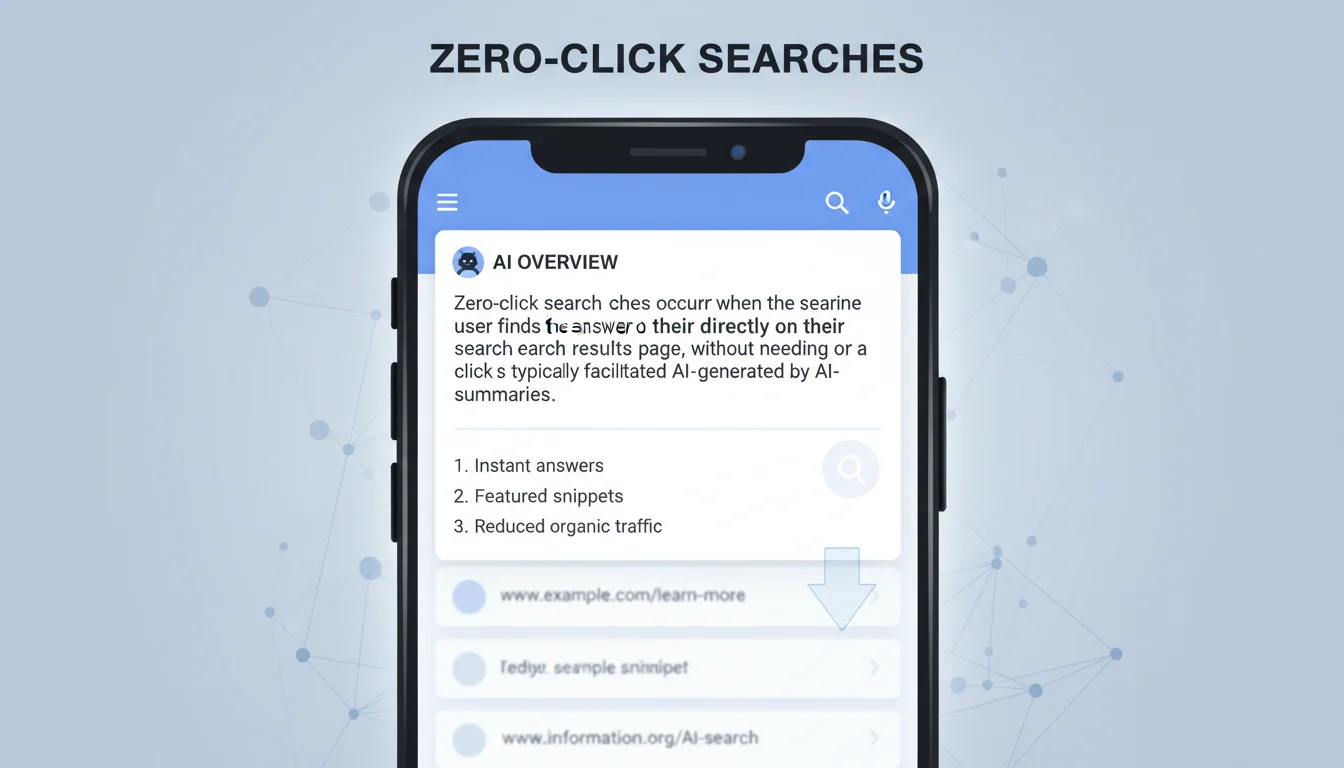
The statistical impact on traditional web traffic is severe. Analytical data from the onset of these changes indicates that organic click-through rates (CTR) for queries featuring Google’s AI Overviews plummeted by 61%, falling from a historical baseline of 1.76% to merely 0.61%. The paid search sector experienced an even more dramatic contraction, suffering a 68% decline in CTR. When examining the impact at the domain level, individual websites have experienced an average CTR drop of 34.5% when AI Overviews intercept their target keywords, with some highly ranked organic results documenting traffic decreases as severe as 79%. Almost 44% of marketers have reported noticeable decreases in web traffic since the widespread launch of AI-generated answers.
However, this phenomenon does not signal the demise of search-driven revenue; rather, it dictates a fundamental shift in the currency of digital visibility. Traditional SEO was engineered for human searchers and algorithmic rankings based on keyword density, latent semantic indexing, and backlink velocity. The new framework, Generative Engine Optimization (GEO) or Answer Engine Optimization (AEO), optimizes for inclusion within the AI-generated summaries themselves. In 2026, visibility relies heavily on a publisher’s ability to be cited as a core source by an AI model. Research indicates that approximately 70% of AI Overview sources are still pulled from the top 10 traditional search results, but the strategic victory no longer relies solely on securing a user click. The actual value is derived from brand mentions and footnote citations embedded directly inside the AI response.
This dynamic highlights a psychological shift from “hosting the answer” to “being the answer”. When consumers see a specific brand or publication repeatedly cited by an AI answer engine across multiple related queries, it cultivates immense brand authority and unshakeable trust. Users may not click through on their initial, top-of-funnel informational search, but the repeated exposure leads to higher-intent direct navigation or downstream conversions when they transition into the decision-making phase of their journey. Consequently, digital publishers must reorient their key performance indicators (KPIs). While tracking traditional pageviews remains relevant, modern publishers must simultaneously measure their AI citation share, footnote impressions, and subsequent increases in direct traffic to accurately gauge their market penetration. Despite the rapid growth of LLMs over the past year, it is vital to remember that Google still commands over 90% of the search market share, averaging over 101 billion monthly visits in 2025, meaning that optimizing for Google’s specific AI Overviews remains the highest priority.
Advanced Trend Discovery Methodologies and Ecosystems
To capture high search volume before a market becomes saturated and highly competitive, publishers must identify trends at their exact point of inception. By the time a topic registers high keyword difficulty metrics in traditional SEO tools, the opportunity for an early-mover advantage has frequently evaporated. Proactive trend discovery requires continuous monitoring of the platforms where cultural shifts and consumer signals first originate.
The Google Search Discovery Ecosystem
Google Trends remains a foundational instrument for measuring the relative growth of search interest over time. Unlike traditional keyword volume tools that provide absolute numerical data, Google Trends measures interest on a relative, normalized scale of 0 to 100, which is highly effective for highlighting the velocity of a topic rather than its static size. By utilizing the “Explore” tab and inputting seed keywords, strategists can gauge the current trajectory of a topic’s popularity. The true value of the platform, however, lies in its secondary data features. The “Top Queries” and “Rising Queries” tables identify “breakout” search terms that have grown exponentially over a designated time frame, allowing publishers to intercept a trend as it goes viral. Furthermore, the integration of Gemini AI into the platform allows for the auto-generation of related search terms based on core areas of interest, facilitating immediate comparisons of multiple rising topics.
For publishers targeting hyper-specific niches, drilling down into localized categories and subscribing to Google Hot Trends RSS feeds allows for the automated discovery of localized or industry-specific spikes in interest, creating significant productivity gains. To bridge the gap between relative interest and actionable numerical data, publishers frequently employ browser augmentation tools. Extensions like Glimpse (“Google Trends Supercharged”) overlay exact search volume data, related trending topics, intricate topic maps, and cross-channel discussion metrics directly onto the Google Trends interface, transforming it from a relative indicator into a precise analytical tool.
Social Media Platforms as Trend Incubators
Modern consumer questions and behavioral trends frequently emerge on social platforms months before they are formulated as search queries in Google. As of 2026, social media behavior is highly fragmented; the typical user now moves between an average of 6.75 different social networks every month, spending over 18 hours per week across these platforms. Consequently, trend discovery must be omni-channel.

TikTok:
TikTok operates as a highly sophisticated, algorithmic search engine that relies heavily on a hyper-personalized For You Page (FYP). The algorithm is designed to deliver hyper-relevant video content based on intricate engagement signals, which means the platform naturally surfaces trending topics before they reach mainstream awareness. Trend discovery on TikTok requires strategic manipulation of this algorithm. Publishers can utilize “burner accounts”—profiles specifically created to engage strictly with content from a single, targeted niche. By doing so, they train the algorithm to curate an FYP that acts as an unfiltered feed of emerging trends within that specific industry. Furthermore, the TikTok Creative Center and TikTok Studio provide robust, unfiltered data on trending sounds, popular hashtags, and promotional posts across specific categories and regions. Content strategies that observe these short-form, visual trends and adapt them into long-form, optimized blog posts routinely capture an audience that is transitioning from passive social discovery to active, deep-dive research.
Reddit:
Reddit serves as an invaluable repository of raw consumer pain points, unfiltered questions, and community-driven discussions. Because search engines increasingly prioritize user-generated content and genuine human experience to combat AI spam, monitoring niche subreddits reveals the exact, conversational terminology that consumers use when seeking solutions. Extracting broad trends from individual, highly localized threads can be labor-intensive, so publishers often utilize AI summarization tools, such as “Reddit Answers,” to distill overarching themes from hundreds of discussions. However, this AI-driven analysis must always be followed by manual verification to ensure the identified trend is a genuine reflection of consumer sentiment rather than an algorithmic hallucination.
Pinterest Trends:
Pinterest is a particularly potent discovery engine for highly visual niches such as lifestyle, interior design, fashion, beauty, and travel. The Pinterest Trends tool provides detailed metrics tracking two distinct categories: general search terms and specific shopping trends. It allows publishers to track relative search interest across specific product categories and identifies clusters of related keywords through its Popular Pins feature.
This makes Pinterest an excellent foundational tool for visual product inspiration and the early identification of lucrative affiliate marketing content.
Specialized Trend Detection Algorithms
Beyond manual social listening, enterprise-level content strategists rely on specialized discovery platforms like Exploding Topics, Trend Hunter, Buzzsumo, and Awario. These platforms utilize sophisticated algorithms to scan millions of data points across the web, identifying subtle conversational shifts and topic clusters months before they reach mainstream awareness. By utilizing these databases, publishers can construct content architectures around “future keywords,” establishing domain authority on a subject before the inevitable surge in search volume occurs.
The Mechanics of Keyword Research: Volume, Competition, and Tools
Once a potential trend is identified, it must be validated through rigorous keyword research to ensure it possesses the necessary search volume and viable competition levels to generate sustainable ad traffic. Because no single software solution provides a flawless representation of the search ecosystem, a composite approach utilizing multiple tools is required to build a profitable content calendar.
Volume Validation and Discovery Platforms
Google Keyword Planner (GKP) remains the industry standard for baseline volume validation because it pulls its data directly from Google Ads, providing a highly accurate reflection of advertiser sentiment. While GKP is primarily engineered for pay-per-click (PPC) advertisers, it is highly effective for SEO strategists seeking to understand broad search volume ranges and estimated Cost-Per-Click (CPC) bids. GKP is particularly useful for analyzing the commercial viability of a keyword; higher CPC bids generally indicate that a keyword is highly valuable, competitive, and likely to convert. However, because GKP often provides overly broad volume ranges and can obscure certain organic long-tail opportunities to increase bidding competition, it must be paired with supplementary tools.
Platforms like KeywordTool.io and WordStream serve as excellent alternatives for deep keyword discovery. The free version of KeywordTool.io leverages Google Autocomplete to generate hundreds of long-tail keyword suggestions in seconds, effectively revealing the profitable, highly specific queries that GKP might hide. WordStream’s Free Keyword Tool offers similar functionality, providing hundreds of relevant results alongside actionable metrics like competition levels and estimated CPCs, making it a vital resource for uncovering niche opportunities and identifying negative keywords that should be excluded from paid campaigns. For real-time volume metrics overlaid directly onto the Search Engine Results Page (SERP), browser extensions like Keywords Everywhere provide immediate context and search volume data during manual Google searches, streamlining the initial research phase.
Competitive Analysis and Keyword Difficulty Assessment
To determine if a keyword is actually rankable for a given domain, publishers rely heavily on third-party enterprise suites like Ahrefs, Semrush, and Moz. These platforms utilize proprietary algorithms to assign a Keyword Difficulty (KD) score, which estimates how challenging it will be to rank in the top 10 search results based on the backlink profiles, content depth, and historical authority of the currently ranking pages.
A critical strategy facilitated by these tools is the competitor gap analysis. By inputting a competitor’s domain into tools like Semrush’s Keyword Gap, publishers can discover keywords for which their competitors currently rank, but they do not. Analyzing the “Missing” or “Weak” tabs within these tools, and subsequently filtering the results for low Keyword Difficulty (e.g., 0-29%) and low search volume (e.g., 0-1,000 monthly searches), frequently reveals highly targeted, easy-to-rank long-tail opportunities that can drive immediate, high-converting traffic.
For newer domains lacking the authority to compete with established industry giants, specialized SERP analysis tools like LowFruits are invaluable. These tools analyze the exact composition of the first page of Google to identify “weak spots”—instances where user-generated forums (like Quora or Reddit) or websites with exceptionally low Domain Authority (DA) are ranking highly. Discovering these weak spots indicates an easily penetrable keyword where the search engine is starved for high-quality, authoritative content.
Question-Based Keyword Generation and Topical Mapping
Long-tail keywords are highly specific search phrases that typically contain three or more words. While they command lower individual search volumes compared to broad “head” terms, they collectively account for the vast majority of web traffic and possess significantly higher conversion rates due to their specificity. To build comprehensive topical authority, publishers must extract the exact questions their audience is asking.
Platforms like AnswerThePublic, AlsoAsked, and Answer Socrates aggregate data from Google’s Autocomplete and “People Also Ask” (PAA) features, visually mapping out the exact questions users are typing into search engines. These tools categorize results by prepositions, comparisons, and alphabetical variations. Incorporating these exact phrasing variations into a blog post’s subheadings (H2, H3) is a critical tactical maneuver for capturing featured snippets, ranking in AI Overview citations, and building comprehensive topical maps. Tools like Surfer SEO take this a step further by utilizing artificial intelligence to organize these keyword ideas into semantic clusters, ensuring that a single piece of content comprehensively covers an entire topical ecosystem, thereby maximizing its visibility across a multitude of related long-tail queries.
Decoding Search Intent for Maximum Yield and Ad Revenue
The generation of ad revenue is intrinsically linked to the commercial value of the audience acquired. A digital publication generating millions of views on celebrity gossip or broad entertainment topics will often earn substantially less revenue than a highly targeted, niche blog generating a fraction of that traffic on topics like corporate liability insurance or B2B software solutions. The fundamental differentiator in this economic equation is Search Intent.
The APTK Framework and the Buyer’s Journey
Successful ad monetization requires aligning the entire keyword strategy with the psychological stages of the buyer’s journey. This is often conceptualized using the APTK Framework (Awareness, Consideration, Decision), which categorizes keywords based on the user’s readiness to execute a transaction. Content strategies that target high search volume without considering this underlying intent routinely fail to generate meaningful revenue. Search queries generally fall into four distinct categories:
- 1. Navigational Intent: The user is attempting to locate a specific website or physical location (e.g., “Facebook login” or “Bank of America near me”). These queries hold minimal value for publishers as the user simply wants to navigate away to the target destination.
- 2. Informational Intent: The user is seeking education, answers to a specific question, or background information (e.g., “how to fix a leaky pipe” or “history of artificial intelligence”). These queries drive top-of-funnel awareness and massive traffic volume, but they typically yield lower CPCs because the user is not actively looking to spend money.
- 3. Commercial Intent: The user is actively researching options, comparing products, or seeking reviews prior to making a purchase decision. They are solution-aware but are evaluating specific brands or methodologies.
- 4. Transactional Intent: The user has completed their research and is ready to execute a purchase immediately. These queries exhibit the highest urgency and the highest potential for immediate conversion.
Linguistic Modifiers for High-Intent Keywords
Premium advertisers and programmatic networks bid aggressively on keywords that indicate a user is at the bottom of the marketing funnel (Commercial and Transactional intent). Identifying and targeting these specific keywords is paramount for securing high AdSense or premium network Revenue Per Mille (RPMs). Publishers identify these lucrative opportunities by looking for specific linguistic modifiers embedded within the search query.
Table 1: Linguistic Modifiers Indicating High Commercial and Transactional Intent
| Intent Category | Linguistic Modifiers / Markers | Example Keyword Query | Psychological State of the User |
|---|---|---|---|
| Commercial (Investigative) | “Best”, “Top”, “Review”, “Vs”, “Compare”, “Alternatives”, “Affordable” | Compare electric SUVs 2026 | Actively evaluating options, seeking third-party validation, and conducting feature comparisons before a purchase. |
| Transactional (Action-Oriented) | “Buy”, “Order”, “Discount”, “Cheap”, “Near me”, “Price”, “Sign up for” | Buy running shoes online | Decision has been made; the user is seeking the optimal vendor, lowest price, or immediate geographic availability. |
| Service-Oriented (B2B/High-Ticket) | “Services”, “Agency”, “Consultant”, “Firm”, “Quotes”, “Packages” | B2B internet marketing agency | Seeking professional intervention for complex, high-cost business needs, indicating high lead generation value. |
By filtering keyword research tools specifically for these modifiers, publishers can isolate the exact phrases that trigger highly lucrative programmatic ad placements. While long-tail variations containing these modifiers may possess lower raw search volumes compared to broad “head” keywords, their conversion rates are exceptionally high, making them the most valuable assets in a publisher’s portfolio.
High-Yield Ad Niches and Revenue Benchmarks
The profitability of a digital asset is heavily dictated by its overarching niche.
Advertisers allocate their marketing budgets based on the Customer Lifetime Value of the target audience. In sectors where a single conversion can yield thousands of dollars in revenue or secure a long-term subscription, the willingness of brands to pay per click (CPC) or per thousand impressions (CPM) rises exponentially.
Top Performing Established Niches for Ad Revenue
The following macro-sectors represent the pinnacle of digital ad monetization in 2026, characterized by fierce advertiser competition and exceptional lead values.
Insurance and Financial Services:
The insurance sector remains the undisputed king of CPC. Because the lifetime value of an insurance customer is immense, major providers like Geico, Progressive, and State Farm bid fiercely for visibility across life, auto, and business liability sectors. Similarly, the personal finance niche, driven by the explosive growth of FinTech applications, retail investing platforms, mortgage refinancing, and debt management services, commands premium ad rates.
Legal Services:
The legal niche, particularly concerning personal injury and specialized litigation (such as wrongful death or mesothelioma lawsuits), generates astronomical CPCs. A single successful case can yield millions in settlements for a law firm, justifying ad clicks that routinely exceed $100 per interaction.
Software as a Service (SaaS) and Technology:
Business-to-business (B2B) technology, cloud hosting infrastructure, cybersecurity, and Customer Relationship Management (CRM) software represent highly lucrative markets due to their reliance on recurring subscription models. In 2026, AI productivity tools constitute the absolute fastest-growing sub-segment within this niche, as enterprise companies race to integrate AI solutions into their workflows.
Real Estate and Online Education:
Real estate commands high CPCs due to the massive commissions associated with property sales, commercial investments, and real estate CRM software. Concurrently, the transition to virtual learning has solidified Online Education (EdTech) as a premium niche, with advertisers paying heavily for leads related to online MBA programs, coding bootcamps, and professional certifications.
Automobile and Make Money Online:
The automotive industry invests billions annually across manufacturing, marketing, and auto insurance, making terms related to car quotes and brand comparisons highly profitable. Meanwhile, the “Make Money Online” niche thrives on the creator economy and remote work shift, with advertisers paying premiums for keywords targeting paid surveys, e-commerce platforms, and digital earning strategies.
Emerging Micro-Niches for 2026
While macro-niches offer high rewards, they are intensely competitive. Strategic publishers often target emerging micro-niches that boast high profitability but lower entry barriers. In 2026, highly profitable blog niches include:
- AI Tools and Productivity: Focusing on the “Creator’s Edge,” this niche generates revenue through high-paying SaaS affiliate programs (often offering 20-30% recurring commissions) alongside display ads.
- Personal Finance Micro-Niches: Specific focuses on debt payoff strategies, side hustles, and sustainable living on a budget.
- Health Tech and Wearables: A high-end consumer technology niche focusing on fitness trackers and biometric health monitoring devices.
- Creator Business Models: Content aimed at helping others build newsletters, digital product empires, and customizable templates.
- Remote Work and Digital Nomad Lifestyle: Capitalizing on global workforce shifts, this niche targets home office productivity, small-space setups, and local travel/weekend getaways.
- Pet Health and Wellness: A deeply emotional niche where consumers are willing to spend heavily on premium food, insurance, and veterinary advice.
Table 2: High CPC Keyword Benchmarks by Niche (2026 Projections)
| Niche Category | High-Intent Keyword Example | Monthly Search Volume Range | Estimated CPC (USD) | Source Constraint / Economic Rationale |
|---|---|---|---|---|
| Legal | Accident lawyer near me | 10k - 100k | $264.63 | Massive potential financial settlement per acquired client. |
| Insurance | Auto insurance quote | 100k - 1M | $140.84 | High lifetime retention rates and recurring monthly premiums. |
| Digital Marketing | Law firm web marketing | 100 - 1k | $138.70 | B2B lead generation resulting in high-retainer agency contracts. |
| Finance / Crypto | Fidelity crypto | 1k - 10k | $128.56 | High asset transfer potential, trading fees, and platform loyalty. |
| Real Estate | Sell my house fast | 1k - 10k | $107.68 | High-value asset transactions yielding substantial broker commissions. |
| Web Hosting | Bluehost coupons | 100 - 1k | $944.64 | Intense, cutthroat competition for recurring digital infrastructure subscriptions. |
| Web Development | Outsource web development | 100 - 1k | $163.01 | High-ticket corporate service contracts and offshore agency partnerships. |
(Note: The CPC values presented reflect the high-range estimates specifically for premium Tier-1 geographic audiences.)
Geographic Tiering and RPM Discrepancies
Niche selection must be inextricably linked to geographic targeting. Ad tech companies and programmatic networks categorize global audiences into economic tiers based on local purchasing power, economic stability, and historical conversion rates. The physical location of the viewer is frequently more influential on the final Revenue Per Mille (RPM) than the subject matter of the content itself.
To understand blog ad revenue, one must understand the relationship between CPM (Cost Per Mille) and RPM. CPM represents the gross amount an advertiser pays the network for 1,000 ad impressions. RPM represents the net revenue the creator actually receives per 1,000 views after the platform takes its revenue share (for example, YouTube traditionally takes a 45% cut, a ratio similar to many standard blog display networks). Therefore, a niche with a $20 CPM will yield an RPM of approximately $9 to $11.
Table 3: Estimated Geographic Ad Revenue Tiers (Based on Broad Display/Video CPM Averages 2026)
| Geographic Tier | Example Countries | Average CPM Range (USD) | Market Dynamics and Purchasing Power |
|---|---|---|---|
| Tier 1 | USA, UK, Canada, Australia, Norway, Switzerland | $12.00 - $55.00 | Features the strongest global economies, highest disposable consumer income, and intense brand bidding wars for premium inventory. |
| Tier 2 | Japan, South Korea, UAE, Poland, Saudi Arabia | $5.00 - $22.00 | Characterized by developing or rapidly transitioning digital ad markets with moderate to strong purchasing power. |
| Tier 3 | India, Turkey, Philippines, Indonesia, Vietnam | $0.80 - $4.50 | Boasts massive population volume but suffers from the lowest CPCs; ad spend is highly diluted across vast audiences. |
To maximize blog ad revenue, publishers must explicitly design their content to attract Tier 1 demographics. This strategic alignment involves localizing content formatting (e.g., using US currencies, discussing US-specific tax laws, or citing Western regulatory bodies) and targeting highly specific geographic long-tail keywords (e.g., “best real estate agent in Arizona”) to ensure the generated traffic triggers the highest possible programmatic bids.
Content Architecture for Traditional and AI Search
Capturing high-value traffic in 2026 requires a meticulous dual-optimization strategy: content must satisfy traditional algorithmic crawlers to secure standard SERP rankings while simultaneously being formatted for effortless extraction by Large Language Models (LLMs) to win highly coveted AI Overview citations.
Traditional On-Page SEO Fundamentals
Before advanced AI formatting techniques can be applied, the baseline SEO structure of a blog post must be executed flawlessly.
- Keyword Placement and Density: The primary keyword must be strategically placed in the H1 title, the meta title (which must remain under 60 characters to prevent SERP truncation), the URL slug (which should be concise and devoid of unnecessary stop words), and woven naturally within the first 100 words of the introductory text.
- Structural Hierarchy: The document must follow a strict, logical hierarchy (H1 -> H2 -> H3). This cascading structure allows search engine bots to instantly understand the topical relationships and the depth of the content.
- Technical Performance: Core Web Vitals, page load speed, mobile-friendliness, and HTTPS encryption remain paramount ranking factors. Premium advertisers actively monitor user experience and will blacklist sites that are slow, poorly rendered on mobile devices, or cluttered with intrusive elements.
- Internal Linking Ecosystem: A robust internal linking structure—typically featuring 3 to 5 contextual links per post—is essential. These links pass valuable PageRank from established, high-authority pillar pages down to newer, highly targeted long-tail posts, facilitating rapid indexation and authority distribution.
Formatting for Answer Engine Optimization (AEO)
To penetrate AI Overviews and answer engines, content must be semantically pristine and easily parsable by LLMs. Generative AI algorithms heavily favor structured data and clear formatting over dense, uninterrupted walls of text.
Citation Hooks and Micro-Formatting
Publishers must actively engineer their text by embedding “citation hooks” every 150 to 200 words. These hooks are highly specific, factual statements, mini-FAQs, or data points explicitly designed to be lifted by an AI model. To ensure these hooks are viable, paragraphs should be strictly limited to 80 words or fewer.
Generative search engines like SGE frequently truncate longer text blocks, meaning dense paragraphs risk being entirely ignored by the summarization algorithm.
Verbatim Lists and Direct Answers
When addressing a targeted long-tail query, the corresponding section must immediately lead with a direct, unambiguous answer before expanding on the broader context. If the query implicitly requests a sequence or a collection of items, publishers should provide a concise, highly scannable list containing 3 to 6 items utilizing bullet points or numerical formatting. LLMs are specifically programmed to identify and extract these exact list structures verbatim for their user summaries, providing a direct pathway to visibility.
Advanced Schema Markup and Entity Mapping
Beyond traditional meta tags, reinforcing the semantic intent of the page with advanced Schema Markup is a mandatory technical requirement. Implementing FAQPage, QAPage, or HowTo schema directly maps question-and-answer pairs for AI bots, eliminating any algorithmic ambiguity regarding the specific problems the text resolves. Furthermore, utilizing Author and Organization schemas helps establish the necessary entity graphs that connect the publisher to verifiable, real-world expertise and institutional trust.
Technical AI Readiness
Forward-thinking publishers in 2026 have adopted the implementation of llms.txt manifests. These specialized manifests provide streamlined, Markdown-formatted snapshots of a website’s core content, allowing AI crawlers to rapidly ingest the factual data of a site without the computational overhead of rendering complex CSS or executing JavaScript frameworks. Additionally, utilizing APIs like IndexNow ensures that critical content updates are pushed immediately to search engines, maintaining data freshness—a major prioritization factor when AI algorithms select their citation sources.
Information Gain and E-E-A-T Compliance
Particularly when operating in high-paying Your Money or Your Life (YMYL) niches such as Finance, Health, and Legal services, Google’s algorithms mandate overwhelming evidence of Experience, Expertise, Authoritativeness, and Trustworthiness (E-E-A-T). Generic, purely AI-generated commodity content fundamentally fails this test because it lacks “Information Gain”—the introduction of new data or unique perspectives not currently present in the search index. To rank successfully and secure premium ad rates, publishers must inject genuine first-party data, proprietary case studies, nuanced expert commentary, and comprehensive author bios featuring credentials cross-linked to verified professional networks like LinkedIn. This unique human element differentiates the content from algorithmic regurgitation, signaling absolute trustworthiness to both human readers and AI evaluators.
Premium Ad Network Criteria: Pathways to Maximum RPM
While monetizing a blog through entry-level programs like Google AdSense provides a necessary baseline, the ultimate objective for professional digital publishers is securing acceptance into premium, programmatic ad management networks such as Mediavine, Raptive (formerly AdThrive), or highly specialized niche networks. These elite platforms bypass standard marketplace bidding algorithms, connecting publishers directly with premium advertisers and global brands willing to pay top-tier CPMs for brand-safe, highly vetted, and high-quality digital inventory.
Traffic Volume and Revenue Requirements
Securing entry into these exclusive networks requires meeting strict, continuously evolving traffic and quality thresholds.
Table 4: Mediavine Network Tiers and Eligibility Requirements
- Journey by Mediavine: Minimum 1,000 monthly sessions. Designed as an accessible on-ramp for smaller, growing websites. Requires the installation of the “Grow” toolkit to build first-party data. Offers a baseline 70% revenue share.
- Mediavine Official: 50,000 monthly sessions (New sites) OR $5,000 annual revenue (Upgrading from Journey). The standard premium network tier. Sites currently on the Journey program automatically qualify for this tier upon hitting $5k in annual revenue, which increases their revenue share to 75%.
- Mediavine Select: $100,000 - $249,999 annual ad revenue. An elevated tier designed for high-earning publishers, granting a highly competitive 80% revenue share.
- Mediavine Signature: $250,000 - $500,000 annual ad revenue. An advanced tier offering an 85% revenue share, typically bundled with additional strategic support and premium beta features.
- Mediavine Premiere: $500,000 - $1,000,000 annual ad revenue. The elite tier granting a massive 90% revenue share, bespoke ad layouts, and premier account management.
(Note: Competitors like Raptive maintain similarly strict competitive thresholds, historically requiring minimums of 100,000 monthly pageviews for their core offerings, though their tier structures are constantly optimizing to match Mediavine’s aggressive market expansion through programs like Journey.)
Beyond the Numbers: Application Vetting and Strict Compliance
- Traffic Quality and Geographic Distribution: A site’s analytics (verified via Google Analytics 4) are deeply scrutinized. Traffic must demonstrate legitimate, organic patterns, driven primarily by search or high-quality social referrals. Crucially, the traffic must be heavily weighted toward Tier 1 countries (US, UK, Canada, Australia). Sites that achieve high pageviews by relying on low-value Tier 3 social media spam or bot traffic are routinely rejected regardless of their overall session count.
- Content Authenticity and Brand Safety: The published content must be highly original, regularly updated to maintain freshness, and rigorously “brand-safe”. Topics involving illegal activities, extreme profanity, controversial political extremism, or unverified medical claims will disqualify a site immediately, as premium corporate brands refuse to have their advertisements placed adjacent to potentially damaging material.
- User Experience (UX): The underlying architecture of the website must support premium ad placements without compromising user navigation. Sites with cluttered interfaces, poor mobile responsiveness, intrusive pop-ups, or layout shifts that induce accidental ad clicks violate the network’s commitment to advertiser ROI and user experience, leading to immediate rejection. Sites must demonstrate good standing with Google AdSense and AdExchange protocols prior to application.