B2B VoIP & AI Contact Center: UCaaS, CCaaS, Sales AI Trends
The 2026 Enterprise Communications Architecture: UCaaS, CCaaS, and AI-Driven B2B Sales Infrastructure
Executive Summary
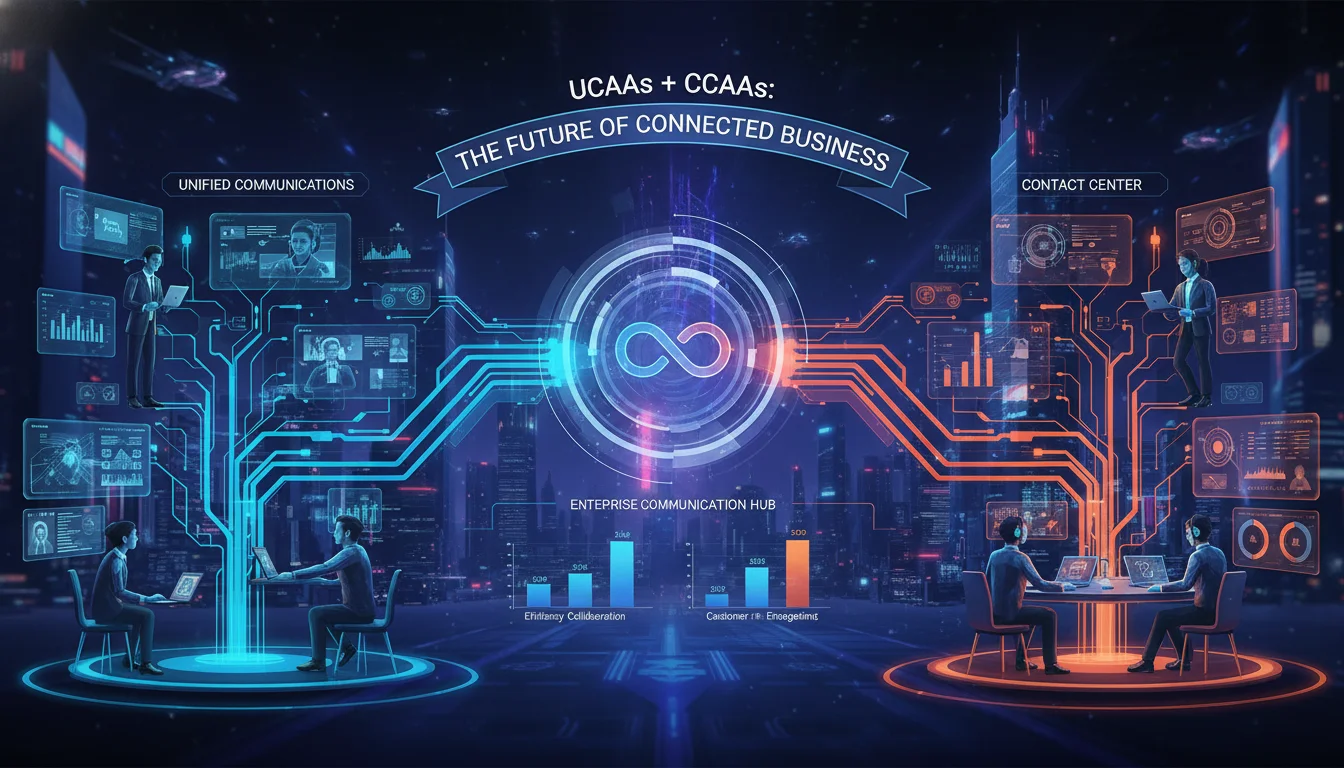
The enterprise communications sector has undergone a fundamental architectural transformation, transitioning from fragmented voice, video, and messaging silos to unified, artificial intelligence-native ecosystems. In 2026, the historical demarcation between Unified Communications as a Service (UCaaS)—traditionally reserved for internal employee collaboration—and Contact Center as a Service (CCaaS)—designed for external customer engagement—has largely dissolved. Organizations are rapidly adopting hybrid deployment models and bundled platforms to streamline technology stacks, reduce integration latency, and ensure continuous, unbroken data flow across the enterprise.
At the vanguard of this convergence are UCaaS platforms such as RingCentral, Zoom Phone, and 8x8, each presenting highly distinct engineering philosophies and monetization strategies to address the complex demands of global voice deployment, data sovereignty, and Total Cost of Ownership (TCO). Concurrently, the operational mechanisms governing customer and prospect interactions have been revolutionized by the advent of predictive behavioral routing and real-time conversational intelligence. Traditional automatic call distribution and skills-based routing protocols are increasingly being supplanted by AI engines from specialized providers like Genesys Cloud CX, Five9, and NICE CXone. These platforms utilize vast historical datasets to dynamically match callers to agents based on psychological profiles, conversational temperaments, and historical sentiment.
For B2B sales organizations, communication infrastructure is no longer merely a passive conduit for conversations; it is an active, revenue-generating participant. Technologies such as Dialpad Ai, RingCentral RingSense, and AI-native parallel dialers like Nooks and CloudTalk actively intervene in live interactions, providing real-time coaching, automated objection handling, and immediate pipeline forecasting. This exhaustive report analyzes the 2026 B2B communication landscape, evaluating the premier UCaaS and CCaaS platforms, assessing the impact of advanced AI routing, detailing the nuances of global infrastructure deployment in regions like Asia-Pacific, and outlining the financial and operational implications of these technologies for global enterprises.
The UCaaS Convergence: RingCentral, Zoom Phone, and 8x8 Evaluated
Selecting an enterprise Unified Communications platform in 2026 requires navigating vastly different vendor monetization strategies, feature-gating protocols, and infrastructure investments. While RingCentral, Zoom, and 8x8 all provide cloud-based telephony, their core engineering priorities cater to highly specific organizational profiles and workflows.
Foundational Philosophies: Video-First, Phone-First, and XCaaS
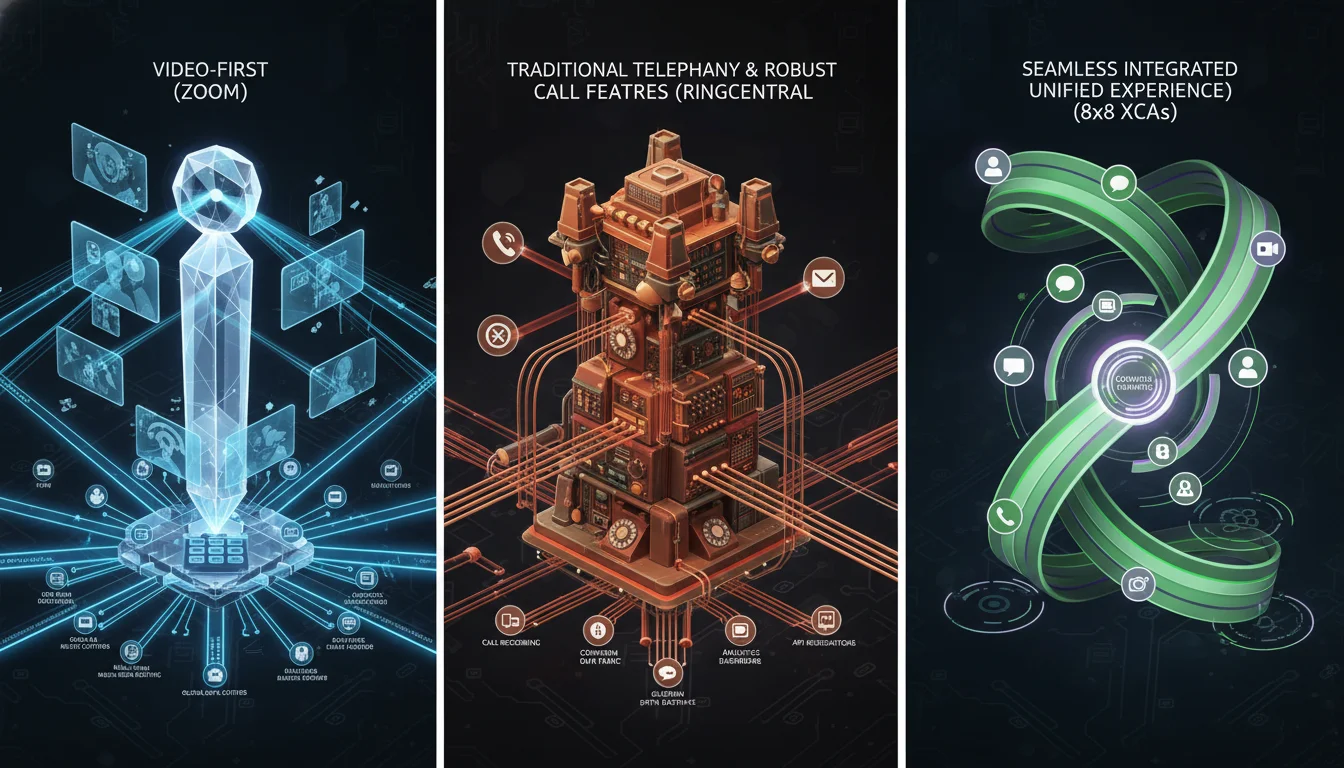
The fundamental divergence between modern UCaaS platforms lies in their foundational architecture and market origin. Zoom evolved from a video-first paradigm, establishing industry dominance through an intuitive, frictionless meeting interface before expanding into cloud telephony via Zoom Phone. Zoom’s philosophy relies on an “assist the worker” model, democratizing artificial intelligence by embedding its AI Companion across all paid workplace tiers to drive widespread organic adoption. Conversely, RingCentral operates on a deeply rooted “phone-first” legacy. It offers granular call routing logic, highly customizable interactive voice response (IVR) systems, and a complex feature set designed to completely replicate and surpass traditional on-premises Private Branch Exchange (PBX) hardware. RingCentral’s AI strategy is centered on “automating the work,” utilizing premium, add-on AI agents to replace manual administrative and reception tasks entirely.
8x8 occupies a unique space as a pioneer of the “XCaaS” (eXperience Communications as a Service) model, which tightly bundles UCaaS and CCaaS into a single, seamless platform. Rather than relying on third-party integrations for workforce engagement management (WEM) or contact center functionality—as is often required with modular setups—8x8 provides a homogenous environment that excels in international telephony and fluid internal-to-external communication handoffs. For organizations requiring more localized or hybrid setups, platforms like 3CX offer an open-standards, software-based IP PBX that allows for “Bring Your Own Carrier” (BYOC) flexibility and on-premises or private cloud hosting, appealing to enterprises prioritizing strict data control and the lowest possible TCO. Furthermore, Microsoft Teams Phone has established itself as the default choice for organizations deeply entrenched in the Microsoft 365 ecosystem, offering a native integration that unifies calls, video, and chat, though it is often criticized for complex administration and extra costs for AI features.
Financial Modeling and Total Cost of Ownership (TCO)
Comparing the pricing models of the leading providers reveals critical differences in long-term enterprise budgeting. Headline pricing often obscures the true Total Cost of Ownership, particularly for outbound sales and revenue teams that rely heavily on integrations and messaging.
| Platform | Entry-Level Pricing (Annual) | Mid-Tier/UCaaS Bundle | Core AI Inclusion Strategy | Ecosystem & Integrations |
|---|---|---|---|---|
| Zoom Phone | $10/user/mo (Metered) | $18.33/user/mo (Pro Plus) | Included (AI Companion) in all paid Workplace plans. | 2,000+ apps; not strictly gated by tier. |
| RingCentral | $20/user/mo (Core) | $25/user/mo (Advanced) | Basic included; Premium AI (Receptionist, ACE) requires $39-$60 add-ons. | 330+ deep integrations; locked behind Advanced tier. |
| 8x8 | Custom/Quote-based | Custom/Quote-based | Integrated across platform; specific quoting required. | ~60 native integrations; strong Salesforce integration. |
| Nextiva | $20/user/mo | $75/agent/mo (CCaaS) | AI transcription and sentiment on higher tiers. | Strong CRM routing; consolidates voice/digital. |
_
The Zoom TCO Model
Zoom’s entry-level metered plan at $10 per user per month appeals to organizations requiring basic PSTN connectivity, but it becomes rapidly cost-prohibitive for high-volume sales teams due to per-minute outbound charges. For a 50-user organization utilizing the Pro Plus bundle (Phone + Workplace), the annual cost is approximately $11,000. Zoom’s competitive advantage lies in its inclusive feature distribution. The AI Companion—which provides real-time transcription, meeting summaries, and chat composition—is included without additional licensing fees, and access to its massive 2,000+ app integration marketplace is not restricted by service tier. Furthermore, Zoom provides unlimited SMS messaging from US, Canadian, and Australian numbers without per-user caps, making it highly attractive for multi-channel sales outreach. Zoom’s meeting capacity also scales significantly higher, supporting between 300 and 1,000 participants depending on the tier, establishing it as the premier choice for organizations hosting large-scale internal events.
The RingCentral TCO Model
RingCentral presents a significantly different financial profile. For the same 50-user team, RingCentral’s Advanced tier costs approximately $15,000 annually—a $4,000 premium over Zoom. This premium secures deep, enterprise-grade telephony infrastructure, including Direct Inward Dialing coverage in 80 countries (compared to Zoom’s 20) and highly advanced analytics that provide both IT professionals and line-of-business users with granular visibility into network performance and agent activity. However, RingCentral aggressively gates essential features. The full library of 330+ integrations, which includes mission-critical CRM synchronization for platforms like Salesforce, Zendesk, and HubSpot, is locked behind the $25/user Advanced plan.
More critically for B2B sales teams, RingCentral imposes stringent Short Message Service (SMS) restrictions: the Core plan allows only 25 texts per user per month, the Advanced plan allows 100, and the Ultra plan caps at 200. A standard Sales Development Representative (SDR) will easily exhaust a 25-text limit within a single week, forcing organizations to purchase the “Business SMS Booster” at $25 per month or upgrade the entire organizational tier due to rigid licensing structures. Additionally, advanced AI capabilities like the AI Receptionist ($39/month), Call Queues Booster ($35/month), and AI Conversation Expert ($60/month) require substantial supplementary investment, meaning enterprise budgets must account for these hidden add-on costs.
The 8x8 TCO Model
While RingCentral and Zoom provide published, transparent pricing that can be modeled in a spreadsheet, 8x8 targets the enterprise market with quote-based, customized pricing. 8x8’s TCO advantage manifests prominently in global operations; for multinational corporations executing high-volume international dialing, 8x8 bundles unlimited calling to over 50 countries on its higher-tier plans. This international bundle consistently offsets the initial licensing costs for global teams, saving organizations thousands in carrier fees. Furthermore, 8x8 does not impose per-user SMS limits, effectively neutralizing the texting bottleneck experienced by RingCentral users. 8x8 also scales impressively for video, supporting up to 500 participants with end-to-end encryption, while RingCentral caps standard video participants at 200.
Ecosystems, Integrations, and the CRM Sync Paradigm
The modern UCaaS platform must serve as a seamless extension of the enterprise’s system of record, which is almost universally the Customer Relationship Management (CRM) platform.
A failure to integrate properly results in broken screen pops, fragmented data, and lost revenue intelligence.
RingCentral offers deeply engineered, “Agentic” workflows with Salesforce, Microsoft Teams, and HubSpot. Its integration with Salesforce High Velocity Sales (HVS) is particularly notable; RingCentral’s Computer Telephony Integration (CTI) application natively embeds within HVS, allowing administrators to map custom disposition fields directly from the dialer into Salesforce. This ensures that not only is the call logged, but the AI-derived context and sentiment data are structured correctly within the prospect’s profile, maintaining a single source of truth. RingCentral also provides native internet faxing over an encrypted TLS connection—a critical requirement for regulated industries like healthcare and finance—which is notably absent as a native inclusion in platforms like 8x8 and Dialpad.
Zoom’s app marketplace is vast, boasting over 2,000 integrations. It excels in connecting scheduling, email, and productivity suites. However, industry analysts note that the “write-back” capabilities for autonomous AI agents in Zoom are generally less advanced than RingCentral’s architecture, meaning Zoom is excellent for retrieving data but slightly less robust at autonomously populating complex CRM fields post-interaction. 8x8 counters with a highly specialized, native third-party app that integrates directly with Salesforce, allowing sales and support teams to handle calls, view customer history, and log notes without switching interfaces, backed by intelligent call routing analytics.
Global Telephony Infrastructure and the APAC Data Center Boom
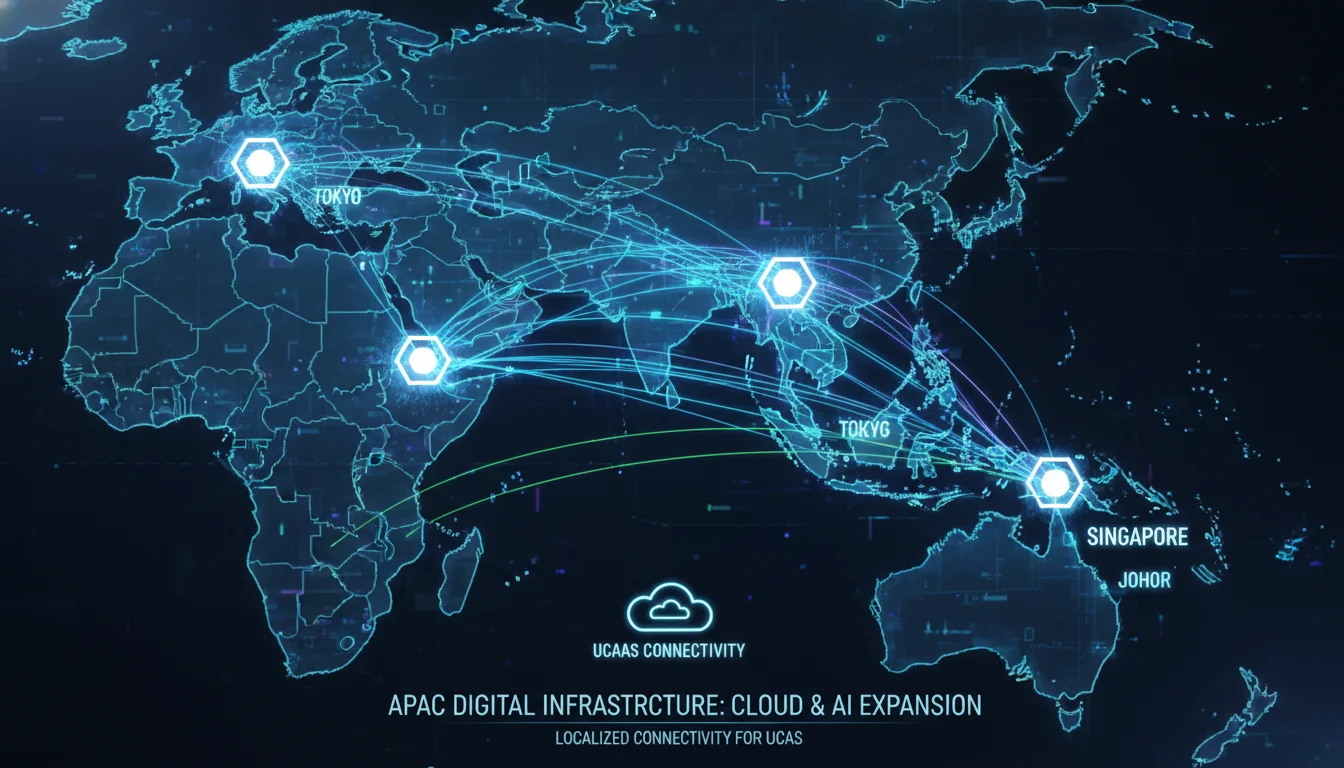
As enterprises expand globally, the underlying physical infrastructure of their UCaaS provider dictates the quality, reliability, and legality of their communications. The Asia-Pacific (APAC) region is currently experiencing explosive growth in unified communications, driven by the expansion of regional contact centers, rapid digitalization, and a massive influx of cloud and AI workloads. Supporting global voice architecture requires substantial data center density to minimize latency, ensure jitter-free packet delivery, and maintain strict data sovereignty compliance.
Navigating the APAC Data Center Market: Singapore, Hong Kong, and Tokyo
The Asia-Pacific data center landscape is characterized by intense development and localized constraints. The region’s capacity is projected to double to approximately 30GW by 2027/2028, yet it faces a looming supply shortage driven by AI and cloud computing demands. Greater Tokyo remains the dominant market with 1160MW of operational capacity. Singapore operates as the premium hub for Southeast Asia, linking businesses to Indonesia, Malaysia, and Thailand via extensive submarine cable networks and internet exchange points. Despite facing high real estate costs and strict government energy restrictions, Singapore is adding 1.2 GW of capacity to support specialized AI workloads. Hong Kong serves as a critical financial and digital hub, primarily absorbing capacity for banking and trade workloads, while emerging markets like Johor, Malaysia, are rapidly accelerating to reach 1GW operational capacity by 2026, offering competitive power costs.
Provider Infrastructure and Latency Mitigation
To operate effectively in these environments, UCaaS providers have heavily invested in local infrastructure.
Zoom’s SIP Zone Architecture
Zoom has aggressively expanded its SIP zone connectivity and physical footprint in the APAC region to support high-fidelity voice routing. The company has doubled its data center capacity in Singapore and opened a new Research and Development Center to tap into local engineering talent. Zoom’s localized PSTN connectivity and media infrastructure rely on data centers strategically located in Singapore, Tokyo/Narita, Osaka, Sydney, Melbourne, Hong Kong, Mumbai, and Hyderabad. By forcing region-specific accounts to initialize calls from their associated local data center, Zoom prevents voice traffic from traversing suboptimal transcontinental routes, drastically reducing latency for APAC end-users.
RingCentral and 8x8: PSTN Replacement and Global DID
RingCentral operates a highly resilient, vendor-neutral network architecture with three layers of failover redundancy, multi-layered load balancing, and financially backed 99.999% uptime SLAs. Its data centers are co-located with major telecommunications carriers to ensure rapid interconnect services, with power monitored four times per minute. Its Global Office solution provides localized extension-to-extension dialing, local caller ID, and carrier-grade service across 30+ countries. In APAC, RingCentral supports full Global RingEX coverage in Australia, and virtual number support in countries like China, Indonesia, Malaysia, and Thailand. The company utilizes subprocessors such as JettyCloud LLC in Georgia for engineering support and Zoom Video Communications for specific video hosting capabilities, maintaining compliance across regions.
8x8 maintains a distinct, competitive edge in unified global PSTN replacement. Operating 15 global data centers serving 157 countries, 8x8’s infrastructure bypasses the need for local customer premises gateways. The platform provides full cloud PSTN replacement in 59 countries, with extensive APAC coverage including Japan, China, Hong Kong, Indonesia, Malaysia, South Korea, Singapore, Thailand, Australia, and New Zealand. By offering local call termination, origination, and emergency services routing natively in the cloud, 8x8 significantly reduces multinational management overhead, making it an ideal choice for global enterprises seeking a unified dial plan.
The second-order insight drawn from this regional data is that the selection of a UCaaS provider must be inextricably linked to a company’s geographical footprint. A North American-centric organization will extract maximum value from Zoom’s cost-effective bundling, whereas an enterprise heavily reliant on offshore sales or support hubs in Singapore or Manila must weigh RingCentral’s granular analytics against 8x8’s superior, borderless PSTN routing.
Contact Center as a Service (CCaaS): From Native Bundles to Pure-Play Enterprise
As organizations scale their B2B operations, the limitations of standard UCaaS routing logic become apparent. Enterprise sales and support require sophisticated Contact Center as a Service (CCaaS) environments capable of orchestrating complex omnichannel interactions, predictive routing, and deep workforce management. The industry is currently shifting away from traditional seat-based pricing toward consumption-based, interaction-based, or hybrid pricing models, reflecting the growing autonomy of AI agents in resolving multi-step workflows without human intervention.
The Architectural Divide: UCaaS-Integrated vs. Specialized CCaaS
-
UCaaS-Bundled (RingCX, Zoom)
- Primary Advantages: Rapid deployment; single administrative pane; unified internal/external comms; lower cost.
- Primary Disadvantages: Lacks deep custom routing logic; fewer advanced workforce management features.
- Ideal Use Case: SMB to Mid-Market; teams prioritizing unified platforms and rapid ROI.
-
Specialized Pure-Play (Genesys, Five9, NICE)
- Primary Advantages: Deep omnichannel routing; advanced predictive dialing; strict compliance/governance; massive scale.
- Primary Disadvantages: Expensive implementation; steep learning curve; complex integration requirements.
- Ideal Use Case: Large Enterprises; compliance-heavy industries; high-volume outbound sales.
Native solutions like RingCX and Zoom Contact Center provide immediate unified internal and external communications. Zoom Contact Center, starting at $69 per agent per month, excels in video-optimized high-touch engagements, features a highly user-friendly interface, and offers flexible “Bring Your Own AI” (BYO AI) model integrations without minimum seat requirements. RingCX ($65 per agent per month, 5-seat minimum) provides seamless integration with RingEX, supporting over 20 digital channels natively, and deploys built-in AI summaries, Agent Assist, and AI Quality Management out of the box, bypassing the complex setup typical of legacy systems.
Pure-Play Enterprise Leaders: Genesys Cloud CX, Five9, and NICE CXone
For global enterprises handling high volumes of interactions, complex bespoke IVR logic, or strict regulatory oversight, the specialized CCaaS market is dominated by three distinct leaders, each optimizing for a different operational reality:
- Genesys Cloud CX (Best for Complex, Large-Scale Routing): Genesys operates as the benchmark for enterprise environments requiring deep custom routing logic, phased hybrid migrations, and extensive omnichannel orchestration. Starting at $75 per agent per month, Genesys features an API-first design that integrates seamlessly with complex CRMs and manages asynchronous messaging (WhatsApp, Apple Messages, Facebook Messenger) with highly sophisticated threading. It focuses on flexibility and scale, utilizing AI to power its “Agent Copilot” and “Virtual Supervisor” to score performance and guide agents in real-time.
Five9 (Best for Speed and High-Volume Outbound): Priced around $119 per agent per month, Five9 is a pure-play cloud contact center that has become the industry leader for outbound campaign execution and intelligent virtual agents. Its predictive dialing algorithms dynamically adjust to agent availability, minimizing downtime in high-volume environments. Five9 explicitly trades deep custom architectural flexibility for rapid AI deployment and visible ROI, making it the premier choice for aggressive B2B sales floors focused on speed and simplicity.
NICE CXone (Best for Governance and Compliance): Starting at $110 per agent per month, NICE leads in highly regulated environments (e.g., finance, healthcare) due to its superior compliance tooling, robust audit trails, and automated quality assurance driven by its Enlighten AI framework. It is an AI-first platform that excels in optimizing workforce management and providing domain-specific AI trained on massive CX datasets.
Mid-Market and Niche CCaaS Alternatives
Beyond the big three, several platforms serve specific niches effectively. Talkdesk ($85/user/month) offers low-code customization with prebuilt solutions for healthcare and finance, making it ideal for mid-market teams needing fast deployment and industry-specific workflows. Nextiva ($75/agent/month) is strong for sales teams consolidating voice and digital tools into a single platform with built-in workforce management. Avaya provides flexible cloud, on-premises, and hybrid options for enterprises burdened by legacy infrastructure, while CloudTalk ($19/user/month) and Aircall ($30/user/month) serve as highly accessible, budget-conscious options providing AI-powered conversation intelligence for SMB outbound teams.
The Evolution of Interaction Distribution: Algorithms and Routing
The most significant technological advancement in B2B contact center software in 2026 is the evolution of interaction distribution mechanisms. The operational logic determining which customer speaks to which agent fundamentally dictates resolution times, customer satisfaction, and revenue generation.
From Automatic Call Distribution (ACD) to Skills-Based Routing (SBR)
Historically, Automatic Call Distribution (ACD) relied on rudimentary models such as “Longest Idle,” “Round Robin,” or “Fixed Order,” which treated all agents and callers as interchangeable nodes, leading to frequent transfers and customer frustration. The industry progressed to Skills-Based Routing (SBR), which introduced a vital layer of logic by directing queries to agents based on specific, predefined competencies, such as language proficiency, technical certification, or product knowledge. While SBR minimized the chance of a customer being bounced between departments, it still lacked context regarding the human element of the interaction.
The Paradigm Shift to Predictive Behavioral Routing (PBR)
The modern enterprise has moved beyond SBR to Predictive Behavioral Routing (PBR), an AI-driven methodology that fundamentally alters the psychology of sales and support interactions. Platforms like Genesys and Five9 utilize predictive AI to analyze hundreds of historical data points, caller intent, past purchase history, and real-time behavioral cues.
Instead of merely identifying that a caller needs a “billing specialist,” PBR leverages artificial intelligence to profile the incoming caller’s personality and disposition. The AI then scans the contact center database—which meticulously documents agent traits, typical dispositions, average handling times, and collaborative problem-solving patterns—to find an agent who not only possesses the requisite technical skills but also shares compatible behavioral traits or has a demonstrated track record of successfully resolving similar issues with that specific demographic.
By matching conversational temperaments, PBR drastically reduces conversational friction, accelerates rapport building, and measurably increases first-call resolution and sales conversion rates. Genesys Cloud Predictive Routing takes this a step further by utilizing AI to identify which specific queues have the highest potential for KPI improvement, enabling continuous A/B testing to compare and optimize routing strategies dynamically. This represents a third-order shift in operational management: contact center KPIs are no longer purely reliant on schedule adherence and handling time, but rather on psychological alignment and AI-driven match-making. Continuous machine learning ensures that every routed call generates feedback data, autonomously retraining the predictive models to further refine future agent-caller pairings without manual administrative intervention.
B2B Lead Routing: Intent, Latency, and the “Five-Minute” Mandate
In B2B sales, inbound lead routing follows a similar evolutionary path. Sending a high-value, hot sales lead to an unqualified representative—or worse, a generalized queue—is a primary cause of pipeline leakage. Modern lead routing utilizes AI and behavioral analysis, integrating data from multiple enrichment sources to assign leads based on firmographics, technographics, and buying intent.
The latency of this routing is critical. Research indicates that companies responding to inbound leads within five minutes are 400% more likely to qualify the lead compared to those waiting 10 minutes or more. To achieve this, organizations are deploying AI Chatbots like MarketBetter, Warmly, and Drift (now part of Salesloft) to capture intent, identify visitors, and autonomously route leads to the correct Account Executive’s calendar in real time, bypassing manual triage entirely.
AI-Powered Sales Acceleration: Dialers and Workflow Automation
For B2B revenue teams, unified communications must serve as a system of action, not merely a system of record. The deployment of AI within the sales stack in 2026 is characterized by real-time intervention and automated data entry, fundamentally addressing the historical inefficiencies of outbound prospecting.
The Mathematics of Outbound: Parallel, Predictive, and Progressive Dialing
The mathematics of outbound B2B sales dictates that manual dialing is an unsustainable labor cost; industry data indicates it can take an average of 18 manual dials to connect with a single prospect. If SDRs spend 80% of their day listening to ringtones, they are performing manual labor instead of selling. Modern AI dialers eliminate this inefficiency through algorithmic call pacing and automation.
Dialer Typology
| Mechanism of Action | Ideal B2B Use Case | Leading Platforms | ||
|---|---|---|---|---|
| Predictive Dialer | Uses AI to predict agent availability and automatically dials multiple numbers in the background, routing only live answers to agents. | High-volume outbound campaigns with 10+ active agents. | Five9, CloudTalk, Convoso. | |
| Power Dialer | Dials a user-configured number of calls sequentially per available agent, adjusting based on abandon rates. | Small teams with large lists needing personalized cadence pacing. | PhoneBurner, Nextiva, JustCall. | |
| Progressive Dialer | Adaptively controls pacing to ensure an agent is always available before the call connects, avoiding dropped calls. | B2B environments where dropped calls severely damage brand reputation. | Five9. | |
| Preview Dialer | Delivers contact records and CRM history to the agent before dialing, allowing manual initiation. | High-value Enterprise Account Executives requiring deep personalization. | Apollo.io, Five9. |
AI-native workspaces like Nooks represent the next evolution, combining parallel dialing with AI-powered coaching within a single interface. Nooks differentiates itself by constructing role-play training bots built from transcripts of actual, historical calls, allowing reps to practice against hyper-realistic objections before executing live outbound campaigns.
Contact Data Integrity and Pre-Engagement Enrichment
It is imperative to note that the efficacy of any advanced dialer is entirely dependent on data hygiene. Deploying a sophisticated predictive dialer is functionally useless if the underlying contact numbers are inaccurate, disconnected, or misrouted. Therefore, UCaaS and CCaaS deployments for sales must be paired with customer intelligence and data enrichment platforms. Tools like Prospeo (providing verified mobile numbers to bypass gatekeepers), Apollo.io (combining 265M+ verified contacts with sequencing), and Leadspace (aggregating 30+ third-party data providers for predictive account scoring) ensure the AI routing engine is processing viable, high-intent leads. SiftHub and ActionIQ further support this ecosystem by unifying buyer data without duplicating records across the CRM.
Conversational Intelligence and Real-Time Sales Coaching
The integration of artificial intelligence into live sales calls has created a dichotomy in coaching philosophies, best illustrated by the technical differences between active, in-the-moment intervention and strategic, post-call analysis.
Real-Time Intervention: Dialpad Ai vs.
Post-Call Analytics: RingCentral RingSense
Dialpad Ai Sales Coaching is engineered as an AI-native platform designed to provide immediate, actionable guidance during live interactions. Starting at approximately $80 per user per month, its proprietary DialpadGPT engine monitors the natural language of the call in real-time.
- Live Sentiment Analysis: The system tracks the emotional state of the conversation dynamically, allowing reps and managers to understand the customer’s mood and intervene if a prospect becomes agitated.
- Real-Time Battlecards: If a prospect mentions a competitor by name or asks a complex technical question, Dialpad Ai instantly triggers an on-screen “Battlecard” providing the sales rep with pre-approved objection handling scripts and technical specifications.
This approach is highly favored by organizations prioritizing rapid SDR onboarding and strict adherence to messaging compliance, as the AI acts as a continuous, live co-pilot ensuring consistency.
Conversely, RingCentral RingSense (ACE)—a premium add-on starting at $60/user/month—excels in macro-level conversational intelligence and post-call strategic analysis.
- Deal Scoring and Pipeline Health: RingSense evaluates the entire lifecycle of an interaction, applying an AI-driven “Deal Score” that helps revenue leaders forecast pipeline accuracy based on conversational markers and intent signals rather than subjective rep intuition.
- Trending Insights and Win/Loss Analytics: The system tracks product mentions, competitor frequency, and macro customer sentiment across thousands of calls, aggregating this data into leaderboards and actionable dashboards for sales directors to identify systemic issues.
- Administrative Automation: AI Conversation Expert (ACE) generates flawless post-call summaries, automatically extracts actionable next steps, and synchronizes this data directly into the CRM, practically eliminating after-call work (ACW).
The implication of this divergence is clear: Dialpad is fundamentally an execution tool designed to augment the individual contributor’s live performance, while RingCentral RingSense serves as an analytical overlay designed to empower Revenue Operations (RevOps) and sales management with strategic visibility. Other B2B sales ecosystems utilize platforms like Gong and Chorus (by ZoomInfo) for similar conversation intelligence and risk detection, though users sometimes report interface complexity and CRM syncing issues with legacy tools.
Salesforce High Velocity Sales (HVS) and Agentic CRM Write-Backs
The ultimate value of AI communications in B2B sales is determined by its integration depth with the central system of record. Seamless synchronization prevents data silos and ensures that AI-generated insights inform broader sales strategies. RingCentral provides exceptionally deep write-back capabilities into Salesforce, particularly concerning the Salesforce High Velocity Sales (HVS) module. RingCentral’s Computer Telephony Integration (CTI) natively embeds within the HVS application, allowing administrators to map custom disposition fields directly from the dialer into Salesforce. This “Agentic” workflow ensures that not only is the call logged, but the AI-derived context, summary, and sentiment data are structured correctly within the prospect’s CRM profile, maintaining a single source of truth.
Measuring ROI and the Future of AI Business Models
The adoption of AI in B2B unified communications is no longer driven by speculative innovation, but by quantifiable financial returns. AI-powered measurement tools are revolutionizing how organizations track ROI, moving beyond basic operational metrics like Average Handle Time (AHT) to predictive insights that quantify business value.
The Forrester Total Economic Impact (TEI) study on Five9’s Intelligent CX Platform provides a definitive framework for this transition. The study revealed that organizations implementing Five9’s AI-elevated solutions achieved a 212% Return on Investment (ROI) and a Net Present Value (NPV) of $14.5 million over three years. By deploying Five9 AI Agents to handle interactions end-to-end, organizations realized cost containment of up to 28%, amounting to $8.8 million in direct savings. Furthermore, automating key activities saved 120 seconds per interaction, generating an additional $11 million in efficiency savings. Payback on the investment was achieved in under six months. Similarly, Zoom Virtual Agent has reported a 28% increase in CSAT scores and a 97% success rate in resolving customer inquiries via self-service.
These metrics confirm that B2B communication infrastructure has evolved into a primary driver of enterprise profitability. The most successful B2B enterprises in 2026 view their communications stack not as a telecom expense, but as a proactive, autonomous data engine. By strategically aligning UCaaS TCO with geographical realities, upgrading to predictive behavioral routing, and embedding real-time AI coaching into the sales workflow, organizations can fundamentally transform their revenue operations, achieving unprecedented scale, efficiency, and customer satisfaction.