Atlassian Layoffs: AI, SaaSpocalypse & Future Trends
Introduction and the Macroeconomic Paradigm Shift
In the early months of 2026, the global enterprise software industry experienced an unprecedented and violent market correction, fundamentally altering the valuation models and operational strategies of legacy software providers. This phenomenon, which Wall Street analysts and financial institutions quickly dubbed the “SaaSpocalypse,” resulted in the evaporation of approximately $2 trillion in software sector market capitalization between January and February 2026. The catalyst for this rapid devaluation was not a traditional macroeconomic recession, but rather a sudden, acute technological breakthrough in the capabilities of autonomous artificial intelligence agents. On January 30, 2026, the AI research organization Anthropic launched eleven highly specialized plugins for its “Claude Cowork” agent, empowering the AI to independently execute complex, multi-step workflows across human resources, sales, finance, and software development.
The introduction of these autonomous capabilities challenged the foundational economic premise of the Software-as-a-Service (SaaS) industry: the per-seat licensing model. For decades, enterprise software valuations were predicated on the assumption that software utilization scaled linearly with human headcount. As organizations grew, they hired more project managers, developers, and analysts, directly resulting in the procurement of additional software licenses. However, the realization that advanced AI agents could seamlessly interact with application programming interfaces (APIs) and underlying databases—effectively bypassing the expensive graphical user interfaces (GUIs) that human workers rely upon—sent shockwaves through the investment community. If a single human worker augmented by an autonomous AI agent could achieve the productivity previously requiring three employees, corporate software seat counts would inevitably face severe contraction. Microsoft Chief Executive Officer Satya Nadella had presciently forecast this exact scenario in a December 2024 podcast, theorizing that traditional business applications would collapse as their core logic migrated to the AI tier, rendering the applications themselves obsolete.
Atlassian Corporation (NASDAQ: TEAM), an established vanguard in collaboration, project management, and developer productivity software, found itself positioned at the very epicenter of this existential market crisis. Institutional investors rapidly identified Atlassian’s core product suite—including Jira, Confluence, and Trello—as highly vulnerable to AI displacement, given that these platforms have historically functioned as systems of record where human employees manually log data, update task statuses, and document institutional knowledge. The market reaction was swift and punitive. Atlassian’s stock price plummeted by more than 50% year-to-date in early 2026, representing an 84% decline from its absolute peak in 2021. This decline mirrored catastrophic drops across the broader software sector, with Intuit falling 34%, SAP dropping 33%, ServiceNow declining by 28%, and Thomson Reuters experiencing a record 15.8% single-day drop.
Faced with this permanent shift from an industry of “Interface Providers” to one dominated by “Intelligence Providers,” Atlassian recognized the urgent necessity for a radical strategic pivot. The company determined that incremental technological updates would be insufficient to reassure shareholders or maintain its enterprise market share. Instead, Atlassian initiated a massive, structural overhaul of its global workforce, executive leadership, and core product architecture to self-fund an aggressive transition into an AI-native enterprise. This exhaustive report analyzes Atlassian’s strategic response to the SaaSpocalypse, detailing the mechanics of its March 2026 workforce restructuring, analyzing its financial resilience in the face of market panic, evaluating its proprietary AI counter-offensive known as the “System of Work,” and providing a comprehensive forecast of its competitive positioning through fiscal year 2027.
Historical Context and Tech Sector Layoff Trends (2023–2026)
To properly contextualize the magnitude of Atlassian’s strategic pivot in 2026, it is necessary to trace the evolution of its workforce management strategies over the preceding three years, comparing its actions against broader labor trends within the technology sector. The narrative of endless headcount expansion in Silicon Valley ended abruptly in late 2022 and early 2023, transitioning into an era of sustained operational efficiency and workforce recalibration.
The March 2023 Restructuring
Atlassian’s first significant modern workforce reduction occurred on March 6, 2023. In a widely circulated memorandum, Co-Founders and Co-Chief Executives Mike Cannon-Brookes and Scott Farquhar announced the difficult decision to terminate approximately 500 employees, which at the time represented 5% of the company’s global workforce. The founders noted that this was the most difficult message they had delivered across 134 internal blogs written since 2011.
The rationale provided for the 2023 restructuring was distinctly different from the pressures facing the company in 2026. In 2023, the layoffs were characterized not as a defensive response to technological obsolescence, but rather as a proactive “rebalancing” effort tailored to a shifting and difficult macroeconomic environment characterized by rising interest rates and slowing corporate IT budgets. The 2023 reductions were highly targeted, specifically aimed at scaling back investments in talent acquisition, internal program management, and exploratory research divisions. The executive team explicitly stated that the cuts were not a reflection of Atlassian’s own financial performance, which remained strong, but were rather a mechanism to free up capital to aggressively reinvest in massive growth opportunities, particularly focusing on cloud migrations, IT Service Management (ITSM), and serving enterprise customers in the cloud. The 2023 action was fundamentally a reallocation of human capital to align with contemporary growth vectors, rather than a broad-based, financially desperate reduction.
The 2025 and 2026 Industry-Wide Labor Contraction
Between the 2023 rebalancing and the crisis of early 2026, the technology industry underwent a profound structural transformation. By the time Atlassian executed its next major reduction, the primary catalyst for tech layoffs had shifted from standard macroeconomic tightening to the explicit substitution of human labor with artificial intelligence. In the early months of 2026 alone, the technology sector witnessed over 45,000 global job cuts by mid-March, with virtually every major SaaS and hardware provider participating in the contraction.
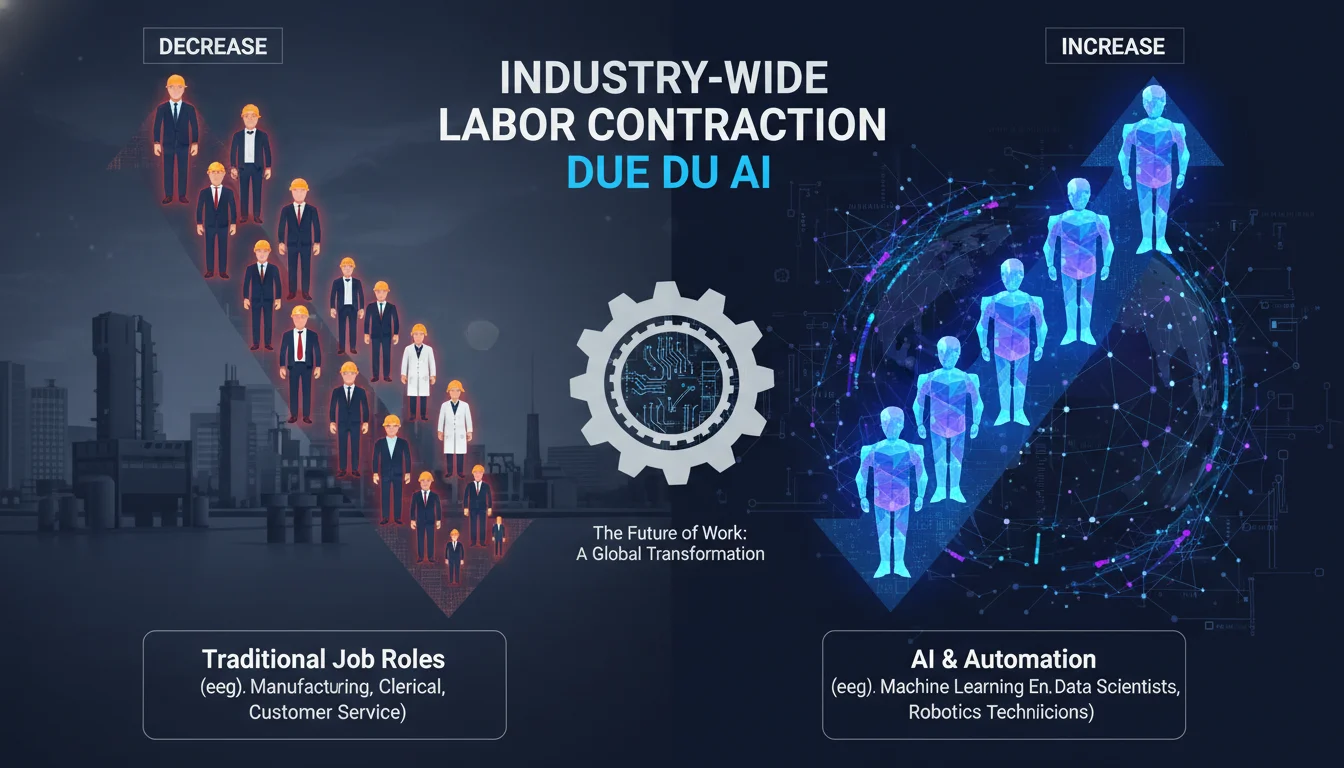
A comparative analysis of Atlassian’s competitors and peers reveals a universal drive to extract capital from traditional operational layers to fund the immense capital expenditures required for AI data centers and large language model training. Microsoft, a primary competitor in the enterprise software space, executed a massive workforce reduction of 9,000 employees (representing slightly less than 4% of its global workforce) in July 2025, heavily impacting its Azure cloud services division. Intel announced a staggering reduction of 22% of its workforce—amounting to approximately 75,000 employees—under the direction of CEO Lip-Bu Tan in mid-2025 as the company struggled with technical setbacks and the costs of pivoting its foundry business toward AI chip manufacturing.
In the pure enterprise software domain, Salesforce engaged in continuous, rolling layoffs. After cutting 1,000 workers in early 2025, the customer relationship management giant eliminated an additional 1,000 roles in February 2026, explicitly cutting layers in marketing, product management, and data analytics while simultaneously funneling resources into its “Agentforce” AI unit. Salesforce CEO Marc Benioff publicly confirmed that the company would permanently cease hiring for specific engineering, legal, and customer service roles, citing the newfound capabilities of AI agents as a direct substitute for human labor. Oracle, similarly, began preparations in January 2026 to eliminate between 20,000 and 30,000 jobs to free up an estimated $8 billion to $10 billion in cash flow to finance its AI data-center expansion after traditional banking syndicates pulled back from financing the massive infrastructure projects. Other SaaS peers followed suit: Workday reduced its headcount by 1,750 employees (8.5%) in February 2025 to focus on AI; Autodesk cut 1,350 staff (9%) to align with profitable cloud AI products; and Freshworks eliminated 660 roles (13%) despite reporting positive revenue growth.
Within this broader macroeconomic context, Atlassian’s actions in March 2026 cannot be viewed as an isolated corporate failure. Rather, the company’s restructuring was a requisite maneuver to maintain operational parity with competitors who were aggressively cannibalizing their legacy human workforces to construct the next generation of AI-native enterprise intelligence.
Anatomy of the March 2026 Workforce Restructuring
On March 11, 2026, Atlassian announced its most severe workforce restructuring to date, initiating a plan to eliminate approximately 10% of its global workforce, equating to roughly 1,600 positions. In a comprehensive note circulated to employees, CEO Mike Cannon-Brookes described the action as the right decision for the long-term health of the company, though he acknowledged the immense personal toll it would take on the affected individuals.
Unlike the 2023 layoffs, which were framed around macroeconomic streamlining, the messaging in 2026 was unequivocally tied to the generative AI revolution. Cannon-Brookes stated that the primary objective of the restructuring was to self-fund further massive investments in artificial intelligence development and the expansion of enterprise sales infrastructure, simultaneously strengthening the company’s financial profile and protecting its operating margins. Directly addressing the anxieties surrounding the SaaSpocalypse, the CEO noted that while Atlassian’s core philosophy is that human-AI collaboration creates the best outcomes, it would be disingenuous to pretend that AI does not fundamentally change the mix of required skills and the overall number of roles needed in certain operational areas.
Demographic and Geographic Impact
The 2026 restructuring fundamentally reshaped the internal demographic composition of the company. A significant portion of the eliminated roles targeted the core software research and development apparatus. According to corporate spokespersons, more than 900 of the 1,600 affected positions were involved directly in software engineering, research, and product design. This heavy concentration of engineering cuts is highly indicative of the company’s belief that AI-assisted coding tools and autonomous development pipelines have structurally permanently elevated the productivity baseline of individual developers, allowing the company to maintain product velocity with a significantly reduced human engineering footprint.
The geographic distribution of the layoffs reflects Atlassian’s global operational footprint, with reductions executed across all primary international hubs. The distribution of the affected workforce is detailed in the table below:
| Geographic Region | Estimated Roles Eliminated | Approximate Percentage of Total Layoffs |
|---|---|---|
| North America | 640 | 40.0% |
| Australia | 480 - 500 | 30.0% |
| India | 250 | 15.6% |
| ROW (Japan, EMEA, Philippines) | ~210 | 14.4% |
| Total Headcount Reduction | ~1,600 | 100.0% |
Data compiled from official Atlassian corporate statements and regional reporting regarding the March 2026 restructuring.
The significant reduction of nearly 500 roles within Australia—Atlassian’s founding headquarters and historic cultural center—prompted immediate industrial backlash. The trade union Professionals Australia publicly decried the move as a devastating blow to the local technology sector, criticizing the company for allegedly executing the redundancies without adequate prior consultation with workforce representatives. The union formally requested an urgent dialogue to assess the direct correlation between the introduction of Atlassian’s internal AI technologies and the subsequent elimination of local engineering jobs.
Restructuring Costs and Financial Mechanics
The execution of a workforce reduction of this scale necessitates substantial short-term capital expenditure. In its regulatory filings with the U.S. Securities and Exchange Commission, Atlassian projected total restructuring charges ranging between $225 million and $236 million, the vast majority of which would be recognized in the third quarter of fiscal year 2026.
These restructuring charges are broadly bifurcated into two primary categories of expenditure, reflecting both the human and physical infrastructure costs of the pivot:
| Expense Category | Projected Cost Range (USD) | Primary Components |
|---|---|---|
| Severance and Employee Benefits | $169 million - $174 million | Minimum 16 weeks separation pay, extended health cover, pro-rated FY26 bonuses, $1,000 technology stipends, and visa support. |
| Real Estate and Facility Reductions | $56 million - $62 million | Lease termination penalties, office consolidation costs, and physical footprint reduction. |
| Total Projected Restructuring Charge | $225 million - $236 million | Total capital outlay for the March 2026 corporate realignment. |
Financial projections based on Atlassian’s March 2026 regulatory disclosures.
The severance package offered to departing employees was highly comprehensive, structured to mitigate reputational damage and facilitate a smooth transition. Affected personnel were guaranteed a minimum of 16 weeks of separation pay, alongside extended healthcare coverage for themselves and their dependents. Furthermore, Atlassian committed to paying out pro-rated performance bonuses for the 2026 financial year, ensuring full payment for employees currently on scheduled parental leave, and providing specialized administrative support for workers on employer-sponsored visas. In a unique provision, departing staff were also offered a $1,000 technology stipend upon the physical return of their corporate laptops, allowing them to purchase personal devices to aid in their transition.
A critical secondary insight derived from the financial breakdown is the massive allocation of up to $62 million for real estate reductions. While the public narrative of the restructuring focused almost exclusively on artificial intelligence and labor displacement, the financial mechanics reveal that Atlassian is using this moment of corporate upheaval to permanently shrink its physical office footprint. By paying the upfront penalties to break commercial real estate leases, Atlassian is aggressively leaning into a highly distributed, remote-first operational model. This physical downsizing guarantees structural, long-term reductions in fixed operational expenditures, further protecting the company’s operating margins in the years to come.
Executive Leadership Overhaul: The Bifurcated CTO Model
Simultaneous with the broader workforce reduction, Atlassian executed a profound restructuring of its highest executive technology tier. The traditional corporate structure, which relied upon a singular Chief Technology Officer to guide the engineering and product vision of the entire organization, was deemed insufficient for the complexities of the AI era.
On March 11, 2026, the company announced that incumbent Chief Technology Officer Rajeev Rajan would step down from his position on March 31, 2026, after serving in the role for nearly four years. Rajan had been instrumental in leading Atlassian through the massive, multi-year engineering challenge of migrating its legacy on-premise customer base into the cloud infrastructure. However, with that infrastructural foundation largely complete, the company required specialized leadership to execute the next phase of its AI product roadmap.
Rather than seeking an external replacement, Atlassian opted to internally promote two executives, officially designating them in regulatory filings as “next generation AI talent”. The CTO responsibilities were subsequently bifurcated into two distinct domains:
- CTO of Teamwork: Taroon Mandhana was elevated to the newly created role of Chief Technology Officer for Teamwork. Mandhana’s mandate focuses exclusively on the user-facing product ecosystem, driving the integration of Atlassian’s proprietary AI agents across the collaboration suite. His organization is responsible for ensuring that the underlying AI technology materially improves the daily productivity of end-users within applications like Jira and Confluence, fundamentally altering how human teams interact with the software.
- CTO of Enterprise and Chief Trust Officer: Vikram Rao was promoted to serve as both the Chief Technology Officer for Enterprise and the Chief Trust Officer. This dual-title appointment is perhaps the most strategic indicator of Atlassian’s long-term market thesis.
By elevating the concept of “Trust” to the absolute highest tier of technology leadership, Atlassian implicitly acknowledges the primary impediment to enterprise AI adoption. Large, highly regulated corporate clients—such as global banking institutions, healthcare providers, and defense contractors—are inherently terrified of deploying autonomous AI agents that possess the ability to read, analyze, and manipulate proprietary corporate data and source code. The fear of data leakage across tenant boundaries, non-compliance with regional data sovereignty laws, and unauthorized AI actions paralyzes enterprise procurement. Rao’s appointment as Chief Trust Officer signals to the market that Atlassian views security, compliance, and governance not as secondary compliance hurdles, but as foundational technology products equal in importance to the AI models themselves.
Comprehensive Financial Analysis: Weathering the SaaSpocalypse
Despite the catastrophic narrative surrounding the software sector in early 2026, an objective forensic analysis of Atlassian’s fundamental financial metrics reveals a highly resilient, rapidly growing enterprise.
The fiscal second quarter of 2026 (ended December 31, 2025) showcased exceptional execution across all primary revenue vectors, highlighting a stark divergence between the company’s actual financial health and its depressed equity valuation.
Q1 and Q2 FY26 Revenue and Profitability Trajectory
Atlassian’s financial performance throughout the first half of fiscal year 2026 demonstrated sustained, high-velocity top-line expansion, driven primarily by the successful execution of its cloud migration strategy and massive uptake among enterprise-tier customers.
In the first quarter of fiscal year 2026, Atlassian generated total revenue of $1,432.6 million, representing a 21% year-over-year increase from Q1 FY25. This strong initial performance accelerated into the second quarter. In Q2 FY26, the company reported total revenue of $1,586.3 million, achieving a 23% year-over-year growth rate compared to the $1,286.5 million generated in the corresponding quarter of the previous year.
The most significant financial milestone achieved in Q2 FY26 was within the Cloud segment. For the first time in the company’s history, Atlassian delivered a $1 billion Cloud revenue quarter, reporting $1,067 million in cloud-specific revenue, an impressive 26% year-over-year increase. This milestone validates the massive R&D investments made over the preceding years to construct a globally scalable, resilient cloud infrastructure capable of hosting the world’s most complex enterprises.
However, the company’s profitability profile remains a subject of intense market scrutiny due to the persistent gap between GAAP (Generally Accepted Accounting Principles) losses and robust non-GAAP profitability.
| Financial Metric | Q1 FY26 (Ended Sep 30, 2025) | Q2 FY26 (Ended Dec 31, 2025) | YoY Change (Q2 to Q2) |
|---|---|---|---|
| Total Revenue | $1,432.6 million | $1,586.3 million | +23% |
| GAAP Operating Loss | $(96.3) million | $(47.7) million | 17% Improvement |
| GAAP Net Loss | $(51.9) million | $(42.6) million | (11.5%) Decline |
| Non-GAAP Operating Income | $322.7 million | $430.2 million | +28.3% |
| Non-GAAP Net Income | $275.7 million | $320.9 million | +25.5% |
| Free Cash Flow | $114.6 million | $168.5 million | Strong Liquidity |
Financial data compiled from Atlassian’s Q1 and Q2 FY26 official regulatory disclosures and shareholder letters.
The dichotomy between the GAAP net loss of $42.6 million and the non-GAAP net income of $320.9 million in Q2 FY26 is primarily attributable to the company’s heavy reliance on stock-based compensation (SBC) to attract and retain elite software engineering talent, alongside amortization charges related to strategic acquisitions. During the hyper-growth tech environment of 2021, institutional investors largely ignored GAAP losses in favor of top-line revenue expansion. However, in the austere market conditions of 2026, where the Altman Z-Score for Atlassian briefly dipped into a “grey area” of 2.33 indicating potential long-term financial stress, the tolerance for unprofitable growth evaporated.
CEO Mike Cannon-Brookes acknowledged this paradigm shift directly, noting that the bar for what constitutes a “great” software company regarding profitability and value creation had fundamentally risen. Consequently, the 1,600 workforce reductions executed in March were designed not only to fund AI but to structurally suppress operating expenses, thereby accelerating the company’s trajectory toward sustained, unadjusted GAAP profitability. Despite the GAAP losses, the company’s underlying cash generation remains exceptionally strong, with free cash flow expanding from $114.6 million in Q1 to $168.5 million in Q2, providing the necessary liquidity to self-fund the restructuring without requiring external debt or equity financing.
Leading Indicators: Enterprise Momentum and RPO
While the broader market feared the imminent collapse of the SaaS seat-based model, Atlassian’s internal leading indicators suggested deepening entrenchment within the global enterprise ecosystem. By the end of calendar year 2025, the company boasted an active customer base exceeding 350,000 organizations.
The most critical metric demonstrating the resilience of Atlassian’s business model is its Remaining Performance Obligations (RPO). RPO represents contracted revenue that has not yet been recognized, serving as a highly accurate proxy for future revenue visibility and the willingness of customers to commit to long-term contracts. In Q2 FY26, Atlassian’s RPO surged to $3.8 billion, representing a massive 44% year-over-year increase. Notably, the growth rate of RPO accelerated for three consecutive quarters, moving from 42% in Q1 to 44% in Q2, indicating that large enterprises were actively signing extended, multi-year platform commitments rather than scaling back their software procurement.
Furthermore, Atlassian’s success in upselling its existing customer base was exceptional. The company’s Cloud Net Revenue Retention (NRR) rate comfortably exceeded 120%, ticking upward sequentially for the third consecutive quarter. This indicates that despite the theoretical threats of AI displacing human workers, Atlassian’s existing customers were organically expanding their seat counts, deploying new applications across different departments, and upgrading to premium, higher-margin enterprise tiers. The sheer volume of massive corporate deployments also reached historic highs, with the company reporting a record number of deals exceeding $1 million in Annualized Contract Value (ACV), a metric that nearly doubled year-over-year. By early 2026, Atlassian commanded a portfolio of over 600 customers generating more than $1 million in ARR, and 55,369 customers generating more than $10,000 in Cloud ARR (a 12% YoY increase).
This empirical data creates a stark paradox when contrasted with the panic of the SaaSpocalypse. While equity traders relentlessly sold off Atlassian stock on the theoretical premise that future seat counts would contract due to AI efficiency, the actual Chief Information Officers (CIOs) of the world’s largest enterprises were simultaneously signing record-breaking, multi-million dollar commitments to migrate their entire operational infrastructure onto the Atlassian Cloud. This divergence suggests that enterprise IT buyers view centralized, unified platforms as a prerequisite for their own internal AI strategies, requiring their disjointed tech stacks to be consolidated onto Atlassian’s platform to ensure their corporate data is centralized and AI-ready.
The AI Pivot: Rovo and the Intelligent “System of Work”
To immunize its business model against the threat of third-party autonomous agents and to justify its premium enterprise valuation, Atlassian executed a profound architectural paradigm shift. The company transitioned away from marketing a portfolio of disparate software tools (e.g., Jira for tracking, Confluence for documentation) and instead aggressively positioned itself as the underlying “System of Work”—a unified, interconnected platform powered centrally by its proprietary artificial intelligence framework, Rovo.
The Capabilities and Adoption of Atlassian Rovo
Rovo serves as Atlassian’s definitive counter-offensive in the generative AI arms race. Rather than allowing external AI models to relegate Atlassian applications to passive databases, the company built an agentic AI natively into the core of its infrastructure, specifically leveraging the “Atlassian Teamwork Graph”. This proprietary graph architecture maps over 100 billion unique objects and human-to-data connections across an enterprise organization, providing the Rovo AI with a highly contextualized, real-time understanding of corporate goals, historical codebases, and personnel hierarchies. By grounding the AI in this massive, organization-specific dataset, Rovo achieves a level of operational accuracy and contextual relevance that generic large language models simply cannot replicate.
The market adoption of Rovo has been staggeringly rapid. By the close of Q2 FY26, Rovo sailed past 5 million Monthly Active Users (MAUs), an adoption curve that firmly establishes it as one of the most widely utilized enterprise AI agents globally. Rovo agents operate far beyond the capabilities of simple chatbots or text summarizers; they are specifically engineered to autonomously execute complex, multi-step workflows. In the six months leading up to early 2026, Rovo agents successfully executed 2.4 million workflow automations across the Atlassian customer base. According to internal analytics, knowledge workers historically spend up to 25% of their time simply searching for answers and context across disjointed corporate systems; Rovo Search directly addresses this inefficiency, instantly synthesizing data across the Teamwork Graph to provide actionable intelligence.
The flexibility of the platform is further augmented by “Rovo Studio,” a low-code environment that empowers non-technical business teams to construct custom AI agents tailored to specific departmental processes. The ease of creation is evidenced by early adopters such as Expedia Group, which independently built and deployed over 200 bespoke Rovo agents within a mere six-week period to automate internal operations.
Rovo Dev and the AI-Native Software Development Lifecycle
While Rovo is highly effective for general knowledge workers, its most profound economic impact lies within the software engineering domain.
Through the introduction of “Rovo Dev,” Atlassian has explicitly targeted the most expensive labor layer in the modern enterprise: the software developer.

Rovo Dev integrates seamlessly into the daily workflows of engineering teams, operating directly within the developer’s Integrated Development Environment (IDE), the command-line interface, and source code repositories such as Bitbucket and third-party integrations like GitHub. The capabilities of Rovo Dev encompass the entirety of the software development lifecycle (SDLC). The agent can autonomously generate boilerplate code, explain legacy codebases in natural language, read and update corresponding Jira work items, conduct initial reviews of pull requests, suggest architecture improvements, and verify that the submitted code accurately matches the business requirements outlined by product managers.
During its beta deployment in late 2025 and early 2026, Rovo Dev yielded transformative efficiency gains for enterprise participants. Organizations such as Tripadvisor and Axel Springer onboarded onto the Rovo Dev agent to systematically remove friction from their development pipelines. The health technology company Flo Health reported astonishing metrics following its implementation of Atlassian’s AI-native tools, achieving a 900% increase in daily code deployments, a 50% reduction in overall cycle time, and a 99% decrease in the mean time to resolution (MTTR) for critical software bugs. By embedding Rovo Dev so deeply into the engineering workflow, Atlassian ensures that its platform remains the indispensable nervous system of software creation, regardless of whether a human or an AI is writing the code.
7. Architectural Strategy: The “Collections” Ecosystem
To seamlessly deliver the System of Work and its underlying AI capabilities to the market, Atlassian overhauled its go-to-market strategy, restructuring its vast portfolio of applications into four highly curated, vertically integrated bundles known as “Collections.” This bundling strategy accomplishes multiple strategic objectives: it dramatically increases the average revenue per user (ARPU), creates impenetrable ecosystem lock-in, and provides a unified, cross-departmental dataset necessary for continuous AI training.
7.1 The Four Pillars of the Enterprise
- The Teamwork Collection: Serving as the foundational bundle for general enterprise collaboration, this collection tightly integrates Jira, Confluence, Loom, and the Rovo AI agents. Designed for cross-functional coordination, the Teamwork Collection breaks down information silos between technical and non-technical business teams, providing a single, unified workspace for work management. By early 2026, adoption of the Teamwork Collection had surpassed 1 million provisioned seats.
- The Software Collection: Engineered specifically for the rigors of modern product development, this bundle combines Rovo Dev, the Developer Experience analytics platform, Bitbucket, Pipelines (for CI/CD automation), and Compass (for component cataloging). The Software Collection provides engineering leadership with unprecedented, end-to-end visibility of the entire software supply chain, allowing them to track DORA metrics, spot operational bottlenecks, and monitor code health in real-time. This comprehensive offering is designed to compete directly against comprehensive developer ecosystems provided by GitHub Enterprise and GitLab.
- The Service Collection: Positioned to aggressively capture market share in the highly lucrative IT Service Management (ITSM) and Customer Service space, this collection bundles Jira Service Management (JSM), the newly introduced Customer Service Management (CSM) application, Assets (the CMDB database), and Rovo agents. The Service Collection utilizes AI to automate ticket triage, resolve repetitive incidents, and synthesize service history. The adoption of Atlassian’s service products has been remarkable; JSM recently surpassed 65,000 customers globally, including penetration into half of the Fortune 500. Global enterprises utilize these tools for massive logistical coordination; Nestlé uses JSM Assets as a central truth source for product engineering tools, BMG manages its vast technology estate and publishing workflows, and automotive giants like Ford track VIN numbers and modular parts.
- The Strategy Collection: Representing Atlassian’s most ambitious movement upmarket, this collection targets the C-suite and enterprise portfolio managers. It integrates Jira Align, the Focus application, and the Talent workforce planning module, augmented by Rovo.
7.2 The Strategy Collection: Encroaching on Financial ERP
The recent enhancements to the Strategy Collection in early 2026 reveal a profound expansion of Atlassian’s total addressable market (TAM). Historically relegated to project and task management, Atlassian has built sophisticated financial and human capital modeling capabilities directly into its platform, encroaching upon the territory traditionally held by Enterprise Resource Planning (ERP) software.
Updates delivered in the March 2026 Innovation Spotlight introduced a “Universal HRIS Connector” that securely ingests workforce data from external Human Resources systems via S3 buckets directly into the Atlassian Talent app. Simultaneously, Atlassian deployed highly granular “Labor Rates” capabilities within the Focus application. This functionality allows executives to define precise labor rate cards for specific positions and instantly visualize annualized labor costs mapped directly against strategic business objectives and focus areas. Executives can slice and analyze these labor costs by employee tenure, geographic location, or seniority level. Furthermore, the platform now supports tracking both labor and non-labor capital and operational expenditures, allowing organizations to compare actual financial benefits and costs against baselined forecasts directly inside Atlassian, rather than exporting data to external financial systems.
The economic value of this top-down visibility is immense. Datasite, an early enterprise adopter of the Strategy Collection, reported that connecting strategy, personnel, and delivery signals into a single unified dashboard improved alignment and efficiency to such a degree that it eliminated over 4,000 internal meetings and saved more than $500,000 in executive time within just four months of deployment.
8. Competitive Landscape Assessment
As Atlassian attempts to redefine the enterprise software architecture through its AI-native Collections, it faces intense pressure from specialized, pure-play work management vendors. The competitive dynamics in the Collaborative Work Management (CWM) space are defined by fundamentally different philosophies regarding how human work should be organized, tracked, and executed.
8.1 Atlassian vs. Monday.com vs. Asana
| Platform | Core Design Philosophy | Ideal Enterprise Use Case | Scaling Friction Profile |
|---|---|---|---|
| Atlassian (Jira/Confluence) | Unified System of Work, deep AI automation, engineering focus. | Complex software development, highly structured IT operations, massive enterprise scale. | Historically criticized for UI complexity and steep learning curves for non-technical users. |
| Monday.com | Communication-first Work OS, highly visual and customizable boards. | Marketing, sales operations, and cross-departmental business workflows. | Experiences severe database latency and architectural slowdowns when scaling beyond small datasets or 100+ user organizational limits. |
| Asana | Rigid task management, strict hierarchy and project discipline. | Smaller, tech-savvy teams requiring deep, granular tracking of individual daily tasks. | Creates organizational silos; struggles with cross-departmental handoffs compared to a unified OS. |
Comparative analysis of CWM platforms based on 2026 market reviews and architectural capabilities.
While platforms like Monday.com are heavily praised for their intuitive, colorful user interfaces and ease of onboarding for business users, they frequently encounter severe architectural limitations at enterprise scale. Industry practitioners report that Monday.com consumes massive computational resources and becomes excruciatingly slow to the point of being unusable when populated with large datasets or utilized as a comprehensive sales CRM for parent companies. Furthermore, building complex, cross-board automations on these platforms requires significant manual configuration due to a lack of deep technical documentation.
Atlassian’s strategic counter to the simpler user interfaces of its competitors is the deployment of Rovo. By integrating agentic AI into the Teamwork Collection, Atlassian aims to bypass the feature-to-feature comparison of task boards entirely. If Rovo can autonomously log data, update task statuses based on email threads, and generate project summaries, the competitive battleground shifts. The value proposition is no longer about which software provides the easiest interface for a human to enter data (where Monday.com excels), but rather which software possesses the deepest intelligence to automate the work so humans never have to enter the data at all.
9. The Ascend Program and the Cloud Migration Imperative
A critical, non-negotiable architectural dependency for Atlassian’s AI strategy is the absolute requirement that its customers operate within the Atlassian Cloud environment.
The training of generative AI models, the processing of complex agentic workflows, and the mapping of the 100-billion-object Teamwork Graph demand massive, centralized computing power and hyperscale data lakes. These capabilities cannot function effectively or economically in isolated, on-premise, air-gapped server environments. Consequently, Atlassian has engineered a rigorous migration strategy known as the Atlassian Ascend program to systematically force its remaining legacy customers into the cloud.
9.1 The Structural Sunset of Data Center
While Atlassian previously concluded the sale and support of its basic “Server” products, thousands of complex, highly regulated enterprise customers remained entrenched on Atlassian “Data Center” (the enterprise-grade on-premise deployment model). These organizations typically resisted cloud migration due to strict compliance mandates, data sovereignty requirements, or highly customized internal security protocols.
The Ascend program establishes a firm, multi-year timeline to systematically eradicate the Data Center deployment model:
- December 16, 2025 Atlassian ceased accepting new application submissions from third-party developers for the Data Center Marketplace, effectively starving the on-premise ecosystem of new innovation.
- March 30, 2026 Sales of new Data Center subscriptions and new Marketplace applications end entirely for all new customers.
- March 30, 2028 The definitive cutoff date for existing Data Center customers. Organizations can no longer purchase new licenses, expand their existing user counts, or buy new Marketplace apps.
- March 28, 2029 Official End of Life (EOL) for Atlassian Data Center. All licenses expire, technical support ceases, and remaining on-premise environments are forced into a permanent read-only state.
Timeline detailing the structural deprecation of Atlassian Data Center via the Ascend program.
9.2 Mitigating Churn Through Compliance and Acceleration
Forcing a mandatory on-premise to cloud migration carries the inherent and severe risk of customer churn, particularly among the public sector, defense contractors, and global financial institutions. To mitigate this risk, the Ascend program offers varying tiers of specialized support. For organizations with over 1,000 users, Atlassian provides the “FastShift Program,” a complimentary strategic partnership designed to accelerate upgrade timelines from a typical 12-16 month process down to just 2-6 months. For massive deployments exceeding 5,000 users, Atlassian provides dedicated “Solution Design Acceleration” to map complex architectural transformations.
Simultaneously, Atlassian has heavily invested in achieving the highest tiers of global security and compliance infrastructure to remove the regulatory objections to cloud migration. By early 2026, Atlassian had achieved FedRAMP Moderate authorization for its Atlassian Government Cloud, ensuring compliance for U.S. federal agencies. Furthermore, the company is actively constructing environments to secure FedRAMP High and Impact Level 5 (IL5) authorizations prior to the 2029 Data Center EOL. The introduction of “Atlassian Isolated Cloud,” a secure, single-tenant offering slated for deployment across new global regions in 2026, provides a bespoke environment tailored for the most stringently regulated customers who require absolute data segregation.
By holding firm on the 2029 EOL date, Atlassian executes a high-stakes strategic gamble. While it risks alienating organizations that categorically refuse cloud environments, the successful migration of this massive legacy user base guarantees a total transition into a high-margin, fully AI-enabled recurring revenue stream, permanently liberating the company from the immense R&D burden of supporting legacy on-premise software codebases.
10. Hiring Trends and Workforce Realignment
Despite the elimination of 1,600 roles in March 2026, Atlassian’s workforce strategy is not characterized by a complete organizational freeze, but rather by an aggressive realignment of human capital. The company continues to actively recruit specialized talent, explicitly pivoting its hiring apparatus toward the precise areas identified as strategic growth vectors by CEO Mike Cannon-Brookes: Artificial Intelligence and Enterprise Sales.
An analysis of Atlassian’s global careers portal in the immediate aftermath of the restructuring reveals a highly targeted recruitment profile. Out of 73 open global requisitions, the overwhelming majority—52 specific positions—are dedicated exclusively to the Sales organization. This heavy concentration validates the executive strategy to self-fund the expansion of the enterprise sales infrastructure. The specific nature of these sales roles underscores the company’s upmarket push; for example, the company is actively recruiting Senior Solution Sales Executives in the United Kingdom focused explicitly on “Agentic AI and Video Collaboration” to aggressively target enterprise accounts across the EMEA North region (Benelux & Nordics). These specialized executives are tasked with driving the adoption of the Teamwork Collection and competing directly against platforms like Monday.com and Asana in massive accounts such as KLM/AirFrance and Mercedes.
Beyond sales, the remaining open requisitions reflect the company’s commitment to injecting new, specialized technical talent into the organization. Atlassian continues to hire for critical senior leadership roles, such as the Senior Design Manager for AI based in San Francisco, and the Head of Engineering for the Developer Experience platform in Salt Lake City. Furthermore, the company maintains a robust pipeline for emerging talent, actively recruiting for 2026 summer internship cohorts across Machine Learning, Data Science, Security Engineering, and Associate Product Management in global hubs like Sydney, Seattle, and San Francisco. This targeted hiring indicates that Atlassian views the injection of fresh, AI-native talent as a critical component of its survival strategy, ensuring the workforce evolves rapidly to meet the demands of the intelligence era.
11. Analyst Sentiment and FY26-FY27 Financial Forecasts
The intersection of Atlassian’s strong fundamental earnings, its ruthless organizational restructuring, and the extreme volatility of the software equities market has resulted in a complex, though fundamentally optimistic, consensus among Wall Street analysts.
11.1 Wall Street Consensus and Equity Ratings
In the immediate aftermath of the Q2 FY26 earnings print and the subsequent March 2026 layoff announcement, the overwhelming consensus among institutional analysts remained highly bullish on the underlying business. However, analysts were forced to execute aggressive downward revisions to their near-term price targets, reflecting the sector-wide valuation compression induced by the SaaSpocalypse.
Out of 23 closely tracked institutional analysts, the vast majority—19 analysts—maintained a “Buy” or “Overweight” rating on Atlassian stock. The remaining 4 analysts advised a “Hold,” while zero recommended a “Sell”. The average 12-month consensus price target stands at $235.57, representing a massive projected upside of over 150% from the depressed mid-$70 range where the stock languished during the peak of the software sell-off.
A review of specific firm actions in early 2026 illustrates this dynamic of lowered targets but maintained conviction:
- Morgan Stanley (Keith Weiss): Maintained an “Overweight” rating on the stock, issuing an updated price target of $290.
- Citi (Fatima Boolani): Maintained a “Buy” rating. The firm significantly lowered its price target from $210 to $160, but explicitly cited broader “sector turmoil” as the primary reason for the reduction, emphasizing that Atlassian’s underlying corporate fundamentals remain “sound”.
- KeyBanc (Jason Celino): Maintained an “Overweight” rating. The analyst adjusted the target from $210 to $170 to reflect the drawdown in software multiples, but specifically praised the company’s solid Q2 fiscal results and the massive outperformance of its Cloud segment.
- Cantor Fitzgerald (Thomas Blakey): Maintained an “Overweight” rating, though executed a sharp target reduction from $240 to $146.
- Baird (Rob Oliver) and Mizuho (Gregg Moskowitz): Both maintained “Outperform” ratings, with respective price targets of $170 and $225.
A critical qualitative insight differentiating the bullish analysts from the general market panic is their interpretation of AI’s long-term impact on the enterprise.
Analysts at Wells Fargo see massive integration potential for Atlassian within new AI frameworks, believing the company is perfectly positioned to embed AI deep within its existing workflows for critical process tracking and approvals. Similarly, analysts at HSBC argue that AI will ultimately serve as an accelerant, enhancing rather than replacing the software industry, reflecting a highly positive outlook on Atlassian’s pivot to becoming the governance layer for autonomous agents. The options market also reflects this underlying bullish sentiment, exhibiting low put-call ratios for open interest and significantly higher-than-average call option volume.
Management Guidance and FY27 Commitments
Despite the macroeconomic chaos of early 2026, Atlassian executive management has firmly and repeatedly reiterated its medium-term financial outlook, projecting extreme confidence in its ability to navigate the technological transition.
Chief Financial Officer Joe Binz reaffirmed the company’s commitment to delivering 20%+ compounded annual revenue growth (CAGR) through fiscal year 2027. For the full Fiscal Year 2026, the company expects total revenue growth of approximately 22.0% year-over-year, with the critical Cloud segment explicitly forecasted to grow at an accelerated rate of 24.3% YoY. This sustained growth trajectory is heavily predicated on the final waves of the Ascend program migrating the remaining Data Center customers to the Cloud (expected to contribute mid-to-high single-digit percentage points to growth), combined with aggressive organic seat expansion and higher-tier upgrades within the massive enterprise customer base.
Equally important to the top-line growth is management’s unwavering commitment to profitability. Atlassian has repeatedly promised to achieve a 25%+ non-GAAP operating margin by FY27. For the full FY26, the company has guided for a 25.5% non-GAAP operating margin. The elimination of 1,600 jobs in March 2026, combined with the permanent reduction in real estate expenditures, serves as the primary financial lever pulled by management to ensure these profitability targets are strictly met, even while the company absorbs the immense capital expenditures required to expand Rovo’s global AI infrastructure. CFO Joe Binz emphasized a disciplined financial framework, noting that the company will dynamically balance revenue outperformance against profitability commitments, electing to drop gross margin beats directly to the bottom line when necessary to protect the fiscal integrity of the enterprise.
Strategic Conclusions
The empirical data, structural reorganizations, and decisive financial maneuvers executed by Atlassian in early 2026 illustrate an enterprise that is acutely aware of its existential vulnerabilities and aggressively proactive in securing its dominance in the next technological epoch. The narrative surrounding the “SaaSpocalypse” is not merely transient market hysteria; it represents a genuine, tectonic shift in how corporate value is generated, measured, and compensated. The simplistic per-seat software licensing model that fueled the SaaS hyper-growth of the 2010s is mathematically incompatible with an AI-driven future where software executes labor autonomously.
- First, the March 2026 restructuring was fundamentally preemptive, not reactive. Despite a plunging equity valuation, Atlassian’s trailing financial performance—marked by 23% YoY revenue growth, 44% RPO expansion, and $168.5 million in quarterly free cash flow—indicates a highly solvent, accelerating business. The decision to terminate 10% of the workforce was not a desperate cost-cutting measure to avoid insolvency, but rather a ruthless, strategic reallocation of capital designed to ensure absolute dominance in the incoming AI ecosystem. The estimated $236 million in restructuring costs will rapidly yield a leaner, more agile operating structure capable of sustaining 25%+ operating margins.
- Second, the unified “System of Work” serves as an impenetrable defensive moat. By transitioning away from selling isolated tools and instead marketing deeply interconnected Collections (Teamwork, Software, Service, Strategy), Atlassian exponentially increases the switching costs for its enterprise clients. If a Fortune 500 company is utilizing Jira Align to manage its executive budget, Jira Service Management for IT ticketing, and Rovo Dev for autonomous code generation, displacing Atlassian requires ripping out the entire operational nervous system of the organization.
- Third, the rigid enforcement of the Ascend program timeline is the linchpin of the company’s AI supremacy. Artificial intelligence requires massive data density to achieve contextual accuracy. By forcing the most complex, legacy enterprises out of isolated on-premise servers and into the multi-tenant Atlassian Cloud, the company ensures that the 100-billion-object Teamwork Graph continuously expands, perpetually improving the efficacy of Rovo agents across all global clients.
- Finally, the executive bifurcation elevating “Trust” to a co-CTO level demonstrates a highly mature understanding of enterprise AI friction. Future multi-million dollar enterprise sales will be won or lost not merely on the ingenuity of the underlying AI model, but on the cryptographic certainty that proprietary data will not leak across tenant boundaries.
While the short-term equity volatility of early 2026 accurately reflects valid market concerns regarding the obsolescence of human-centric SaaS interfaces, Atlassian’s strategic pivot positions the company to capture the overwhelming upside of the next technological cycle. By accepting the inevitable cannibalization of some seat-based human revenue and investing heavily in the automation of the entire software and business development lifecycle, Atlassian is successfully executing its transition from the digital workspace where work is merely documented, into the ubiquitous digital intelligence engine where work is autonomously performed.