Your Essential Analytics Audit Checklist for Digital Marketing in Nepal
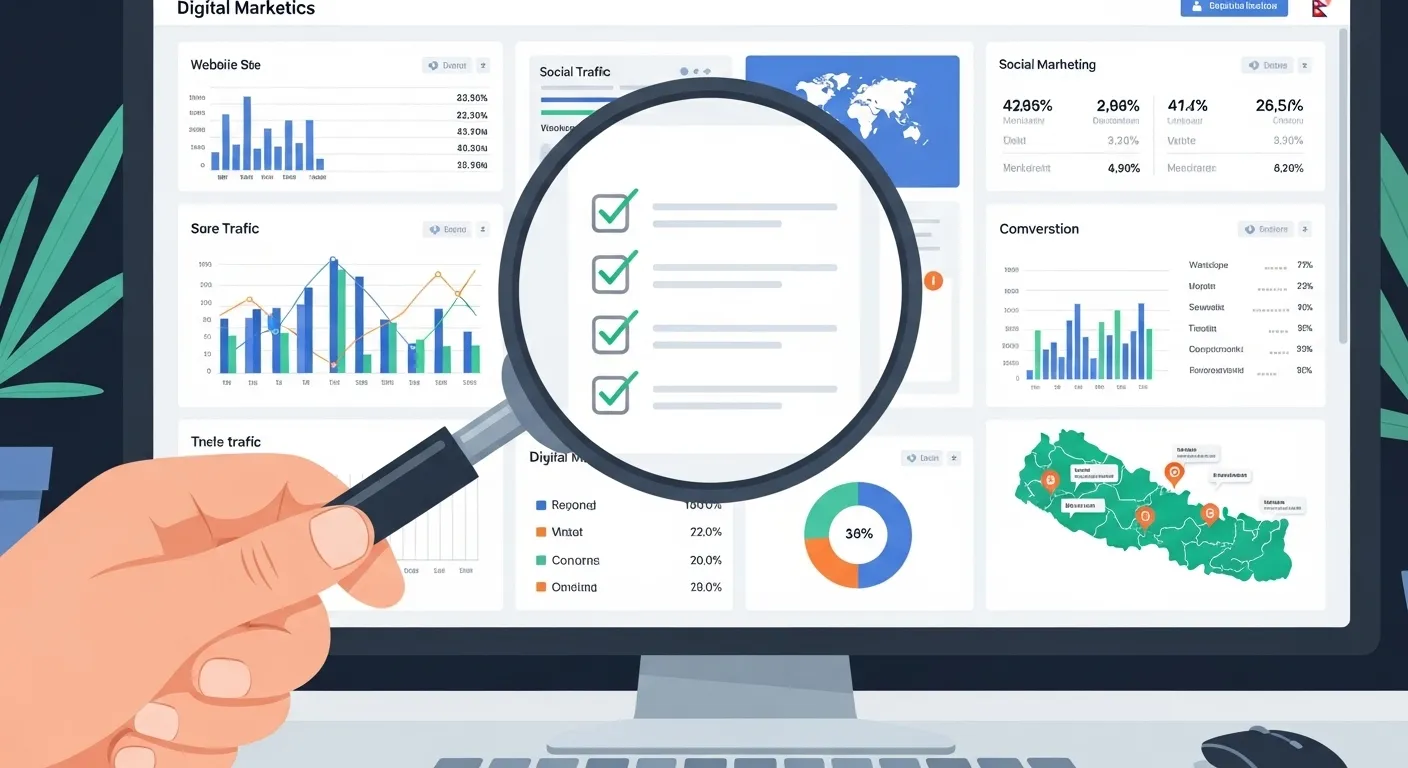
In the world of digital marketing in Nepal, data is king. But what if your data is flawed? A common pitfall for many businesses is relying on inaccurate or incomplete analytics. This can lead to misguided strategies, wasted ad spend, and missed opportunities. For a broader look at common issues, see our post on analytics challenges in Nepal.
That’s why a regular analytics audit is not just a good idea—it’s essential. As a Google Analytics expert in Nepal, I’ve seen firsthand how a thorough audit can transform a business’s understanding of its online performance. This checklist will guide you through the critical steps to ensure your data is clean, reliable, and actionable.

Why an Analytics Audit is Crucial for Nepali Businesses
- Avoid Misinformed Decisions: Bad data leads to bad decisions. An audit ensures you’re basing your strategies on truth.
- Optimize ROI: By accurately tracking what works, you can allocate your marketing budget more effectively.
- Identify Gaps: Uncover missing tracking, broken goals, or untagged campaigns.
- Improve User Experience: Understand how users interact with your site and identify areas for improvement.
Your Essential Analytics Audit Checklist
1. Basic Setup & Configuration
- Is Google Analytics (GA4) properly installed on all pages? Check for duplicate tracking codes.
- Are you using the correct GA4 property ID?
- Is data collection enabled? (Go to Admin > Data Streams > Your Web Stream > Enhanced Measurement).
- Are internal IP addresses filtered out? This prevents your own team’s activity from skewing data.
- Are referral exclusions set up for payment gateways? This ensures transactions are attributed correctly.
For a step-by-step guide, see our analytics setup guide for Nepal.
2. Data Accuracy & Integrity
- Are page views and sessions being recorded accurately? Compare GA4 data with server logs or other analytics tools if available.
- Is traffic source data correct? Check for “(direct) / (none)” spikes that might indicate untagged campaigns.
- Are UTM parameters being used consistently for all campaigns? This is vital for tracking campaign performance.
- Are self-referrals being filtered out? (e.g., traffic from your own subdomains appearing as referrals).
3. Event & Conversion Tracking
- Are all critical user interactions being tracked as events? (e.g., button clicks, form submissions, video plays, downloads).
- Are key events marked as conversions? (e.g., purchases, lead form submissions, sign-ups).
- Is e-commerce tracking implemented correctly? Verify product data, transaction values, and revenue are accurate.
- Are custom definitions (dimensions & metrics) set up for important business data?
Learn how to use GA4 for conversion rate optimization.
4. Goals & Funnels (for Universal Analytics users, or explore GA4 Explorations)
- Are all your business goals defined and tracking correctly? (e.g., contact form submissions, product purchases, newsletter sign-ups).
- Are funnel visualizations set up for key conversion paths? Identify where users drop off.
- Are goal values assigned where appropriate? This helps calculate ROI.
5. Reporting & Dashboards
- Are your reports providing actionable insights? If not, adjust them.
- Are custom reports or explorations set up for regular monitoring?
- Is data being segmented effectively? (e.g., by device, traffic source, location within Nepal).
- Are you regularly reviewing your data for anomalies or trends?
Our ultimate analytics guide can help you get the most out of your reports.
How to Conduct Your Analytics Audit
- Gather Your Tools: Access to Google Analytics, Google Tag Manager (if used), Google Search Console, and any other marketing platforms.
- Document Everything: Create a spreadsheet to log your findings, issues, and proposed solutions.
- Systematic Review: Go through each item on this checklist methodically.
- Test and Verify: After making any changes, thoroughly test to ensure they are working as intended.
- Regularly Repeat: An audit isn’t a one-time task. Schedule regular audits (quarterly or bi-annually) to maintain data integrity.
graph TD
  A[Start Audit] --> B(Gather Your Tools);
  B --> C{Document Everything};
  C --> D[Systematic Review<br>Checklist Items];
  D --> E{Test and Verify Changes};
  E --> F(Regularly Repeat Audit);
  F --> G[End Audit Cycle];
Figure 2: Steps to Conduct an Analytics Audit
Final Thoughts
An analytics audit might seem daunting, but it’s an investment that pays dividends. For businesses navigating the competitive digital marketing landscape in Nepal, accurate data is your compass. By ensuring your tools like Google Analytics Nepal setup is robust, you empower yourself to make smarter, data-driven decisions that lead to real growth and improved ROI. Don’t let analytics failures hold you back.
Start your audit today, and let your data guide you to success!
Related Posts and Resources
- Digital Marketing in Nepal (Complete Guide)
- Google Ads in Nepal: Practical Strategy
- SEO Analytics for Nepali Businesses
- eCommerce Analytics Setup in Nepal
- eCommerce Metrics That Matter
- Email Marketing Guide for Nepal
- Email Marketing ROI in Nepal
- Facebook Ads Budget Guide (Nepal)
- Cultural PPC Strategy for Nepal
- Competitor Analysis Framework for Nepal \n\n## Visual Summaries\n
mindmap
  root((Analytics Audit Benefits))
    Avoid Misinformed Decisions
      Bad Data --> Bad Decisions
      Strategies based on Truth
    Optimize ROI
      Accurate Tracking
      Effective Budget Allocation
    Identify Gaps
      Missing Tracking
      Broken Goals
      Untagged Campaigns
    Improve User Experience
      Understand User Interaction
      Identify Improvement Areas
Figure 1: Benefits of a Regular Analytics Audit