Session 10: Budget Rationale & Risk/Compliance Frameworks
Block 1: Advanced Strategy, Funnel Mapping & The A1 Deck
View lecture slides: Session 10 Slides
Template: use the Bottom-Up Budget & CYA Memo for your acquisition math, playbook split, and risk protocol.
1-Hour Lecture (Theory & Strategy)
- Budget rationale is not “we’ll spend NPR 50,000 on ads.” It is a logic chain: business goal → target CAC → channel cost-per-click/lead → required spend → expected volume.
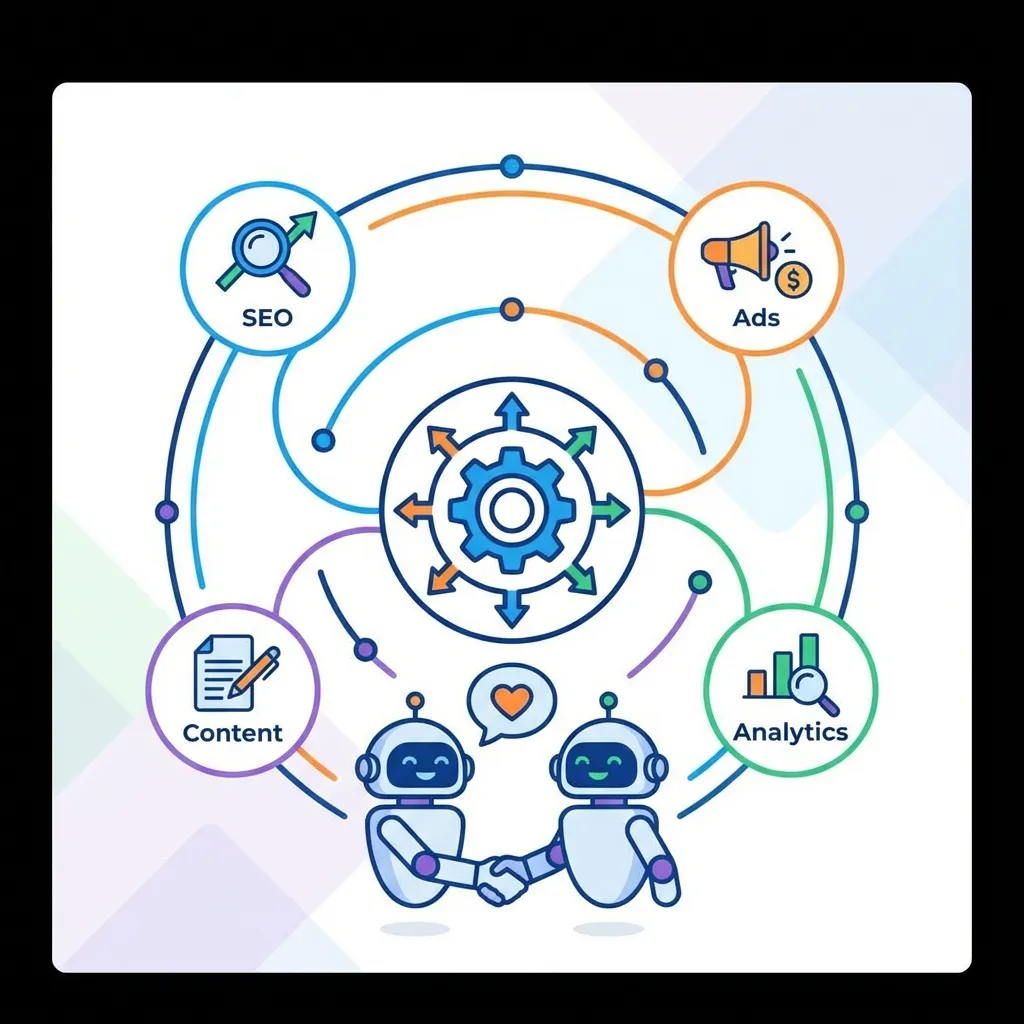
- Introduce a simple allocation framework: Capture (SEM — high intent, funds first), Create demand (Meta/social — mid funnel), Compound (SEO/content — long-term, low marginal cost), Retain (email — near-zero marginal cost). Recap the Phase 1 sample allocation in Session 8 note.
- Risk register basics: platform policy risk (ad account suspension, disapproval), budget risk (overspend, no cap), compliance risk (data privacy, misleading claims, restricted categories), reputational risk (poor creative, insensitive targeting).
- Read the ad policy fundamentals here: Google Ads campaign structure and Ad performance & Quality Score.
- Ethics & privacy angle: Ethics and data privacy — required reading before drafting your risk section.
flowchart TD
    subgraph chain["Budget logic chain"]
        G[Business goal] --> CAC[Target CAC]
        CAC --> CPC[Channel CPC/CPL]
        CPC --> SP[Required spend]
        SP --> VOL[Expected volume]
    end

    subgraph split["Channel allocation"]
        T[Total budget 100%] --> CAP[Capture - SEM]
        T --> CRE[Create demand - Meta]
        T --> COM[Compound - SEO]
        T --> RET[Retain - email]
    end
Figure 1: Bottom-up budget logic and channel split
Key Concepts in Depth
A defensible budget is built bottom-up from the business goal, not top-down from “what we can afford”:
- Goal: how many customers (enrolments, sales) per month?
- Funnel rates: what share of leads become customers? This gives the number of leads required.
- Channel economics: cost per click (CPC) and landing-page conversion give cost per lead (CPL = CPC ÷ CR).
- Spend per channel: leads needed from that channel × CPL.
- Check: does the resulting customer acquisition cost (CAC) sit comfortably below customer lifetime value (LTV)? A common rule of thumb is LTV:CAC of at least 3:1.
The Capture → Create → Compound → Retain split decides the order of funding: high-intent search first (it converts existing demand), social to create demand, SEO/content for long-term compounding, and email for near-zero-cost retention.
A risk register turns vague worries into managed items. Score likelihood and impact (Low/Medium/High), then write a concrete mitigation and an owner. In Nepal, check claims and data practices against the Consumer Protection Act 2075 (misleading advertising) and the Individual Privacy Act 2075 (collecting and using personal data), as well as Google and Meta advertising policies.
Worked Example: Pathshala Tutors (Running Case)
SMART objective: 12 enrolments per month within 90 days, at a blended CAC under NPR 3,000.
Working backwards: lead-to-enrolment is 20% (6 of 30), so 12 enrolments need 60 leads.
| Channel | Role | Budget (NPR) | Share | Economics | Expected leads |
|---|---|---|---|---|---|
| Google Search | Capture | 12,500 | 50% | CPC 40, landing CR 8% → CPL 500 | 25 |
| Meta (Facebook/Instagram) | Create | 5,000 | 20% | lead form CPL ≈ 300 | 16 |
| SEO/content | Compound | 5,000 | 20% | 2 local pages per month | ~12 (organic) |
| Email/CRM tool | Retain | 1,500 | 6% | nurtures existing leads | ~7 (re-activated) |
| Contingency | — | 1,000 | 4% | held back for winning ads | — |
| Total | 25,000 | 100% | ≈ 60 |
CAC = 25,000 ÷ 12 ≈ NPR 2,083 (meets the target). With a course fee of NPR 12,000 per month, an average stay of 4 months and a 50% gross margin, LTV (gross profit) ≈ NPR 24,000, so LTV:CAC is comfortably above 3:1.
Risk register (extract):
| Risk | Likelihood | Impact | Mitigation |
|---|---|---|---|
| Ad disapproved for “Guaranteed Band 7” claim | Medium | High | Replace with “8-week structured plan with 4 mock tests” |
| Collecting phone numbers of SEE students under 18 | Medium | High | Ask for a parent’s contact and consent; state purpose on the form |
| Overspend on Meta during testing | Low | Medium | Daily caps; weekly budget review |
| Fake or unconsented testimonials | Low | High | Use only real reviews with written permission |
1-Hour Lab (Agency Execution)
- Using your Session 9 funnel diagnosis, set one SMART marketing objective (e.g., “generate 60 qualified leads/month at CAC ≤ NPR 3,000 within 90 days”).
- Build a budget table: channel, % allocation, rationale (one sentence per row, tied to a KPI — not a guess).
- Draft a risk/compliance register — a 4-row table: Risk, Likelihood, Impact, Mitigation. Cover at minimum one platform-policy risk and one data/privacy risk.
- Cross-check your riskiest claim (e.g., “guaranteed results,” health/finance claims) against Google/Meta ad policy restricted categories.
- Local data baseline: Reference the Kathmandu Bookstore CRO case for a realistic, defensible small-budget allocation example.
Common Mistakes
- Starting from a round number (“NPR 50,000 for ads”) with no link to leads or customers.
- Using CPC and conversion rates with no source; label each as a benchmark, a test result, or an assumption.
- A budget that does not add to 100%, or that forgets tools, content production, and contingency.
- A risk register with risks but no mitigations or owners.
Deliverable: Feeds Assignment A1
Budget table + risk/compliance register are now locked. Combined with Session 9’s funnel insight, you have 3 of the 4 A1 rubric criteria drafted.
Summary
Budget rationale is a chain from business goal to required leads to channel cost to spend, finished with a CAC versus LTV check. Allocation follows Capture, Create, Compound, Retain. A four-column risk register (risk, likelihood, impact, mitigation) covers platform policy, budget, data privacy and reputation.
Key Takeaways
- Build budgets bottom-up: customers → leads → CPL → spend.
- CPL = CPC ÷ landing-page conversion rate.
- Always check CAC against LTV before asking for money.
- Every risk needs a mitigation, and every claim needs a policy check.
Review Questions
Short answer
- State the five steps of a bottom-up budget.
- If CPC is NPR 50 and the landing page converts at 5%, what is the CPL?
- Why does high-intent search usually receive budget before social media in a lead-generation plan?
Applied (case) questions
- A gym wants 40 new members a month. Lead-to-member conversion is 25%, Google CPL is NPR 600 and Meta CPL is NPR 350. Build a two-channel budget and justify the split.
- Draft a four-row risk register for a skincare brand advertising “visible results in 7 days” on Instagram in Nepal.