Local and location-based marketing are two of the most powerful marketing strategies available to businesses today. They allow businesses to target their marketing messages to customers who are located near their store or who are interested in products or services that are available in their local area.
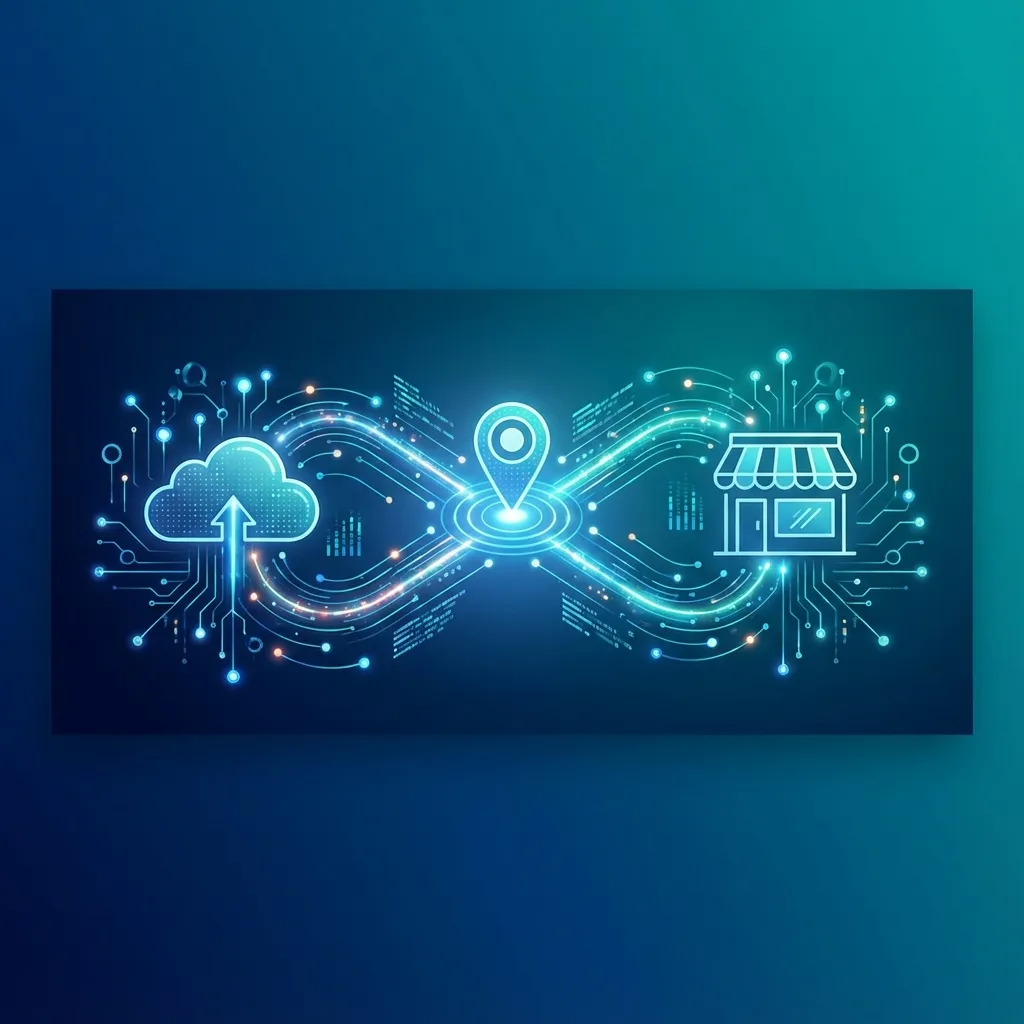
flowchart LR
    A[Local Discovery<br/>Search or Maps] --> B[Location Signal<br/>GPS or Geofence]
    B --> C[Targeted Offer<br/>Ad, Coupon, Push]
    C --> D[Store Visit<br/>Purchase or Redemption]
Figure 1: Local and Geo-Marketing Funnel
Learning Objectives
By the end of this chapter, you will be able to:
- Distinguish local marketing from location-based (mobile) marketing.
- Explain geomarketing, geofencing, and beaconing, and when each is used.
- Describe how a local business uses search listings, maps, and reviews to win nearby customers.
- Discuss privacy and consent in location-based marketing.
1. Local Marketing
Local marketing is a marketing strategy that targets consumers and customers within a certain radius of the physical location of a business. Local marketing is also known as neighborhood marketing or local store marketing.
2. Location-Based Marketing
Location-based marketing is a marketing strategy that uses a mobile device’s location to alert the device’s owner about an offering from a near-by business. Location-based marketing can be used to send customers targeted ads, coupons, and other promotional offers.
3. Geomarketing
Geomarketing is a marketing strategy that uses geographic data to target marketing messages to customers. Geomarketing can be used to target customers based on their location, demographics, and interests.
4. Geofencing
Geofencing is a location-based marketing technique that uses GPS to define a geographic boundary. When a mobile device enters or leaves the geofenced area, a pre-programmed action is triggered, such as sending a text message or an email.
5. Beaconing
Beaconing uses small Bluetooth devices (beacons) placed in a store or venue. When a customer’s phone with Bluetooth enabled comes within range, the beacon can trigger a notification — a coupon, product info, or checkout reminder. Unlike GPS geofencing (which works outdoors at city scale), beacons work well indoors (malls, supermarkets, airports). Adoption in Nepal is still limited by hardware cost and the need for customers to opt in to Bluetooth and app notifications.
6. Comparing the Techniques
| Technique | Location signal | Typical range | Example |
|---|---|---|---|
| Local marketing | The business’s address and area | Neighbourhood or city | Flyers, local SEO, a Google Business Profile listing |
| Geomarketing | Geographic and demographic data | District, city, or region | Choosing where to open a new outlet or where to advertise |
| Geofencing | Phone GPS, Wi-Fi, or cell location | Tens of metres to km | An offer when a customer comes near a shopping mall |
| Beaconing | Bluetooth from a small in-store device | A few metres, indoors | A coupon when a shopper reaches the shoe section |
| Local search | The searcher’s location and query | “Near me” results | “Pharmacy near me” showing the three closest open pharmacies |
7. Types of Location-Based Services
- Local search: “near me” searches on Google Search and Maps; the biggest source of local customers.
- Geo-advertising: ads shown only to people in, or recently in, a chosen area.
- Proximity marketing: messages triggered when a customer is very close to a store (geofence or beacon).
- Geo-social services: check-ins, location tags, and reviews on social media that show where friends go.
- Navigation and delivery: ride-hailing and food-delivery apps that use location to match customers with nearby riders and restaurants.
8. A Worked Example: A Pharmacy in Lalitpur
A pharmacy in Jawalakhel wants more walk-in customers in the evening.
- Claim and complete its Google Business Profile: correct pin on the map, opening hours (including late hours), phone number, photos of the shop, and the categories “pharmacy” and “medical store”.
- Collect reviews: ask satisfied customers to leave a review, and reply politely to every review, including complaints.
- Run a small geo-targeted ad on Facebook and Instagram for people within about 3 km, promoting “open until 10 pm” and free blood-pressure checks.
- Measure: calls and direction requests from the listing, ad reach in the target area, and how many customers mention the ad.
The pharmacy does not need an app or beacons. For most small local businesses in Nepal, an accurate map listing, good reviews, and narrowly targeted social ads give the best return.
9. Privacy and Consent
Location data is sensitive: it can reveal a person’s home, workplace, religion, and health visits. Good practice is to collect location only with clear consent, use it for the stated purpose, keep it no longer than needed, and let customers switch tracking off. Nepal’s Privacy Act, 2075 (2018) sets limits on collecting and using personal information without consent.
Local and Location-Based Marketing in Nepal
Local and location-based marketing are still in their early stages of development in Nepal, but they are a growing trend. With the increasing penetration of smartphones, businesses have a great opportunity to reach their customers with targeted marketing messages based on their location.
Some of the ways that businesses in Nepal are using local and location-based marketing include:
- Google My Business: Many businesses in Nepal are using Google My Business to create a free business listing that appears in Google Search and Google Maps. This is a great way for businesses to attract local customers.
- Facebook Location Targeting: Facebook allows businesses to target their ads to people who are located in a specific area. This is a great way for businesses to reach potential customers who are near their store.
- Ride-sharing apps: Ride-sharing apps like Tootle and Pathao are using location-based marketing to send promotional offers to their customers. For example, they might send a notification to a customer who is near a partner restaurant, offering a discount on their next ride.
There are a number of challenges to the growth of local and location-based marketing in Nepal. These challenges include:
- Lack of awareness: Many businesses in Nepal are not aware of the benefits of local and location-based marketing.
- Lack of skilled personnel: There is a lack of skilled personnel in Nepal who can implement and manage local and location-based marketing campaigns.
- Privacy concerns: There are some privacy concerns associated with location-based marketing. Businesses need to be transparent with their customers about how they are using their location data.
- Address quality: many Nepali addresses are descriptive (“near the temple, second lane”) rather than exact, so map pins and phone confirmation matter for delivery and local search.
Summary
Local marketing targets customers near a business; location-based marketing uses the location of a customer’s mobile device to deliver relevant offers. Geomarketing uses geographic data to plan, geofencing triggers actions when someone enters an area, and beacons work indoors at very short range. For most small businesses, the most effective tools are an accurate map listing, reviews, and geo-targeted social ads. Location data is sensitive, so consent and transparency are essential.
Key Takeaways
- Local marketing is about the business’s area; location-based marketing is about the customer’s current location.
- Geofencing works outdoors at city scale; beacons work indoors within a few metres.
- “Near me” search and map listings are the largest source of local customers.
- Reviews and accurate business information drive local visibility.
- Use location data only with consent and for a clear purpose.
Discussion Questions
- Why is a Google Business Profile often more valuable than a website for a small restaurant?
- When would a business choose geofencing over beacons?
- What location data would you be comfortable sharing with a shopping app, and why?
Exam-Style Questions
Short answer
- Differentiate between local marketing and location-based marketing.
- What is geofencing?
- What is a beacon, and where is it used?
Long answer
- Explain local and location-based marketing techniques, with examples from Nepal.
- Discuss the benefits, challenges, and privacy issues of location-based marketing.