Learning Objectives
By the end of this chapter, you will be able to:
- Identify the major digital marketing strategies and the funnel stage each one serves.
- Differentiate between SEO and paid search (PPC), and decide when to use each.
- Describe display, native, and video advertising, email marketing, and affiliate, viral, and lead-generation marketing.
- Explain customer retention strategies and online pricing strategies.
- Apply these strategies to businesses in Nepal.
Digital Marketing Strategies
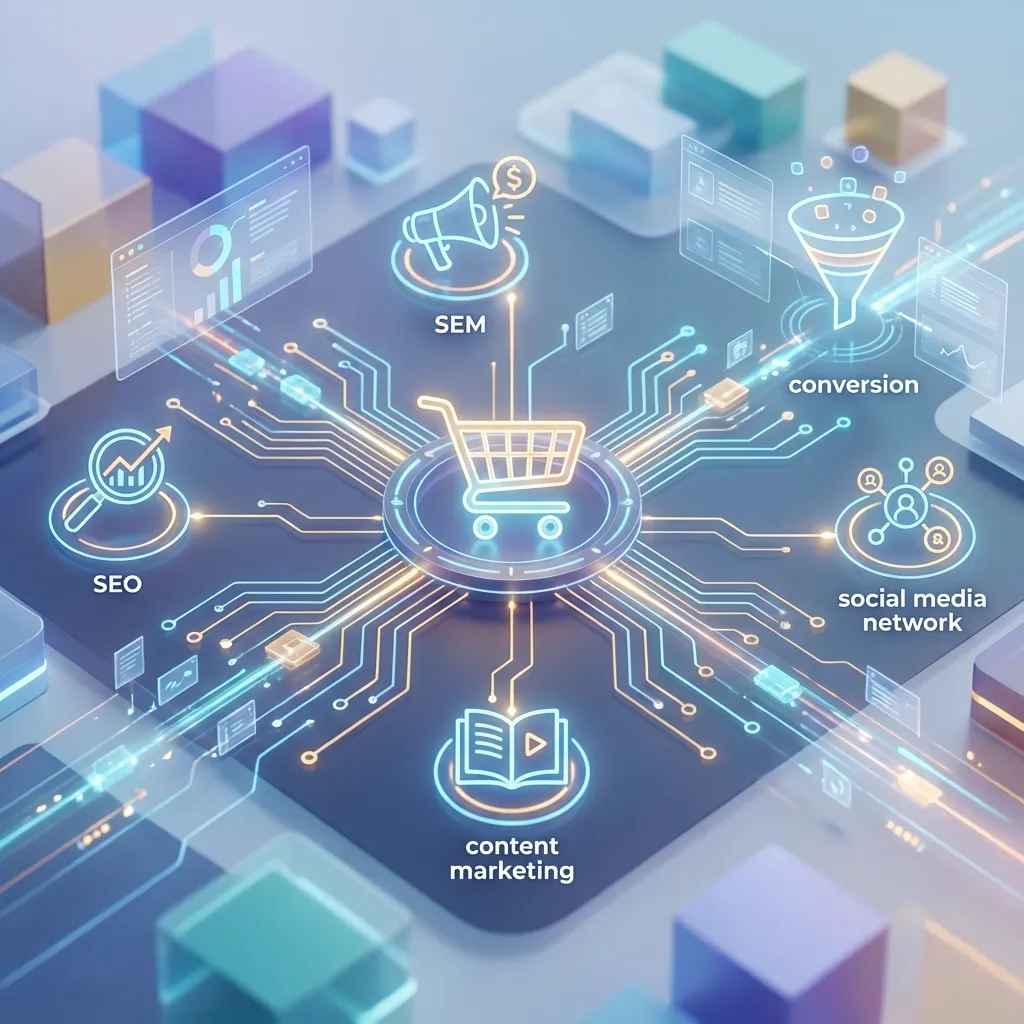
Digital marketing encompasses a wide range of strategies and channels used to reach customers online. Most firms start with their own website (or app) as the marketing platform: it is where customers learn, compare, and buy, and every other channel tries to bring them there. A good marketing website has a clear domain name, fast mobile pages, search-friendly content, and easy checkout.
flowchart TD
    DM[Digital Marketing] --> SEM[Search Engine Marketing]
    DM --> DISP[Display Advertising]
    DM --> EMAIL[Email Marketing]
    DM --> SMM[Social Media Marketing]
    DM --> CM[Content Marketing]
    SEM --> SEO[SEO - Organic Traffic]
    SEM --> PPC[Paid Search Ads]
Figure 1: Digital Marketing Strategy Channels
1. Search Engine Marketing: SEO and Paid Search
Search engine marketing (SEM) means using search engines to attract customers. It has two parts. (Some writers use “SEM” for paid search only; this note uses it for both.)
- Search Engine Optimization (SEO): improving a website’s content, structure, and reputation so that it ranks higher in the organic (unpaid) results.
- Paid search or pay-per-click (PPC): buying ads that appear above or beside the organic results for chosen keywords. The advertiser pays each time someone clicks.
| Feature | SEO (organic) | Paid search (PPC) |
|---|---|---|
| Cost per click | No direct cost, but content and time cost money | Pay for every click |
| Speed of results | Slow: months | Immediate |
| Durability | Lasts after the work is done | Stops when spending stops |
| Control | Limited: the search engine decides ranking | High: choose keywords, budget, locations |
| Trust | Users often trust organic results more | Clearly labelled as ads |
Worked example: a Pokhara trekking agency
A trekking agency wants bookings from foreign visitors searching “Annapurna base camp trek”. Assume a click costs USD 1.50 (about Rs. 200), 3% of visitors send an enquiry, and 20% of enquiries become bookings with a profit of Rs. 25,000.
- Cost per enquiry = Rs. 200 ÷ 3% = Rs. 6,667
- Cost per booking = Rs. 6,667 ÷ 20% = Rs. 33,333
Each booking costs more in ads than it earns in profit, so paid search alone loses money at these numbers. The agency should improve its landing page to raise the enquiry rate, target cheaper, more specific keywords (“ABC trek 7 days from Pokhara”), and invest in SEO (detailed itinerary pages, reviews, photos) so that organic traffic brings bookings without a cost per click.
2. Display, Native, and Video Advertising
- Display (banner) ads are image or animated ads on websites and apps. Rich media ads add interaction, such as expanding or playing a video.
- Video ads play before, during, or after online videos (for example on YouTube) or within social feeds.
- Native ads look like the surrounding content, such as a sponsored article on a news site or a promoted post in a feed. They must be labelled as sponsored.
- Sponsorships pay to be associated with content, such as a brand sponsoring a podcast or a cricket live-stream.
Display ads mainly build awareness; clicks are usually low, so they are judged by reach and cost per thousand impressions as well as sales. Retargeting shows ads to people who already visited the site, which usually converts better.
3. Email Marketing
Email marketing sends targeted messages to people who have agreed to hear from you — newsletters, order updates, abandoned-cart reminders, and promotional offers. It remains one of the highest-ROI digital channels because you reach people in an inbox they check daily. Good email marketing depends on a clean subscriber list, clear subject lines, mobile-friendly design, and compliance with anti-spam rules (only mail people who opted in; include an unsubscribe link). Spam, unsolicited bulk email, damages a brand and may break the law.
4. Social Media and Content Marketing
Social media marketing uses platforms such as Facebook, Instagram, TikTok, and YouTube to build a brand, engage customers, and drive sales; see social marketing for the full process. Content marketing creates useful blogs, videos, and guides that attract customers and support SEO.
5. Affiliate, Viral, and Lead-generation Marketing
- Affiliate marketing: Other websites or creators (affiliates) promote a firm’s products and earn a commission on each sale or sign-up they generate, tracked through special links. The firm pays only for results.
- Viral marketing: Content designed to be shared, so customers spread the message to their own networks. Referral programmes (“invite a friend, both get Rs. 100”) are a planned form of viral marketing.
- Lead-generation marketing: Collecting contact details of potential customers, usually in exchange for something useful such as a free guide, a quote, or a webinar seat, and then following up. This is especially important in B2B marketing.
6. Customer Retention Strategies
Keeping a customer is usually cheaper than finding a new one.
- Personalization and one-to-one marketing: Recommendations, offers, and messages based on each customer’s history.
- Customization: Letting customers configure products, such as printed T-shirts or custom gift boxes.
- Customer service: Fast replies on chat and messaging apps, easy returns, and FAQs.
- Loyalty programmes: Points, member prices, and free delivery for repeat customers.
7. Online Pricing Strategies
| Strategy | Meaning | Example |
|---|---|---|
| Dynamic pricing | Prices change with demand, time, or customer | Ride-hailing fares rising at peak hours |
| Flash sales | Large discounts for a very short time | Festival sales on marketplaces |
| Freemium | Basic version free; pay for premium features | Music and productivity apps |
| Versioning | Different versions at different prices | Standard and premium delivery |
| Bundling | Several products sold together at one price | Phone plus case plus screen protector |
| Free and low-cost | Give away something to attract users, earn later | Free shipping above a minimum order |
The long tail is another online pattern: because online stores have almost unlimited shelf space, many niche products that each sell little can together sell a lot.
8. B2B Digital Marketing
B2B marketing relies more on websites with detailed product information, SEO, lead generation, email, LinkedIn, webinars, and direct sales follow-up, because purchases are larger and involve several decision makers.
The Digital Marketing Funnel
flowchart LR
    A[Awareness<br/>SEO, Content, Display] --> B[Consideration<br/>SEM, Social, Email]
    B --> C[Conversion<br/>Landing Page, Cart]
    C --> D[Retention<br/>Email, CRM]
    D --> A
Figure 2: Digital Marketing Funnel and CRM Cycle
Digital Marketing Strategies in Nepal
Digital marketing is a rapidly growing field in Nepal. Businesses of all sizes are using digital marketing to reach their target audience and to achieve their business goals. Some of the most popular digital marketing strategies and tools in Nepal include:
- Social Media Marketing: Social media is the most popular digital marketing channel in Nepal. Businesses are using social media platforms like Facebook, Instagram, and TikTok to connect with their customers, to build their brand, and to drive sales.
- Search Engine Optimization (SEO): SEO is becoming increasingly important for businesses in Nepal. As more and more people use search engines to find information about products and services, it is essential for businesses to have a strong presence in the search engine results pages (SERPs).
- Influencer Marketing: Influencer marketing is a popular marketing strategy in Nepal. Businesses are partnering with social media influencers to promote their products and services to a wider audience.
- Video Marketing: Video marketing is a growing trend in Nepal. Businesses are using video platforms like YouTube and TikTok to create and share engaging videos with their customers.
- Messaging and SMS: Viber, WhatsApp, Messenger, and bulk SMS are widely used for offers and order updates, often more than email.
- Email Marketing: While not as popular as social media marketing, email marketing is still a valuable tool for businesses in Nepal, especially for B2B firms, travel and tourism, and international customers.
- Festival campaigns: Dashain, Tihar, and New Year sales drive large spikes in online advertising and flash sales.
Summary
Digital marketing uses the firm’s website or app as the central platform and many channels to bring customers to it. Search engine marketing combines SEO, which is slow but lasting, and paid search, which is fast but costs money for every click. Display, native, and video ads build awareness; email, affiliate, viral, and lead-generation marketing drive action at low cost. Retention strategies such as personalization, customization, service, and loyalty programmes keep customers coming back, and online pricing strategies such as dynamic pricing, freemium, versioning, and bundling shape what they pay. In Nepal, social media, video, messaging, and festival campaigns dominate.
Key Takeaways
- SEO earns organic traffic over time; PPC buys immediate traffic per click.
- Display and native ads build awareness; retargeting converts past visitors.
- Affiliate marketing pays only for results; viral marketing spreads through customers’ networks.
- Retaining customers is cheaper than acquiring new ones.
- Online pricing strategies include dynamic pricing, flash sales, freemium, versioning, and bundling.
Discussion Questions
- What are the advantages of SEO over paid search?
- What are the advantages of paid search over SEO?
- Think of a brand that does email marketing well. What makes their emails effective?
- Design a referral (viral) programme for a new food delivery app in Butwal.
Exam-Style Questions
Short answer
- Distinguish between SEO and PPC advertising.
- What is native advertising?
- What is affiliate marketing?
- Define dynamic pricing with an example.
- What is the long tail?
Long answer
- Explain the major digital marketing strategies used by e-commerce firms, with examples.
- Discuss customer retention strategies and online pricing strategies in e-commerce.
- A business pays Rs. 50 per click, 4% of visitors buy, and the profit per sale is Rs. 1,500. Calculate the cost per sale and comment on whether the campaign is profitable. What could the business change?