Definition
Viral marketing is a strategy that encourages people to share a marketing message with others, creating exponential growth in brand awareness and reach, much like a virus spreads from person to person. It relies on your audience to become your marketing team.
Detailed Explanation
At its core, viral marketing isn’t about getting lucky; it’s about creating something so interesting, funny, useful, or emotionally resonant that people feel a natural urge to share it with their network. This strategy is powerful because it generates organic reach that money can’t easily buy. Instead of a brand pushing a message onto people (outbound marketing), the message is pulled and shared by the audience themselves, which builds immense social proof and trust.
The mechanics often involve two key components: a “viral trigger” and a “viral loop.” The trigger is the content itself—a hilarious video, a shocking statistic, a beautiful image, or a highly useful free tool. The loop is the mechanism that facilitates and encourages sharing. This could be as simple as social share buttons, or more sophisticated, like a referral program where both the sender and receiver get a reward (e.g., “Give 100 NRs, Get 100 NRs”). The goal is to achieve a “viral coefficient” greater than 1, meaning every existing user brings in more than one new user on average.
A common misconception is that viral marketing is the same as word-of-mouth. While related, viral marketing is typically a deliberate campaign built around a specific piece of content or mechanism designed to be spread. Word-of-mouth is a more general, organic outcome of having a great product or service. You can’t just “make something go viral,” but you can strategically create the conditions to maximize its chances of spreading.
Nepal Context
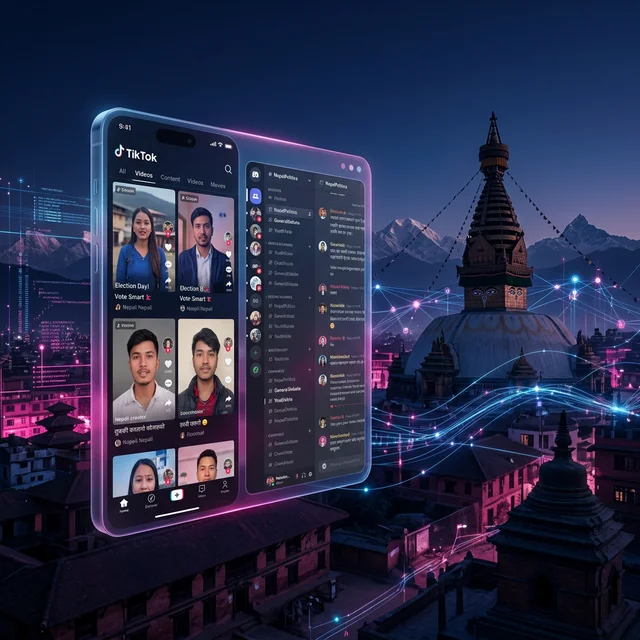
In Nepal, the conditions for viral marketing are ripe, thanks to high mobile phone penetration and increasingly affordable data. Platforms like TikTok, Facebook, Instagram, and even Viber are the primary battlegrounds where content spreads like wildfire. Nepali audiences respond strongly to content that is relatable, humorous, and taps into cultural nuances, local trends, or national pride. Memes, short-form video content, and posts in Nepali language (or a mix of Nepali and English) have a much higher chance of being shared.
The close-knit nature of Nepali society, both online and offline, can be a double-edged sword. A positive campaign can spread incredibly fast through family and friend circles. However, negative sentiment or a poorly executed campaign can also backfire just as quickly. Brands like Daraz and Pathao have successfully leveraged meme marketing and trend-jacking during events like 11.11 or local festivals, creating content that users share for its entertainment value. Similarly, digital wallets like eSewa and Khalti built their initial user bases almost entirely on viral referral programs, turning every user into an advocate.
For Nepali businesses, the key is authenticity. A campaign that feels too corporate or disconnected from local reality will likely fail. Instead, focus on creating content that reflects the everyday lives, aspirations, and humour of Nepalis. Partnering with local content creators and meme pages can be a highly effective way to seed a campaign. Don’t underestimate the power of Viber groups; a useful tip or a funny video shared in a few large groups can kickstart a viral cascade.
Practical Examples
-
Beginner: The Social Media Contest
A new restaurant in Pokhara posts a high-quality photo of its signature dish on Instagram. The caption reads: “Want to win a free dinner for two? 1. Follow our page. 2. Like this post. 3. Tag 3 friends in the comments who you’d share this with!” This simple mechanism encourages sharing and expands the post’s reach to new, relevant audiences with minimal effort.
-
Intermediate: The Referral Program
A Nepali clothing brand launches an e-commerce store. They implement a “Refer a Friend” program. When a customer signs up, they get a unique referral link. If they share it and a friend makes a purchase, the original customer gets 200 NRs in store credit, and the new customer gets a 15% discount on their first order. This creates a clear, incentivized viral loop.
-
Advanced: The Free Tool
A finance company in Nepal creates a simple, free, and highly useful web tool: an “EMI and Loan Calculator for Nepal.” It’s mobile-friendly and helps users calculate monthly payments for home, auto, and personal loans from major Nepali banks. The tool has a subtle “Powered by [Your Finance Company]” logo. As people use and share this genuinely helpful tool, the company gains massive brand visibility and is seen as an authority in the space, generating high-quality leads.
-
Nepal-Specific Case: Khalti’s “Refer & Earn”
Khalti’s initial growth was heavily powered by its “Refer & Earn” campaign. They offered a direct cash bonus (e.g., NRs 20) to a user for every new person who signed up using their referral code. This turned their entire user base into a motivated, commission-based sales force, dramatically lowering their customer acquisition cost and helping them compete with established players.
Key Takeaways
- Viral marketing is about creating something people want to share, not just something you want them to see.
- It leverages the trust and reach of personal networks, making it more credible and cost-effective than traditional advertising.
- In Nepal, success depends on understanding local culture, humour, and leveraging mobile-first platforms like TikTok, Facebook, and Viber.
- Incentives, like the referral programs used by Khalti and Pathao, are a proven method to engineer and accelerate virality.
- Focus on providing value first, whether through entertainment (a funny video), utility (a free tool), or emotion (an inspiring story).
Common Mistakes
- Trying too hard to be “viral”: Creating content that is inauthentic, copies a trend too late, or feels forced. Audiences can spot this easily, and it can damage your brand’s credibility.
- No clear call-to-action (CTA): Your content might get a million views, but if viewers don’t know what to do next (visit your website, download your app, buy your product), the virality has no business impact.
- Making it difficult to share: Hiding content behind a sign-up form, having a slow-loading website, or not including obvious share buttons are simple technical mistakes that can completely kill a campaign’s potential to spread.