Definition
In digital marketing, traffic refers to the number of visitors who come to your website, app, or social media page. It’s the digital equivalent of the number of people walking into a physical shop.
Detailed Explanation
Traffic is the lifeblood of any online business because every visitor represents a potential customer. It’s the very first step in the digital customer journey; without visitors, you have no one to sell to, inform, or engage with. The primary goal of many marketing activities, such as Search Engine Optimization (SEO), social media marketing, and paid advertising, is to increase the amount of relevant traffic.
In practice, traffic is measured by tracking users who land on your digital properties. These visitors can come from various channels: Organic traffic from search engines like Google, Paid traffic from ads, Social traffic from platforms like Facebook or TikTok, Referral traffic from links on other websites, and Direct traffic from users typing your URL directly. It’s crucial to understand that not all traffic is equal. 100 visitors who are genuinely interested in your product are far more valuable than 1,000 visitors who landed on your site by accident and leave immediately. This is the concept of quality over quantity.
A common misconception is that more traffic automatically leads to more sales. While traffic is essential, it’s only one piece of the puzzle. If your website is slow, difficult to navigate, or your products are not compelling, even a massive amount of traffic won’t convert into customers. The goal is to attract the right people and then provide them with a great experience.
Nepal Context
In Nepal, the concept of traffic has unique characteristics driven by our digital landscape. With the explosion of mobile internet users, primarily through services like Ncell and Nepal Telecom, the vast majority of web traffic is mobile. For any Nepali business, this means a mobile-first website design isn’t just a good idea—it’s essential. If your site loads slowly on a 4G connection or is hard to use on a small screen, you will lose potential customers.
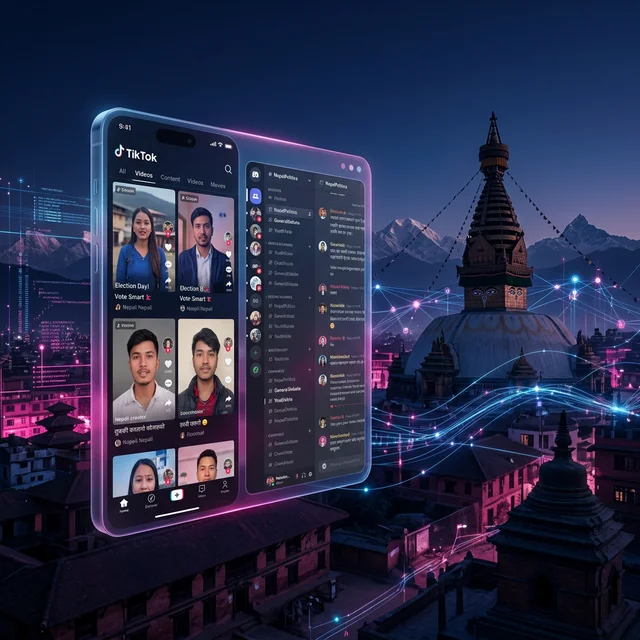
The most popular sources of traffic in Nepal are social media platforms. Facebook, Instagram, and increasingly TikTok are not just for socializing; they are major commercial channels where businesses drive visitors to their pages or websites. Additionally, apps like Daraz, Pathao, and Hamro Patro have become primary traffic destinations themselves, creating their own ecosystems. For example, a small business might get more initial traffic by becoming a seller on Daraz than by building its own website from scratch. The rise of digital wallets like eSewa and Khalti also generates significant app traffic, as users log in to pay bills, buy tickets, and more.
A key opportunity for Nepali businesses is leveraging local language content. Creating content in Nepali (using Devanagari script) or even Romanized Nepali (“Tapai lai kasto chha?”) can attract a highly engaged local audience through search and social media. The challenge, however, remains reaching audiences beyond the major cities like Kathmandu, Pokhara, and Chitwan, where internet infrastructure can be less reliable. Therefore, a practical tip is to create lightweight, fast-loading web pages and use platforms with massive local reach, like Viber Communities and Facebook Groups, to drive targeted traffic.
Practical Examples
1. Beginner: A Local Bakery
A new bakery in Patan creates a Facebook page. They post high-quality photos of their cakes and breads daily. In their posts, they encourage followers to click the link in their bio to see their full menu on their simple website. This drives social traffic and helps them get their first online orders.
2. Intermediate: A Trekking Agency
A trekking agency in Kathmandu wants to attract international clients. They write a detailed blog post titled “Ultimate Guide to Everest Base Camp Trek for Beginners.” Using SEO, they get this article to rank on the first page of Google. Now, when people worldwide search for information on this trek, they find the agency’s website, driving high-quality organic traffic that is very likely to convert into bookings.
3. Advanced: An E-commerce Store
An online clothing store in Nepal wants to boost sales during Dashain. They run a targeted Facebook and Instagram ad campaign showing their new collection to users aged 18-35 living in major Nepali cities who have shown interest in fashion. The ad leads to a specific landing page with a “Dashain Discount.” This drives highly relevant paid traffic and tracks conversions to measure the ad’s success, calculating the Return on Ad Spend (ROAS).
4. Nepal-Specific: A Restaurant
A restaurant in Jhamsikhel partners with a popular Nepali food blogger on Instagram. The blogger visits the restaurant and posts a video Reel about their experience, tagging the restaurant’s page and adding a link to their menu in their stories. This single post can drive hundreds of visitors (referral traffic) to the restaurant’s social media page and website in just a few hours.
Key Takeaways
- Traffic is the number of visitors to your digital platforms, and it’s the first step to getting customers online.
- Focus on attracting high-quality, relevant traffic, not just increasing visitor numbers.
- In Nepal, the majority of traffic is mobile, so your website must be fast and easy to use on a phone.
- The main traffic sources for Nepali businesses are often social media (Facebook, TikTok) and popular local apps (Daraz, Pathao).
- Traffic is useless if your website or app provides a poor user experience.
Common Mistakes
- Buying Fake Traffic: Paying for low-quality, automated bots to visit your site. This inflates your numbers but brings zero real customers and can even get your site penalized by Google.
- Ignoring Analytics: Not using tools like Google Analytics to understand where your traffic is coming from, who your visitors are, and what they do on your site. Without this data, you’re just guessing.
- Relying on a Single Source: Getting 95% of your traffic from Facebook ads is risky. If your ad account gets blocked or ad costs rise, your business is in trouble. Diversify your traffic sources across organic search, social media, email, and others.