Unit 8.4
Descriptive Analytics: Understanding What Happened
Learning Objectives
By the end of this session, you will be able to:
- ✅ Define Descriptive Analytics and its primary purpose.
- ✅ Identify the key question that descriptive analytics answers.
- ✅ Describe the main techniques used, such as reporting, aggregation, and visualization.
- ✅ Understand the role of dashboards in monitoring business performance.
The Foundation of Business Insight
Descriptive Analytics: The process of summarizing historical data to understand what has happened in the past.
It provides a retrospective (backward-looking) view of business operations.
It's the essential first step. Before you can predict the future, you must understand the past.

The Core Question: "What happened?"
Descriptive analytics turns raw data into answers for past events. It helps us understand performance by answering questions like:
- What were our total sales last quarter?
- Which of our products was the most profitable?
- How many customer complaints did we receive last month?
- What was our website traffic last week?
Key Techniques & Tools 🛠️
We use a range of techniques to summarize data and find insights.
Reporting
Routine summaries of key metrics (daily, weekly, monthly).
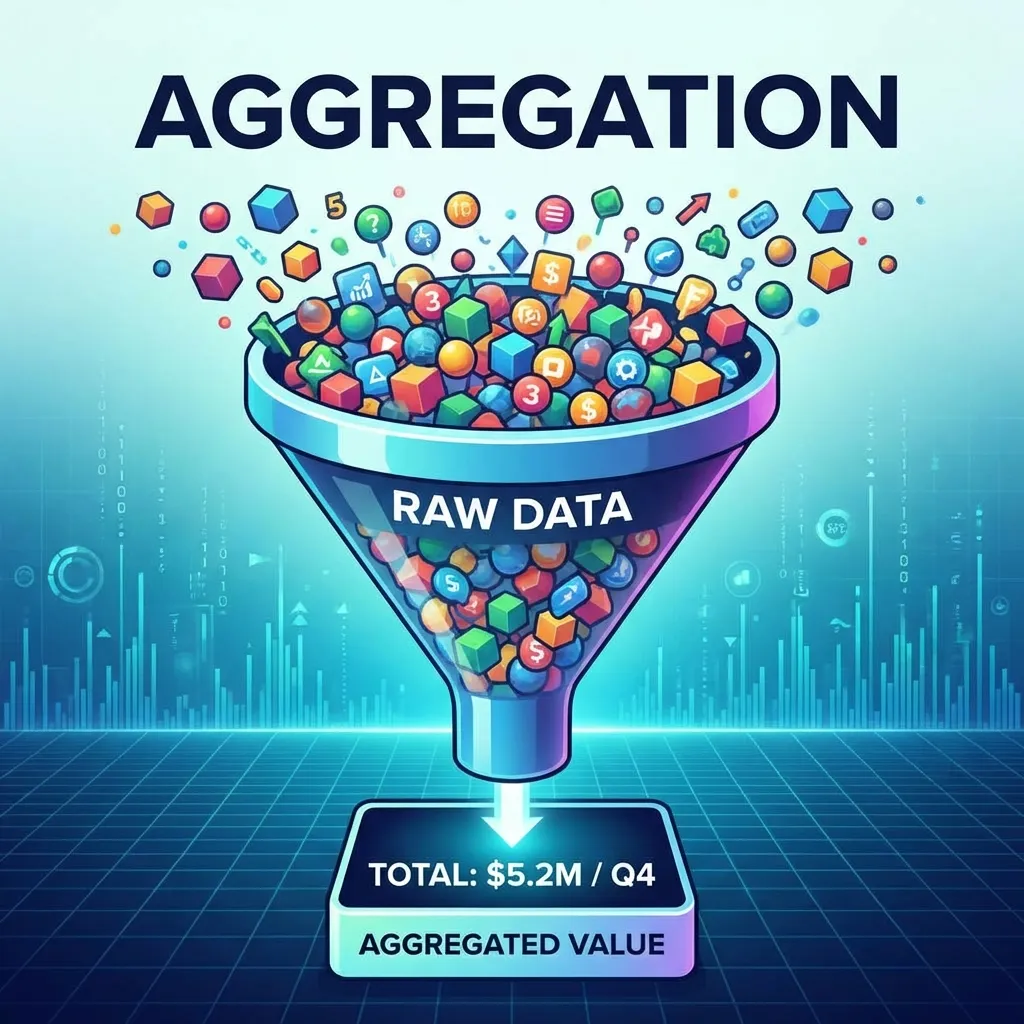
Data Aggregation
Gathering and summarizing data (e.g., sum, average, count).
Data Visualization
Presenting data in graphical formats like charts and graphs.
Technique 1: Reporting & Aggregation
📊 Standard Reporting
The creation of routine reports that provide a summary of key business metrics on a regular basis.
Example: A monthly sales report emailed to all department heads.
🔢 Data Aggregation
The process of gathering data and summarizing it in a simple, statistical format.
Common aggregations:
- Sum, Average (Mean), Median, Count, Percentage
Technique 2: Data Visualization
"A picture is worth a thousand rows of data."
Data Visualization: The practice of presenting data in a graphical format, such as charts, graphs, and maps, to easily identify trends, patterns, and outliers.
Common types include bar charts, line charts, pie charts, and heat maps.
Bringing It All Together: Dashboards 🎯
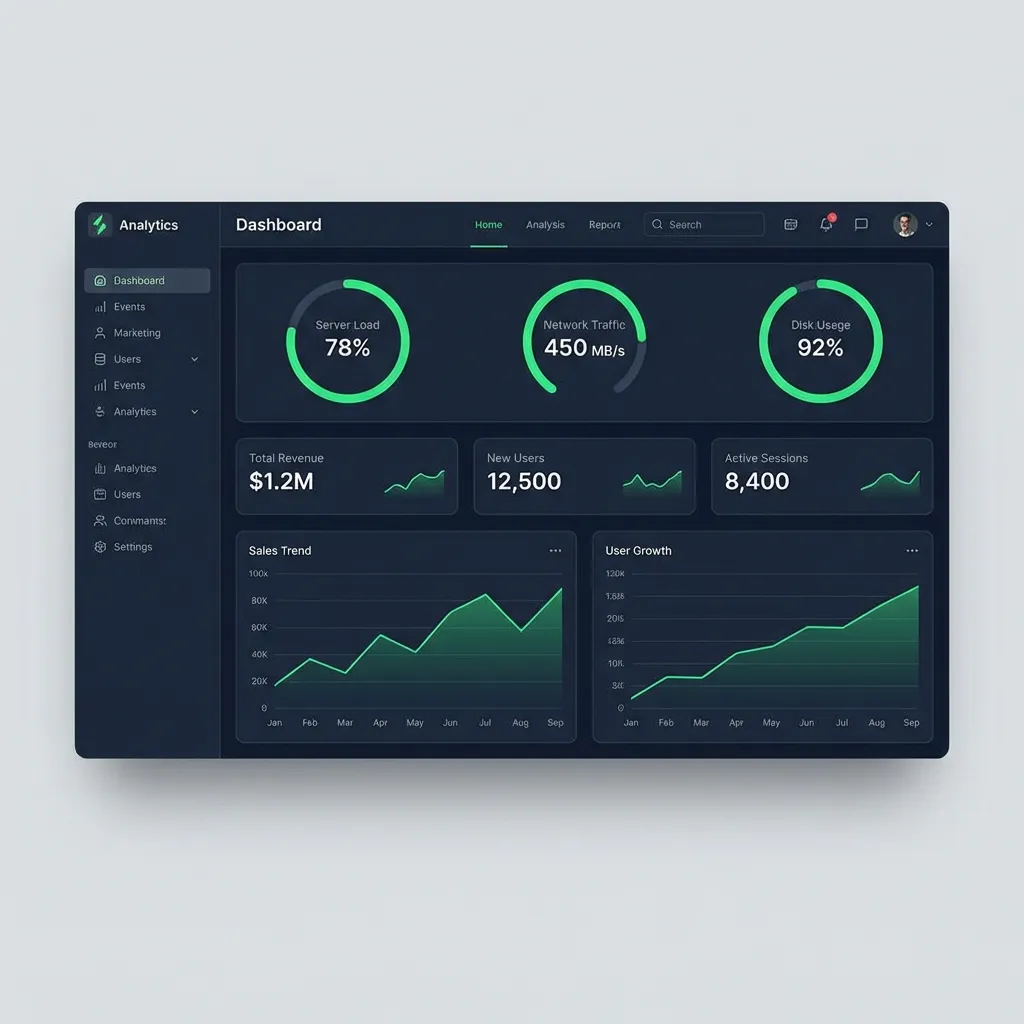
A Dashboard is a data visualization tool that displays a real-time summary of Key Performance Indicators (KPIs) and other important business metrics on a single screen.
Dashboards are a very common application of descriptive analytics.
They allow managers to monitor the health of the business at a glance.
Descriptive Analytics in the Real World
📈 Sales
A sales manager uses a dashboard to view total revenue by region, product, and salesperson for the previous quarter.
📢 Marketing
An analyst creates a report showing the performance of a recent ad campaign, including click-through rate and cost per acquisition.
🌐 Web Analytics
A website manager looks at a Google Analytics report to understand visitor numbers, popular pages, and traffic sources.
👥 Human Resources
An HR manager reviews a report on the employee turnover rate for the past year, broken down by department.
Local Context: Descriptive Analytics in Nepal
Scenario: An e-commerce site in Nepal (e.g., Daraz)
Managers would use a descriptive analytics dashboard to answer:
- 🔍 Which products were the top sellers during the Dashain festival season?
- 🔍 What is the average delivery time for orders within Kathmandu Valley vs. outside?
- 🔍 Which payment method (eSewa, Khalti, Cash on Delivery) is most popular?
- 🔍 How many new customers did we acquire last month?
A Key Limitation ⚡
While extremely useful, descriptive analytics has its limits.
It tells you WHAT happened, but it does not explain WHY it happened or WHAT WILL happen next.
Answering "why" requires Diagnostic Analytics.
Answering "what will happen" requires Predictive Analytics.
Summary & Key Takeaways
- Descriptive analytics summarizes historical data to show what has happened.
- It is the essential foundation for all other types of analytics.
- Key tools include reports, data aggregation, data visualization, and dashboards.
- It is used to monitor business performance and Key Performance Indicators (KPIs).
Thank You
Any Questions?
Next Topic: Unit 8.5: Predictive Analytics: Forecasting What Will Happen | IT 233