Unit 6.1
Unit 6 Intro: Information Systems within Organizations
Learning Objectives
By the end of this introductory chapter, you will be able to:
- ✅ Differentiate between the major types of information systems used within an organization.
- ✅ Explain the foundational role of Transaction Processing Systems (TPS).
- ✅ Describe Functional Area Information Systems (FAIS) and the challenge of "information silos."
- ✅ Define Enterprise Resource Planning (ERP) systems and their purpose in business integration.
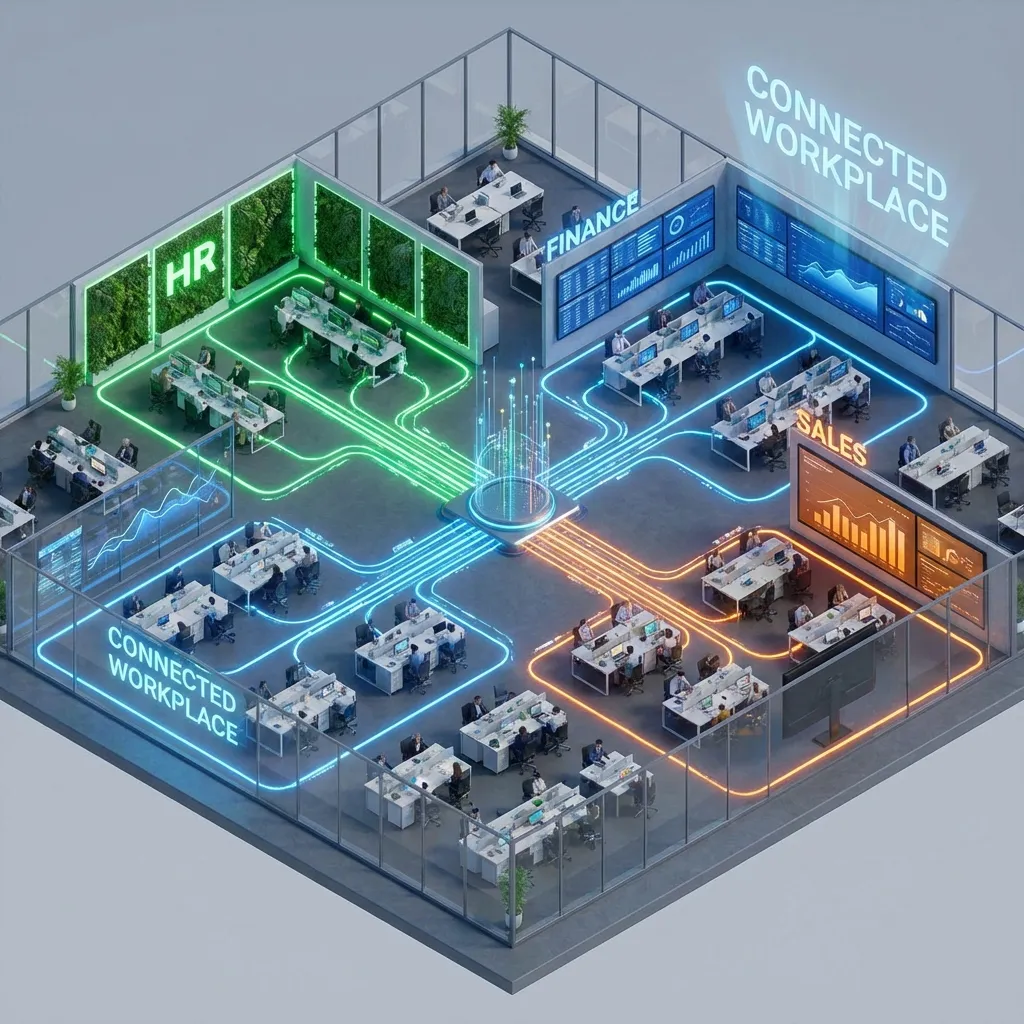
The IT Landscape is Not Flat
Organizations are complex, and their information systems reflect that. Systems are tailored for different needs.
Different Levels, Different Needs
- Operational: Day-to-day activities.
- Managerial: Mid-term planning & control.
- Strategic: Long-term goals & direction.
Different Functions, Different Tools
- Accounting & Finance: Managing money.
- Marketing & Sales: Managing customers.
- Human Resources: Managing people.
A Hierarchical View of Systems
Think of systems as a pyramid, with each layer supporting the one above it.
(Executive IS, Dashboards)
(Management IS, FAIS)
(Transaction Processing Systems - TPS)
Interactive: Explore the IS Pyramid
Click each level of the pyramid to discover which information systems operate there.
Each level above relies on data flowing up from the level below.
🔑 The entire pyramid is built on the vast amount of data captured by Transaction Processing Systems (TPS) at the base.
This Unit's Key Players 🔍
We will explore three fundamental types of systems that form the backbone of modern organizations.
1. TPS
Transaction Processing Systems
The workhorses that capture daily business data.
2. FAIS
Functional Area Information Systems
The specialists that serve specific departments.
3. ERP
Enterprise Resource Planning
The integrators that unite the entire organization.
1. Transaction Processing Systems (TPS) ⚡
Definition: Systems that monitor, collect, store, and process data generated from all routine business transactions.
Core Characteristics:
- Handles high volume of data in real-time.
- Must be reliable, fast, and accurate.
- Forms the input for most other information systems.
Example: A supermarket's Point-of-Sale (POS) system scanning barcodes, calculating totals, and processing a payment via Fonepay.
Simulate: TPS in Action
Walk through each step of a Point-of-Sale transaction at a Kathmandu supermarket. Click the active step to proceed.
2. Functional Area IS (FAIS) 🎯
Definition: Systems designed to support the specific information needs of a single functional area or department.
Finance & Accounting IS
- Financial planning
- Accounts payable/receivable
Human Resources IS
- Recruitment tracking
- Payroll management
The Problem with FAIS: Information Silos
When each department has its own system, data becomes trapped.
Imagine the Sales department's system can't see the real-time stock levels in the Warehouse department's system. A customer might order an item that is out of stock.
Consequences of Silos:
- Data is duplicated and often inconsistent.
- Lack of a single, enterprise-wide view of the business.
- Inefficient processes and poor decision-making.
Quiz: Spot the Silo
Each scenario below describes a real business situation. Decide whether it is an information silo consequence or not.
Scenario A: The Sales department confirms a large order for 200 units, but the Warehouse system (which Sales cannot access) shows only 50 in stock. The customer is disappointed.
Scenario B: When a sale is processed in the ERP system, the inventory count is automatically reduced and the Finance module reflects the updated revenue in real time.
Scenario C: HR records a promotion in their spreadsheet, but the Payroll system never receives the update. The employee is paid at the old salary next month.
3. The Solution: ERP Systems 🌐
Definition: Integrated software systems that manage all core business processes using a single, unified database.
ERP systems break down the information silos by creating a central hub.
🎯 The Goal: To create a single source of truth for the entire organization, from finance to manufacturing to HR.
FAIS vs. ERP at a Glance
FAIS (The Silos)
- Department-specific
- Multiple, separate databases
- Can lead to data inconsistency
- Difficult cross-departmental reporting
ERP (The Integrator)
- Organization-wide
- One central, unified database
- Provides a single source of truth
- Enables integrated business processes
Interactive: Classify Each Feature
Click each feature pill to assign it to FAIS or ERP. Then click Check Answers.
Practical Application in Nepal
Example: A Local E-commerce Company (e.g., Daraz)
- TPS in Action: When you place an order, the system processes the payment (via eSewa/Khalti), confirms the transaction, and sends an order confirmation. This is a classic TPS function.
- FAIS Challenge: Initially, their marketing team might use a separate tool for email campaigns, while the warehouse uses a different system for inventory. The two systems don't talk to each other.
- ERP Solution: A unified ERP system connects your order (Sales) to the warehouse (Inventory), notifies the delivery partner (Logistics), and updates the financial records (Accounting) all in real-time from a single platform.
Match the Nepal Scenario to the IS
Four real-world scenarios from Nepali businesses — click the correct IS type for each.
Unit 6 Intro: Key Takeaways
- ✅ Organizations use a variety of systems (TPS, FAIS, ERP) to support different functions and levels.
- ✅ Transaction Processing Systems (TPS) are the foundation, capturing the high volume of daily operational data.
- ✅ Functional Area IS (FAIS) are specialized but can create inefficient "information silos" that isolate data.
- ✅ Enterprise Resource Planning (ERP) systems aim to solve the silo problem by integrating all business functions into a single, unified system.
Review Questions 📝
- What is a transaction processing system?
- What is an information silo?
- Distinguish between IaaS, PaaS, and SaaS.
- Explain the types of information systems found within an organization and how they relate to each other.
- What is an ERP system? Discuss its benefits and limitations, with reference to organizations in Nepal.
Revise the answers in the full note.
Thank You
Next, we will take a deeper dive into the workhorses of the organization...