Unit 5.2
What is Web 2.0? The Foundation of the Social Web
Learning Objectives 🎯
By the end of this chapter, you will be able to:
- ✅ Define Web 2.0 and explain how it differs from Web 1.0.
- ✅ Identify the key principles of Web 2.0, such as user-generated content and the wisdom of crowds.
- ✅ Describe the core technologies that enable Web 2.0, including AJAX, RSS, and social networking platforms.

The Great Shift: From Web 1.0 to Web 2.0 📊
Web 1.0: The "Read-Only" Web
- Static pages
- Content flows one-way (creator → user)
- Passive consumption
- Like reading a digital encyclopedia
- Example: Early corporate websites
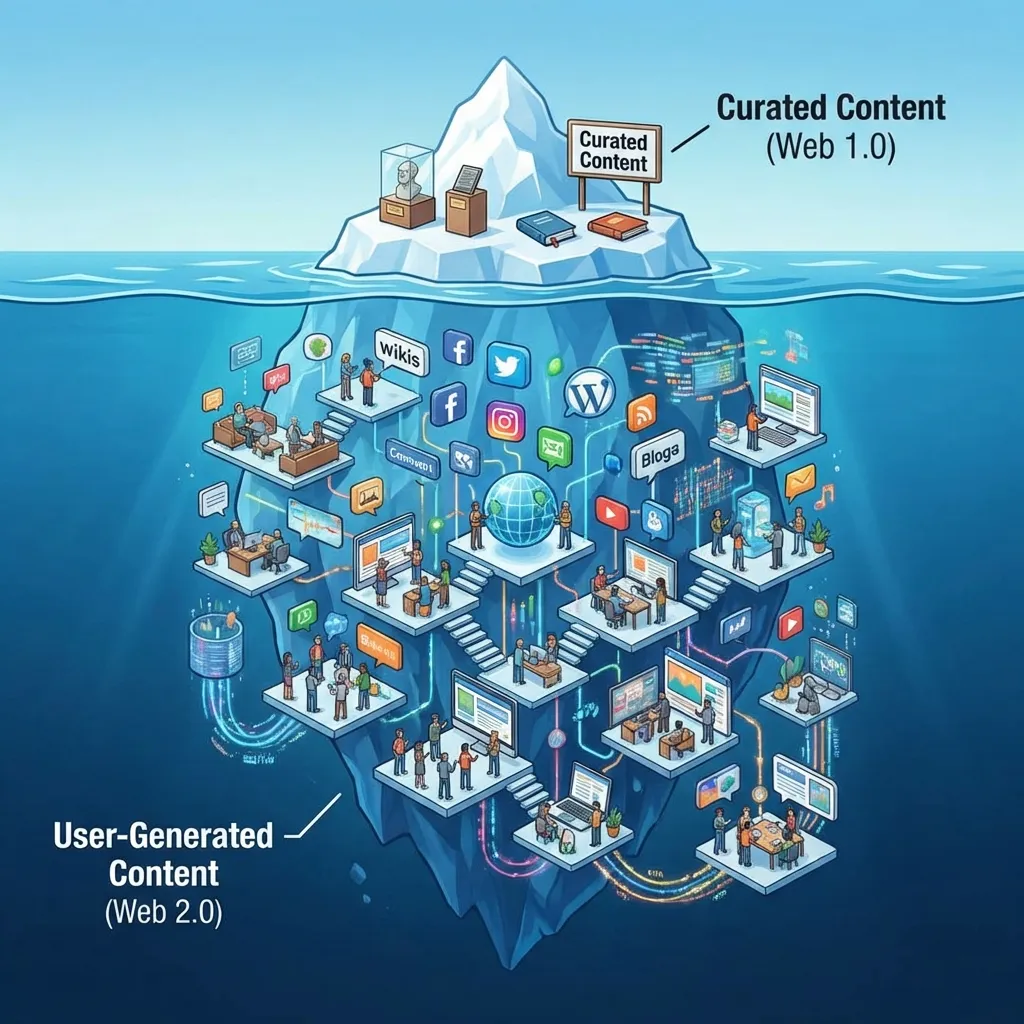
Web 2.0: The "Read/Write" Web
- Dynamic and interactive
- Users are creators and participants
- Collaboration and social interaction
- Like participating in a global conversation
- Example: Wikipedia, YouTube, Facebook
Defining Web 2.0: The Social Web
Web 2.0 is the second generation of the web, characterized by a major shift from static pages to dynamic platforms that emphasize user-generated content, collaboration, and social interaction.
It's not a single technology, but a new philosophy for building websites and applications.
The core idea: The user is no longer just a consumer, but a co-creator of value.
Principle 1: User-Generated Content (UGC)
The cornerstone of Web 2.0. The audience becomes the creator.
📝 Blogs & Wikis
Users write articles on Wikipedia or post their thoughts on Medium.
📸 Media Sharing
Users upload videos to YouTube or share photos on Instagram.
💬 Social Media
Users share updates on Facebook or join conversations on Twitter.
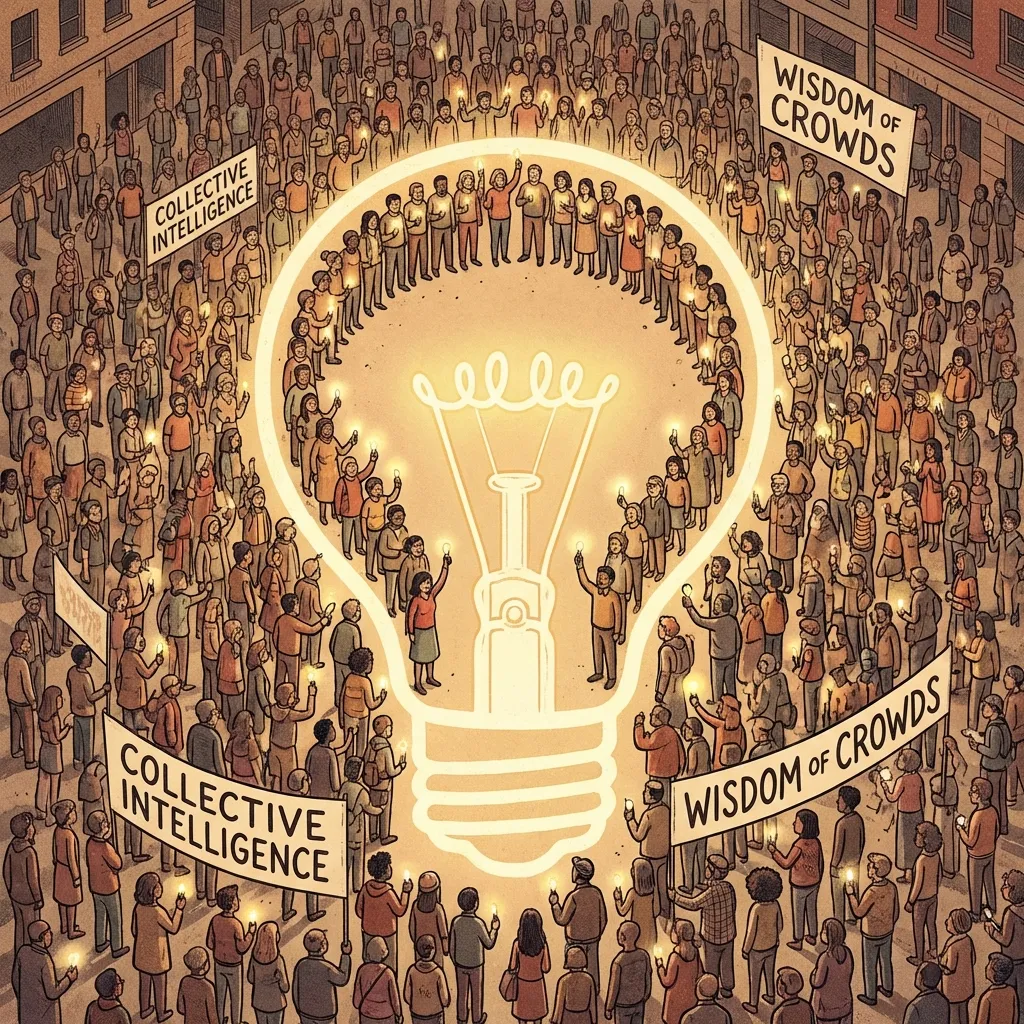
Principle 2: The Wisdom of Crowds 🧠
Harnessing collective intelligence to produce better outcomes than a small group of experts.
- ⭐️ Reviews & Ratings: Customer reviews on Amazon or Daraz.
- 📍 Local Guides: Ratings on Google Maps for restaurants in Kathmandu.
- 🤝 Collaborative Editing: Thousands of editors improving Wikipedia articles.
The belief that the aggregated knowledge of a large group is often more accurate and valuable than that of any single expert.
Key Platforms of Web 2.0
Social Networking
Building and maintaining networks of people with shared interests.
- Facebook: Connecting with friends & family.
- LinkedIn: Professional networking.
- Twitter: Public conversations & news.
Collaboration Tools
Working together in real-time, from anywhere.
- Google Docs: Simultaneous document editing.
- Wikis: Community-built knowledge bases.
- GitHub: Collaborative code development.

Core Technology: AJAX ⚡
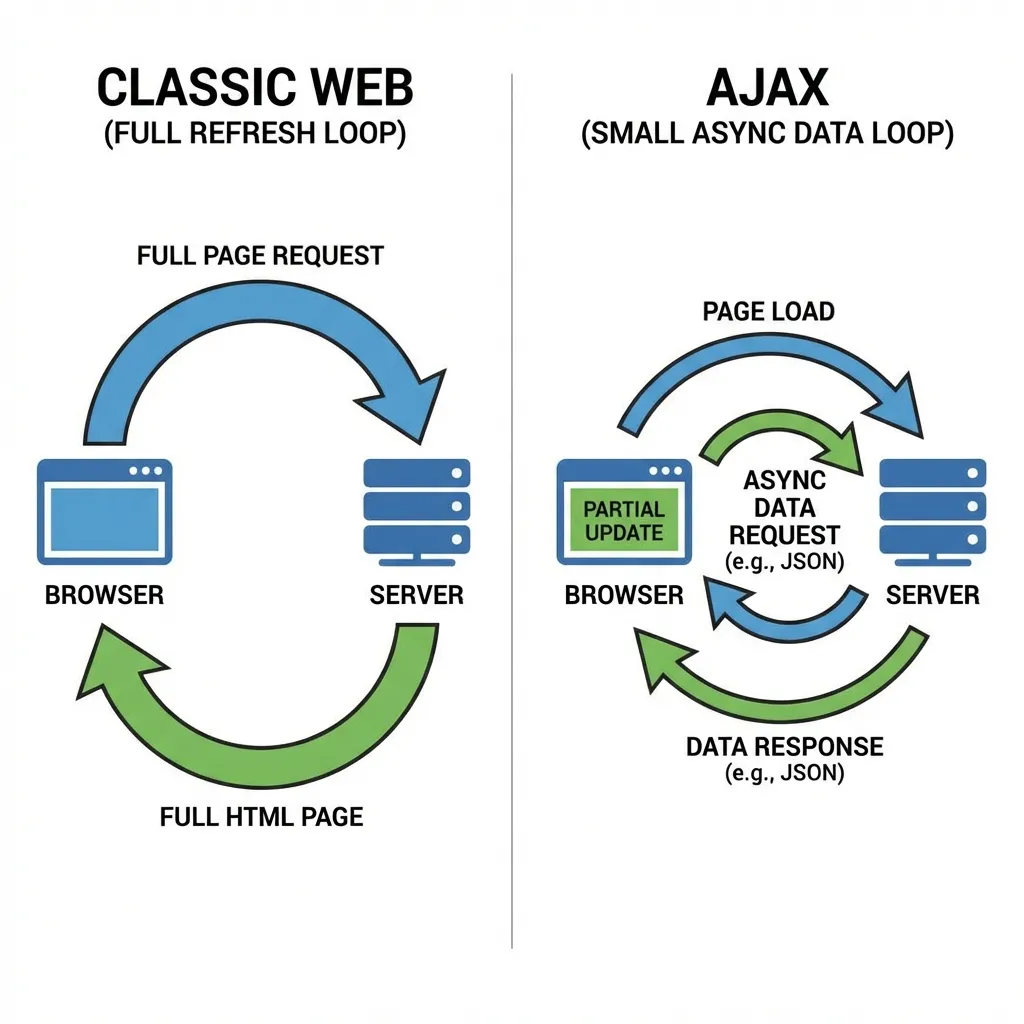
Asynchronous JavaScript and XML
A web development technique that allows parts of a web page to update without reloading the entire page.
The Result: Faster, more responsive web applications that feel like desktop software.
Real-World Example
When you type in Google's search bar, suggestions appear instantly. When you "Like" a post on Facebook, only the button changes. That's AJAX in action!
More Core Technologies
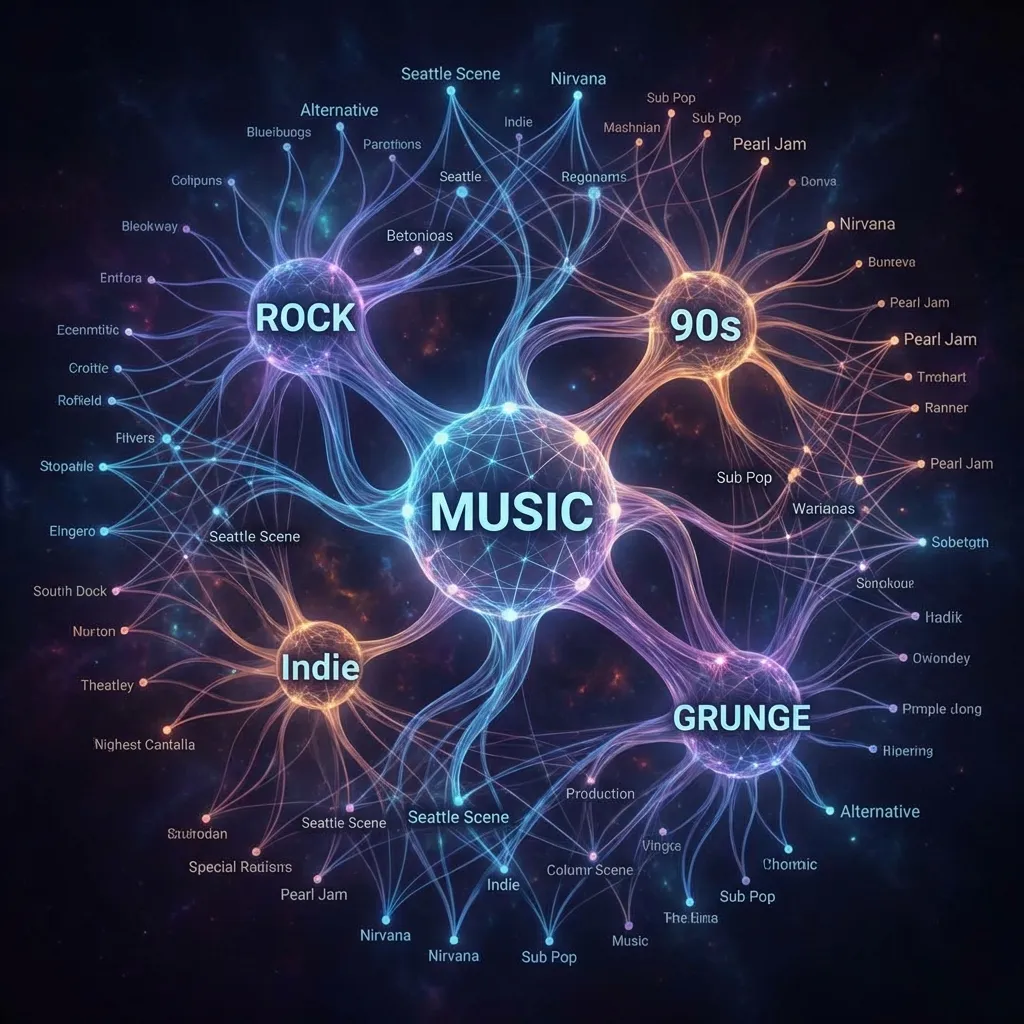
#️⃣ Tagging & Folksonomy
A user-driven classification system.
- Users apply labels (tags) to content.
- The community-created system is a folksonomy.
- Example: Using hashtags like
#VisitNepalor#IT233on Instagram and Twitter.
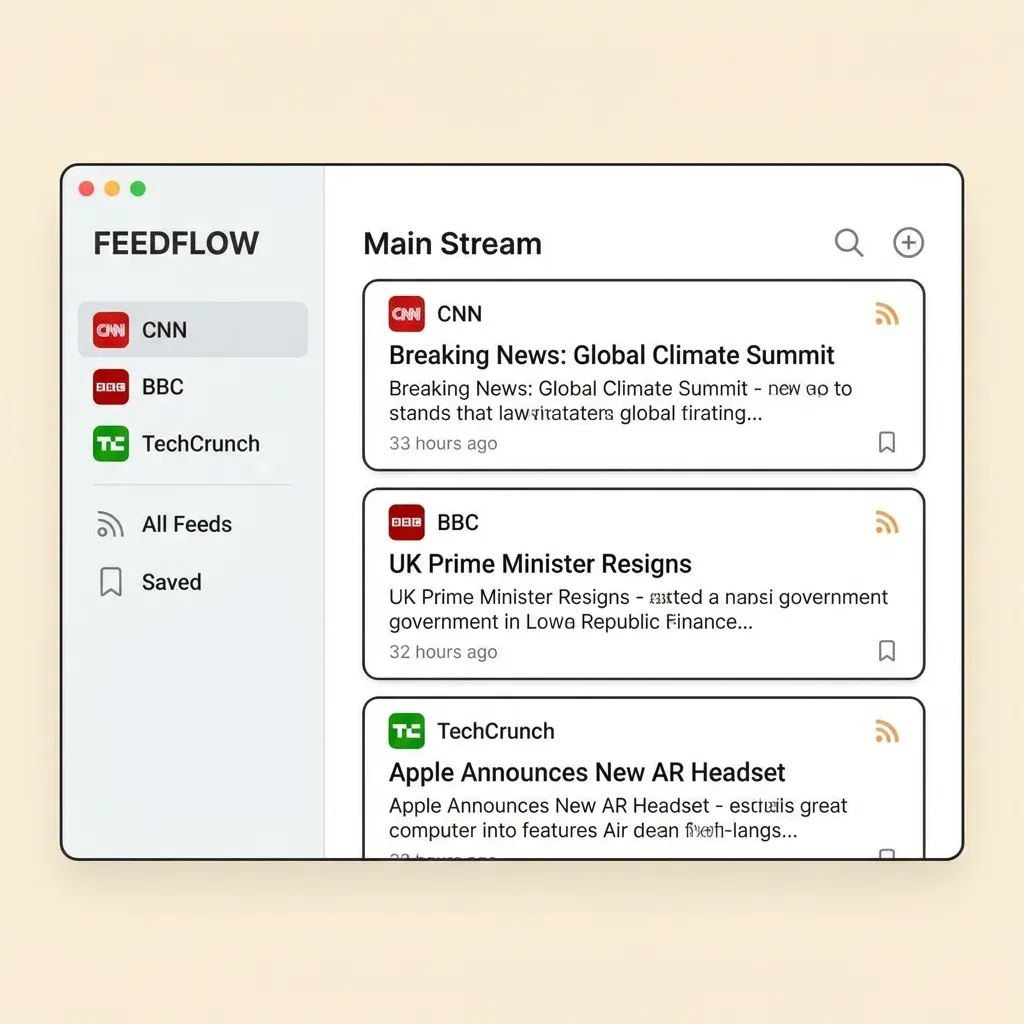
📡 RSS (Really Simple Syndication)
Subscribe to content updates from websites.
- Get new content delivered to a central reader.
- No need to visit each site individually.
- Used by news sites, blogs, and podcasts.
Web 2.0 in a Nepali Context 🇳🇵
How are these principles applied locally?
Daraz & Hamrobazar
Leverage the "wisdom of crowds" through user reviews and seller ratings to build trust in e-commerce.
Foodmandu / Pathao Food
Restaurant ratings and dish reviews are classic UGC, guiding user decisions and improving service quality.
Nepali Facebook Groups
Groups like "Entrepreneurs for Nepal" are hubs for collaboration and user-generated advice, fostering a community.
These platforms succeed by building communities and empowering users, not just by providing a service.
Chapter Summary & Key Takeaways 🔍
- Web 2.0 is the "Read/Write Web," shifting from passive consumption to active participation.
- The core concept is User-Generated Content (UGC), where the audience becomes the creator.
- It leverages the "wisdom of crowds" through reviews, ratings, and collaborative platforms.
- Key technologies like AJAX make web applications feel fast and responsive.
- Web 2.0 isn't just technology; it's a fundamental change in how we use the internet for business and social life.
Discussion & Next Steps
For Your Consideration 🤔
- How has the rise of UGC changed how you evaluate the credibility of information online?
- Is Web 2.0 purely positive, or are there downsides to a web dominated by user-generated content (e.g., misinformation, privacy concerns)?
Next Up: Web 3.0 and the Semantic Web
Thank You!
Any questions?