Unit 4.5
The Internet of Things (IoT) Explained
Learning Objectives
By the end of this chapter, you will be able to:
- ✅ Define the Internet of Things (IoT) and its core concept.
- ✅ Describe the four main stages of how an IoT system works.
- ✅ Provide examples of IoT applications in consumer and industrial settings.
- ✅ Identify the major benefits and challenges associated with IoT, particularly security and privacy.
What is the Internet of Things (IoT)? 🌐
Definition: The network of physical objects—or "things"—embedded with sensors, software, and other technologies to connect and exchange data with other devices and systems over the internet.
In simple terms, IoT is about:
- Extending internet power beyond computers and smartphones.
- Making everyday objects "smart" and connected.
- Gathering data, automating processes, and creating new services.
How IoT Works: A 4-Stage Model
An IoT system follows a simple but powerful four-stage process to turn raw data into meaningful action.
🌡️
1. Collect(Sensors)
📡
2. Transmit(Connectivity)
☁️
3. Process(Cloud)
💡
4. Act(Action/UI)
Let's break down each stage...
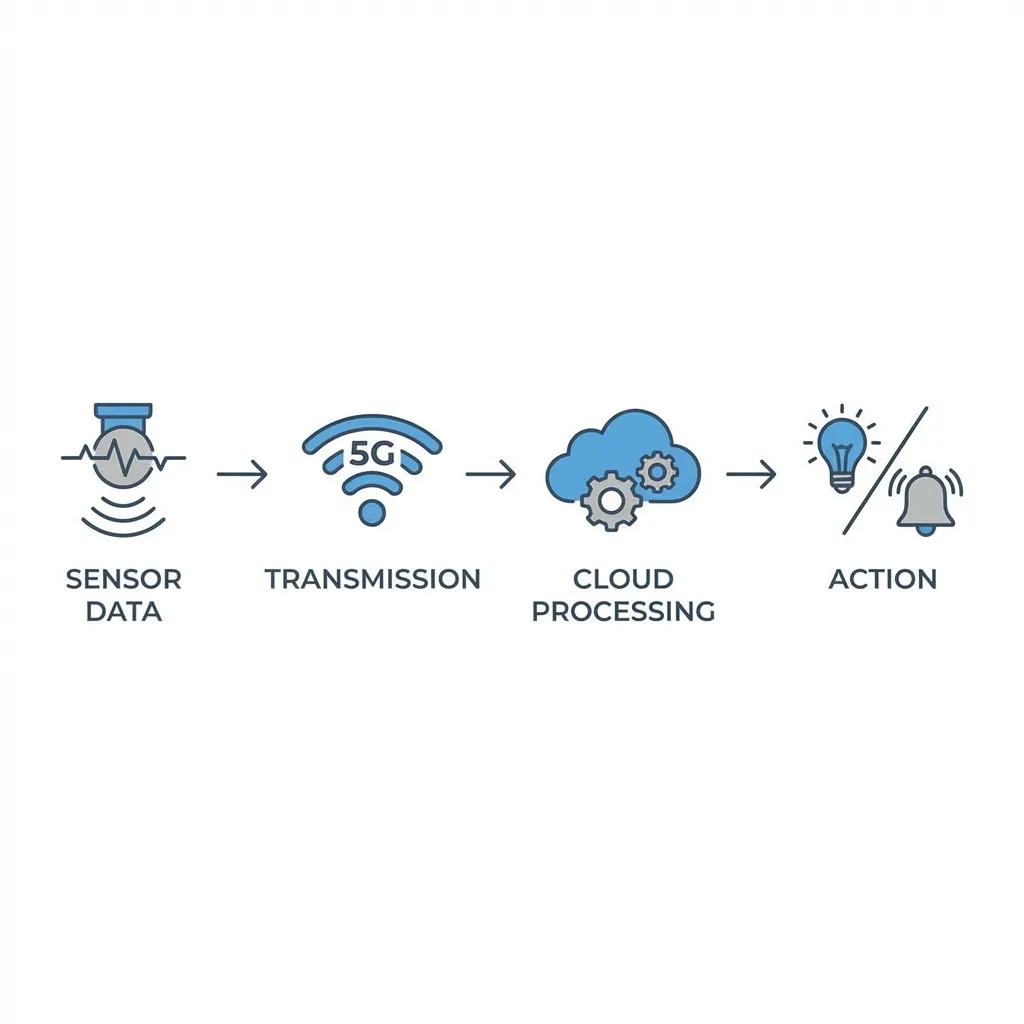
Stages 1 & 2: Data Collection & Transmission
1. Data Collection (Sensors)
The "things" are equipped with sensors to gather data from the physical environment.
- Temperature
- Motion
- Location (GPS)
- Humidity
- Light
2. Data Transmission (Connectivity)
The collected data is sent to a central platform using various network technologies.
- Wi-Fi
- Bluetooth
- Cellular (4G/5G)
- LoRaWAN
Stages 3 & 4: Data Processing & Action
3. Data Processing (The Cloud ☁️)
Data is stored and analyzed in the cloud. This can be:
- Simple: Check if a temperature is within a safe range.
- Complex: Use Machine Learning to predict equipment failure from vibration data.
4. Action / User Interface ⚡
The processed information is used to trigger a response.
- Automated Action: A smart thermostat adjusts the room temperature.
- User Interface: A notification is sent to your phone, or data is shown on a dashboard.
IoT in Action: Consumer Applications
Smart Home 🏠
Monitor and control your home remotely for convenience and energy savings.
Examples: Nest thermostats, Philips Hue lights, Ring doorbells.Wearables ⌚
Track personal health and activity data using sensors worn on the body.
Examples: Fitbit, Apple Watch, Oura Ring.Smart Cities 🏙️
Improve urban management and services for citizens.
Examples: Smart traffic lights, smart parking, waste management.Industrial IoT (IIoT) & Local Context
Industrial IoT (IIoT) 🏭
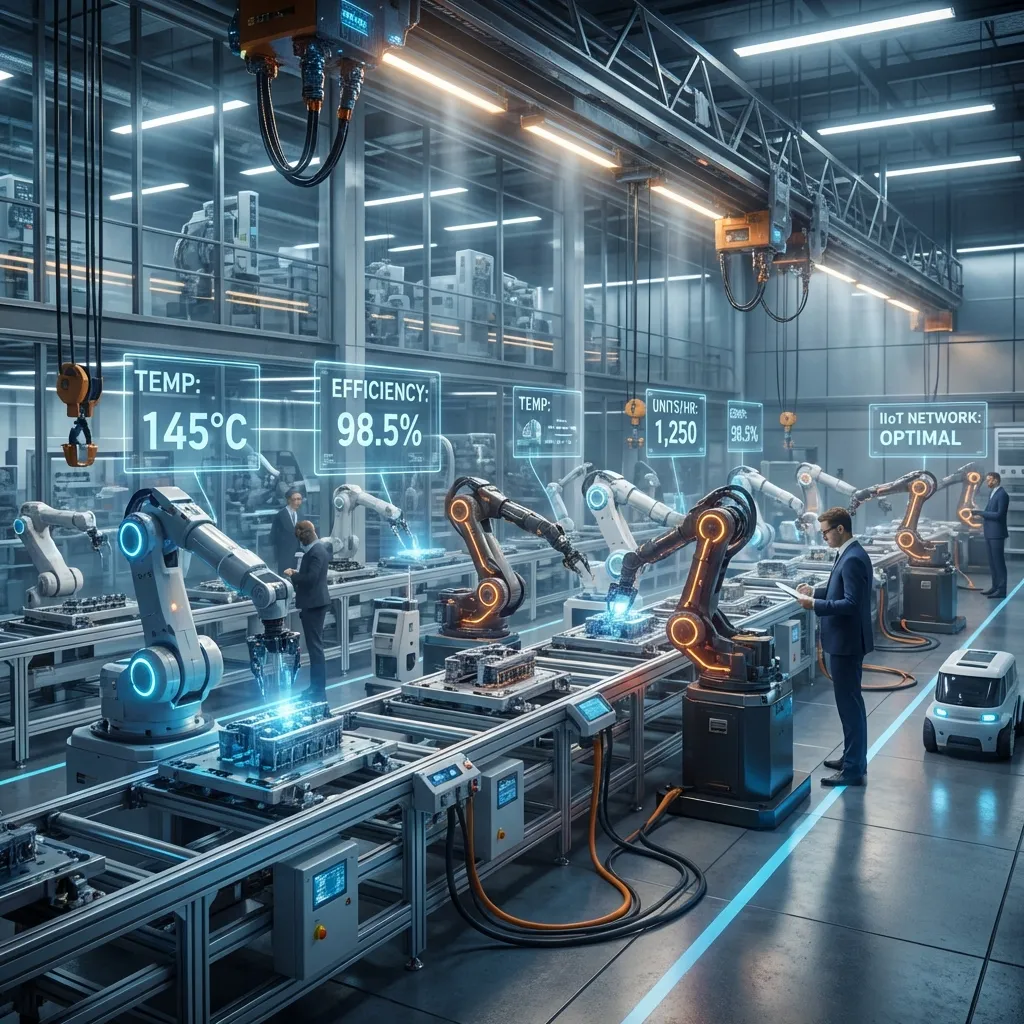
Applying IoT in industrial settings to optimize processes and enhance safety.
- Predictive Maintenance: Sensors on machinery detect early signs of failure, preventing costly downtime.
- Supply Chain & Logistics: Track location and condition (e.g., temperature) of goods in transit.
Local Context: IoT in Nepal 🇳🇵
How can IoT solve local challenges?
- Agriculture: Soil moisture sensors in the Terai region for efficient irrigation.
- Hydropower: Remote monitoring of power plants in hard-to-reach areas.
- Tourism: GPS trackers for trekkers in the Himalayas to improve safety.
The Big Picture: Benefits & Challenges 📊
Benefits of IoT
- ✅ Increased Efficiency
- ✅ Cost Savings
- ✅ Automation of Tasks
- ✅ New Data-Driven Services
- ✅ Improved Safety
Challenges of IoT
- 🚧 Security Vulnerabilities
- 🚧 Data Privacy Concerns
- 🚧 Scalability & Complexity
- 🚧 Lack of Standards
- 🚧 High Implementation Costs
🔍 The Two Biggest Hurdles: Security & Privacy
As we connect more of the physical world, we create new risks that must be managed.
Security 🔒
Every connected "thing" is a potential entry point for a cyberattack.
- Default passwords are a major risk.
- Can be used in large-scale attacks (e.g., botnets).
- Critical infrastructure (power grids, water systems) is a prime target.
Privacy 🕵️
IoT devices can collect vast amounts of personal and sensitive data.
- Who owns the data you generate?
- How is it used, stored, and protected?
- Risk of surveillance and data misuse.
Chapter Summary & Key Takeaways
Recapping the core concepts of the Internet of Things:
- 🎯 IoT is a network of physical objects embedded with sensors and software to connect and exchange data.
- 🎯 The four stages are crucial: Data Collection, Transmission, Processing, and Action.
- 🎯 Key applications range from consumer (Smart Homes, Wearables) to industrial (IIoT, Smart Cities).
- 🎯 Security and Privacy are the two biggest challenges that must be addressed for widespread, trusted adoption.
Thank You
Questions?
Next Topic: Unit 5.1: Learning Objectives 🎯 | IT 233