Unit 3.6
Knowledge Management and the KM Lifecycle
IT 233: Business Information Systems
Learning Objectives
By the end of this chapter, you will be able to:
- ✅ Define Knowledge Management (KM) and its importance to an organization.
- ✅ Differentiate between explicit knowledge and tacit knowledge.
- ✅ Describe the four stages of the Knowledge Management System Lifecycle.
- ✅ Identify the types of tools used in a Knowledge Management System (KMS).
What is Knowledge Management (KM)?
Knowledge Management (KM) is the systematic process of capturing, developing, sharing, and effectively using organizational knowledge.
It’s about making the best use of the collective expertise and insights of people within an organization. 🧠
While data management handles raw facts, KM focuses on the most valuable asset: employee experience and know-how.
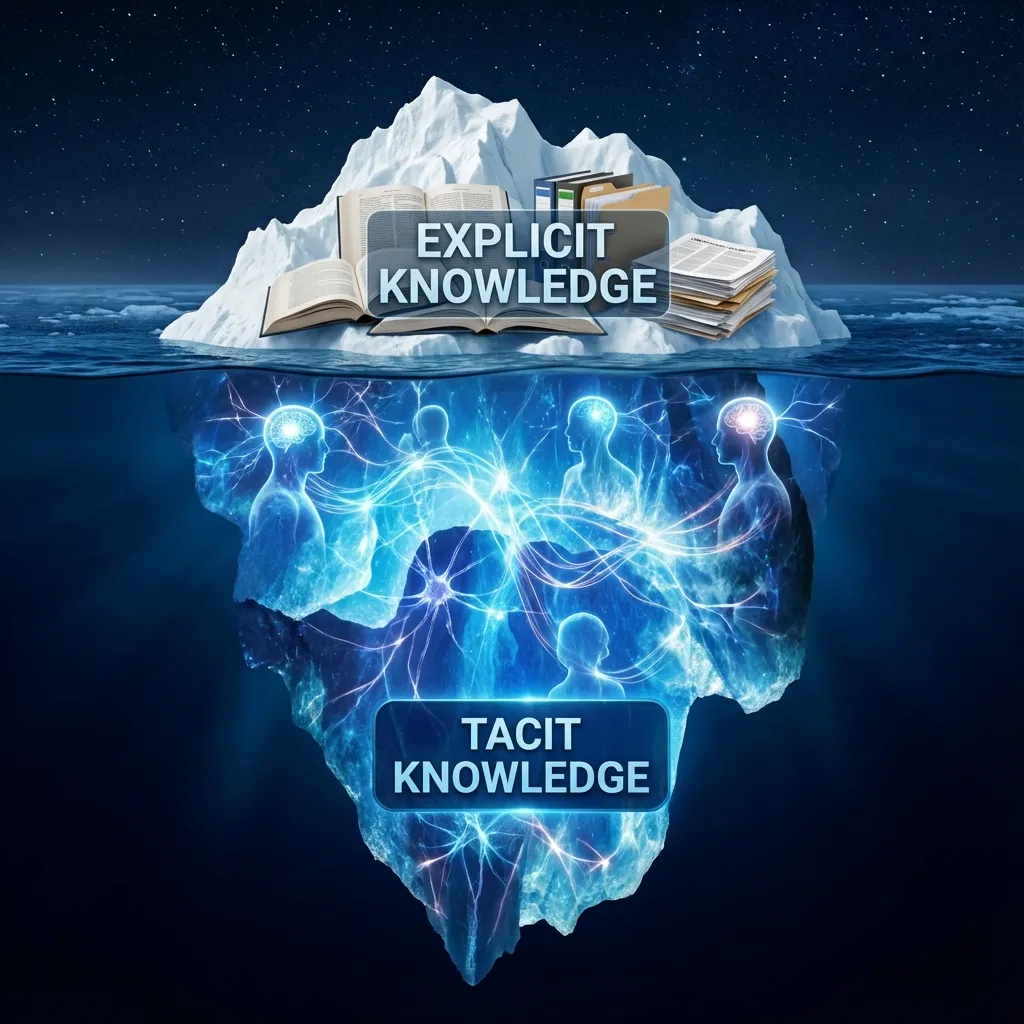
The Two Faces of Knowledge 🎭
Explicit Knowledge (The "What")
Knowledge that is easy to articulate, write down, and share.
- 📜 Reports & Manuals
- 📊 Procedures & Formulas
- 💻 Databases & Tutorials
- Formal and systematic.
Tacit Knowledge (The "How")
Knowledge that is personal, in people's heads, and hard to formalize.
- 💡 Skills & Experiences
- 🤔 Intuition & Insights
- 🎨 "Gut feelings"
- The biggest challenge & opportunity in KM.
Example: Learning to Cook Momos 🥟
How do explicit and tacit knowledge apply?
📜 Explicit Knowledge
- The written recipe
- List of ingredients and measurements
- Step-by-step instructions
- Cooking time and temperature
🤌 Tacit Knowledge
- The "feel" of the perfect dough consistency.
- The muscle memory for folding the pleats quickly.
- An experienced cook's intuition for seasoning the filling.
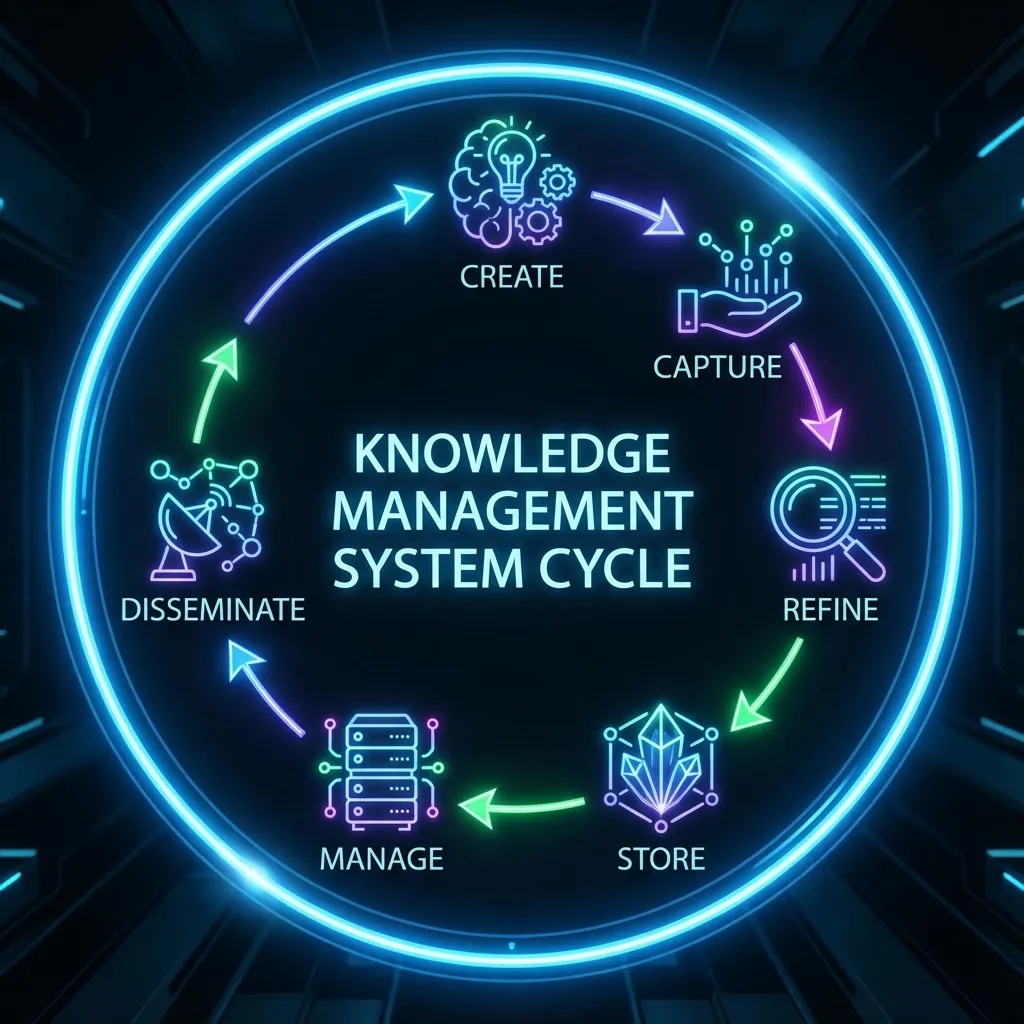
The Knowledge Management Lifecycle 🔄
KM is a continuous cycle, not a one-time project. It ensures knowledge is constantly refined and reused.
(Capture)
(Organize)
(Share)
(Use)
Applying knowledge often creates new knowledge, which starts the cycle all over again.
Lifecycle Stages: Create & Store
1. Create (or Capture) ✍️
Discovering new knowledge or capturing existing (often tacit) knowledge.
- Internal R&D and innovation
- External sources (market research)
- Expert interviews and debriefs
- Documenting best practices
2. Store 🗄️
Organizing knowledge in a central place for easy access.
- Stored in a knowledge repository or base.
- Must be codified, formatted, and indexed.
- The goal: make knowledge findable when needed.
Lifecycle Stages: Disseminate & Apply
3. Disseminate 📡
Making knowledge available to the right people at the right time.
- Company intranets, portals, wikis
- Powerful search engines
- Push notifications and alerts
- Fostering a culture of sharing.
4. Apply 🎯
The most important stage: putting knowledge into action to create value.
- Solving problems faster
- Making better, informed decisions
- Driving innovation and new ideas
- Avoiding "reinventing the wheel."
Knowledge Management Systems (KMS)
KMS: An information system that supports and enhances the process of knowledge management.
A KMS is not a single piece of software.
It's a collection of IT tools and technologies working together to support the KM lifecycle. 🛠️

Common KMS Tools
📄 Document Management Systems
For explicit knowledge: reports, procedures, manuals.
🌐 Intranets & Portals
A central gateway to access company information and applications.
✍️ Wikis
Collaborative sites where employees can contribute and edit content (e.g., an internal Wikipedia).
🔍 Expert Locator Systems
A directory to find people with specific tacit knowledge or skills.
💬 Collaboration Tools
Discussion forums, instant messaging, and video conferencing to share knowledge in real-time.

Practical Application in Nepal 🇳🇵
Scenario: A Senior Engineer at a Hydropower Company is Retiring
How can KM prevent their decades of tacit knowledge from being lost?
- Capture: Record video interviews of them troubleshooting common turbine issues.
- Store: Upload videos and documented procedures to a central knowledge base on the company intranet.
- Disseminate: Make the knowledge base a key part of the training for new junior engineers.
- Apply: A new engineer uses a video tutorial to solve a pressure issue, preventing costly downtime and learning a valuable skill.
⚡ Key Takeaways
- KM is a strategic process to leverage an organization's collective brainpower.
- Tacit knowledge (the "how") is harder to manage but often more valuable than explicit knowledge (the "what").
- The KM lifecycle (Create, Store, Disseminate, Apply) is a continuous loop for organizational learning.
- A Knowledge Management System (KMS) is the collection of IT tools that enables this entire process.
Thank You!
Any Questions?
Next Topic: Unit 4.1: Learning Objectives 🎯 | IT 233