Unit 3.1
Unit 3 Intro: Data and Knowledge Management | IT 233 Notes

Learning Objectives
By the end of this introductory chapter, you will be able to:
- ✅ Differentiate between data, information, and knowledge.
- ✅ Identify the key challenges of managing organizational data.
- ✅ Define the core concepts of Big Data, data warehouses, and data marts.
- ✅ Explain the purpose and importance of knowledge management in a modern organization.
The Information Economy's Most Valuable Asset
In today's business landscape, data is often called "the new oil."
However, raw data by itself is not useful. It must be refined to create value.
This unit explores the journey from raw facts to strategic advantage.
Data ➡️ Information ➡️ Knowledge ➡️ Business Value ⚡
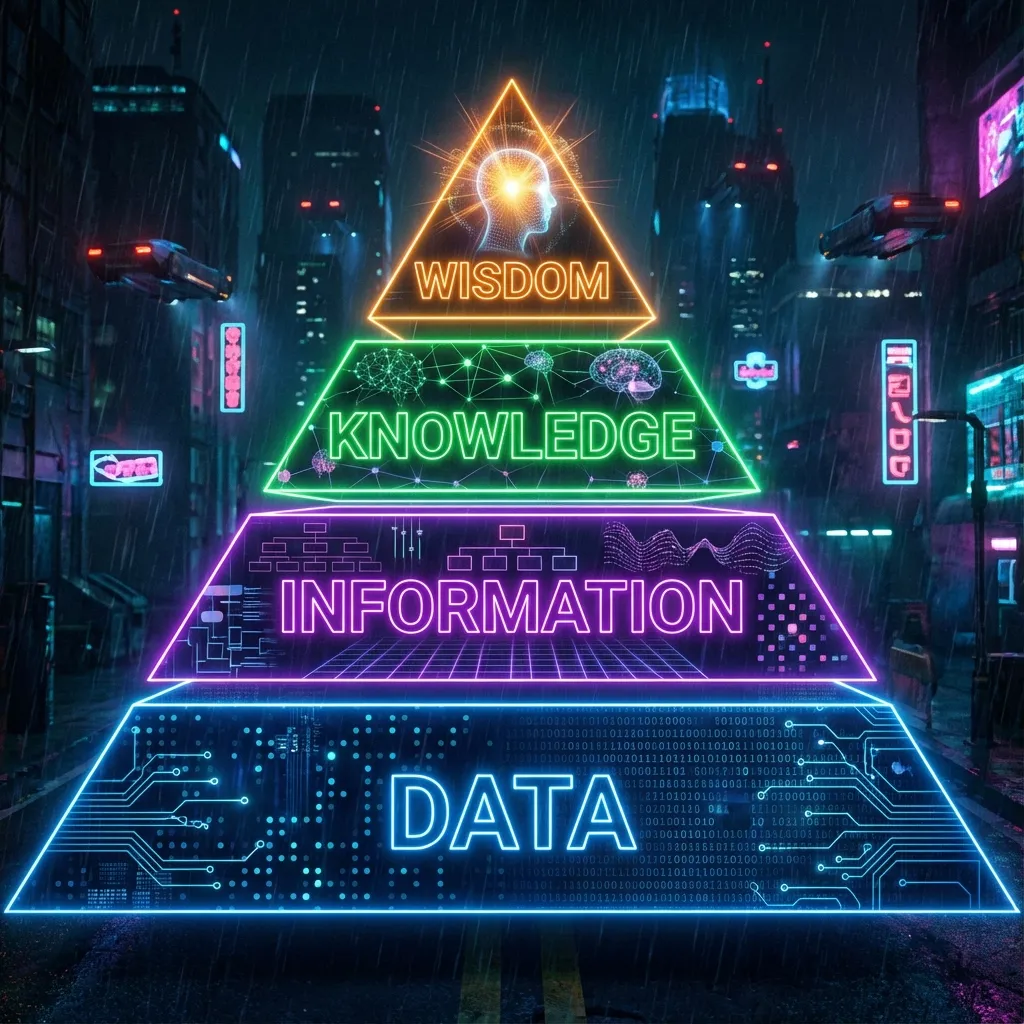
The Data Hierarchy
Understanding the progression is crucial.
1. Data 📊
Raw, unorganized facts and figures. Lacks context.
Example: 120, 150, 95
2. Information ℹ️
Data processed to be useful. It has context and meaning.
Example: Sales for Product A in the last 3 days were 120, 150, and 95 units.
3. Knowledge 🧠
Application of information and experience to make decisions.
Example: Seeing the declining sales trend, we know we should launch a marketing promotion for Product A.

The Data Deluge: Key Challenges
Why is managing data so difficult?
- Volume Explosion: Data is generated at an unprecedented rate from many sources (web, mobile, IoT).
- Data Silos: Information is often trapped in isolated systems across different departments (e.g., Marketing, Sales, HR).
- Quality & Consistency: Ensuring data is accurate, complete, and up-to-date is a constant battle.
- Security & Privacy: Protecting sensitive data from breaches and complying with regulations is critical.
Solution: The Database Approach
Moving from chaos to a structured, centralized system.
Problem: Traditional Files
- Data Redundancy
- Data Inconsistency
- Difficult to Access
- Poor Security
Solution: Database
- Centralized Management
- Minimal Redundancy
- Enforced Standards & Integrity
- Improved Security & Sharing
A Database Management System (DBMS) is the software used to create, manage, and query a database.

Beyond the Spreadsheet: The Rise of Big Data
Big Data refers to datasets so large and complex that traditional data-processing application software is inadequate to deal with them.
Characterized by the "3 V's":
Volume
Massive scale of data (terabytes to zettabytes).
Velocity
High-speed at which data is generated and processed.
Variety
Different forms of data (structured, unstructured, semi-structured).

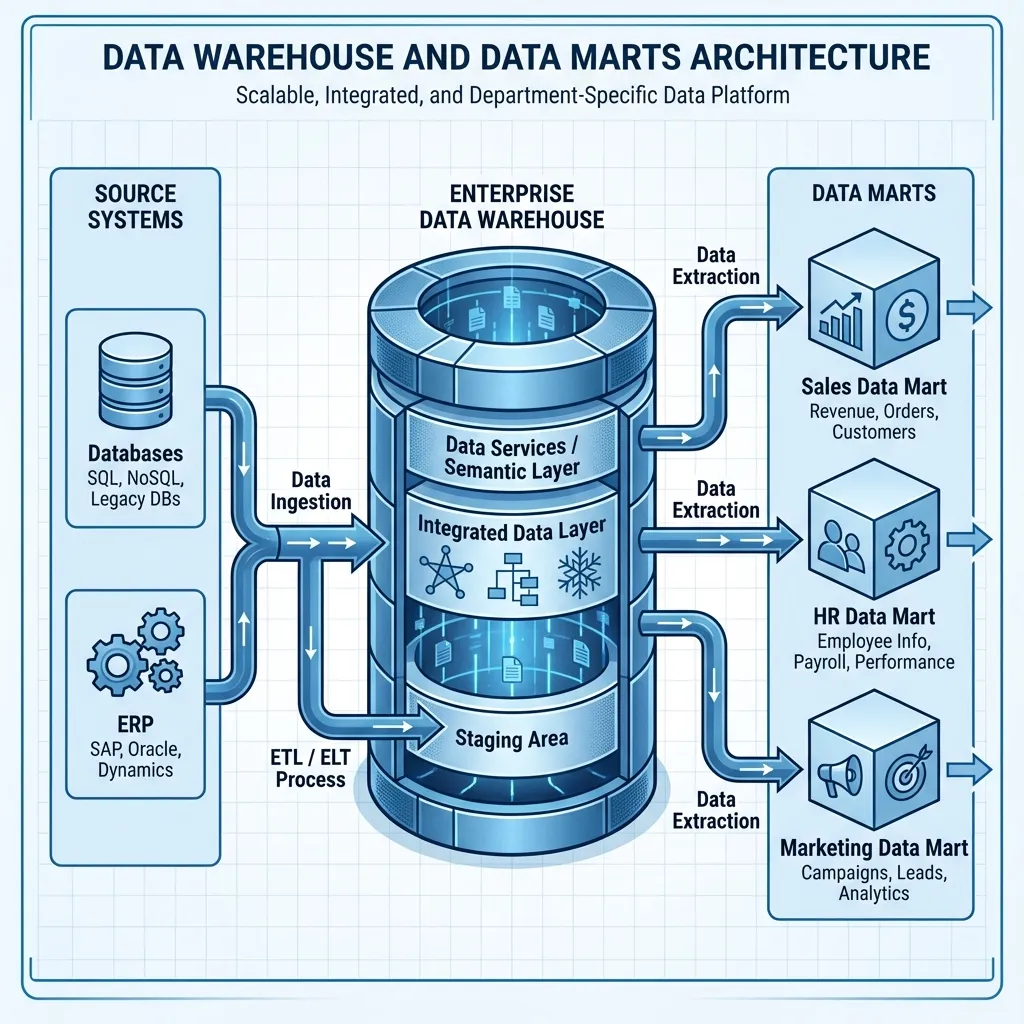
Organizing for Insight: Warehouses & Marts 🔍
Specialized databases designed for analysis, not for day-to-day operations.
Data Warehouse
A large, centralized repository of integrated data from various sources.
- Scope: Enterprise-wide
- Subject: Multiple subjects
- Purpose: Strategic, long-term decisions
Data Mart
A subset of a data warehouse, focused on a specific business line or department.
- Scope: Departmental (e.g., Sales, Marketing)
- Subject: Single subject
- Purpose: Tactical, specific analysis
The Final Step: Knowledge Management (KM)
Knowledge Management is the process through which organizations capture, share, and leverage the collective expertise of their employees to foster innovation and improve decision-making.
Why is it important?
- It converts individual, tacit knowledge (experience) into explicit knowledge (documented procedures, best practices).
- Prevents "reinventing the wheel" and retains critical knowledge when employees leave.
- Creates a "smarter" organization over time.
Practical Application in Nepal 🇳🇵
Real-World Scenarios
- Big Data: Ride-sharing apps like Pathao and inDrive analyze vast amounts of trip data (Volume), in real-time (Velocity), from GPS, user ratings, and payment info (Variety) to optimize pricing, match drivers, and predict demand.
- Database Approach: Nepali commercial banks like Nabil Bank or Global IME Bank use robust databases to manage millions of customer accounts and daily transactions, ensuring data integrity and security for services like mobile banking.
- Knowledge Management: IT service companies in Kathmandu use internal wikis to document project solutions and coding standards, allowing new hires to quickly learn from the collective experience of senior developers.
Unit 3.1: Key Takeaways 🎯
- Raw data is useless without context; it must be processed into information and applied as knowledge to drive business value.
- A structured database approach is essential to overcome challenges like data redundancy, inconsistency, and security risks.
- Big Data, defined by its Volume, Velocity, and Variety, requires new tools and strategies for analysis.
- Data warehouses provide an enterprise-wide view for strategic decisions, while data marts serve the specific needs of a single department.
- Knowledge Management captures human expertise, turning it into a lasting, reusable organizational asset.
Thank You!
Any questions?