Unit 2.5
Understanding Business Pressures in the Modern Economy
Learning Objectives
By the end of this chapter, you will be able to understand the key forces that drive the need for Information Systems in modern organizations.
- ✅ Identify and describe the three main categories of business pressures.
- ✅ Explain how globalization and powerful customers create market pressure.
- ✅ Describe how technological innovation and information overload act as technology pressures.
- ✅ Understand the impact of social responsibility and government regulation as societal pressures.
The Three Forces Shaping Modern Business
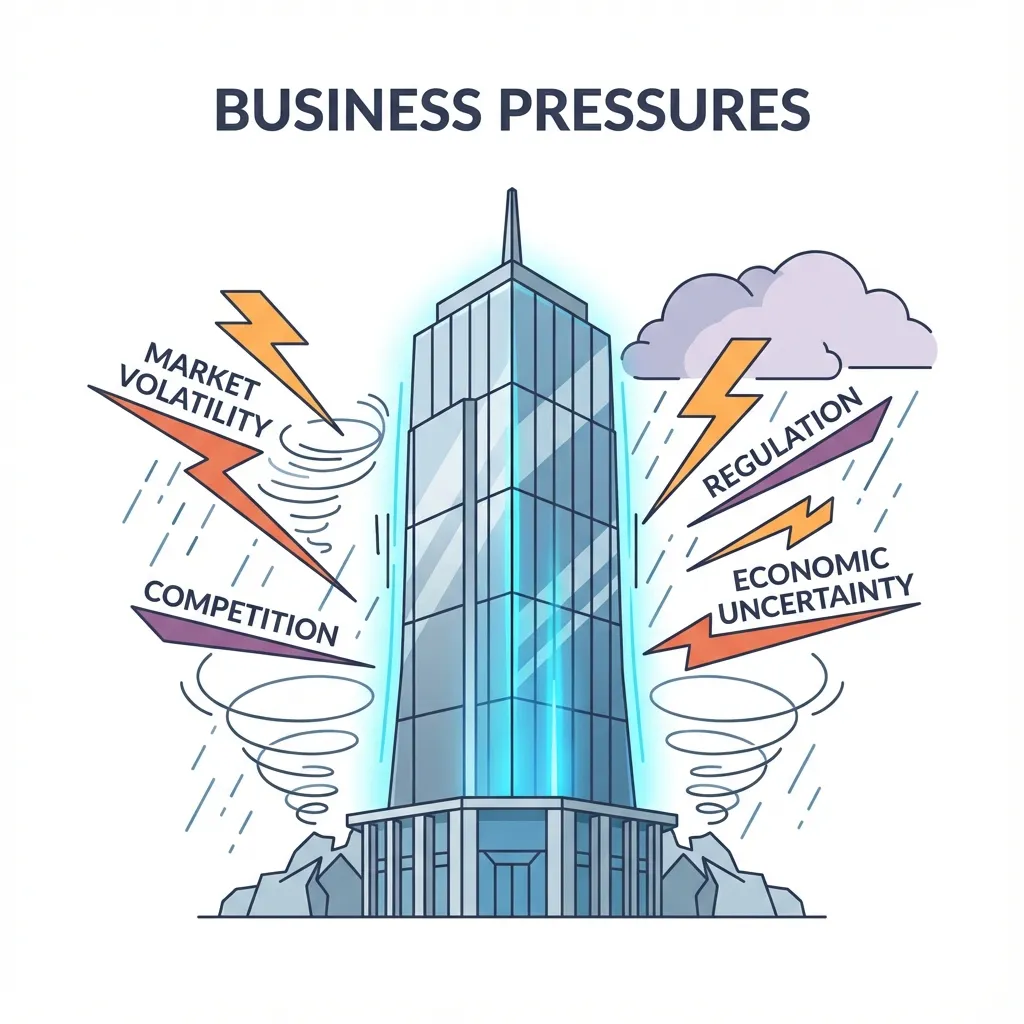
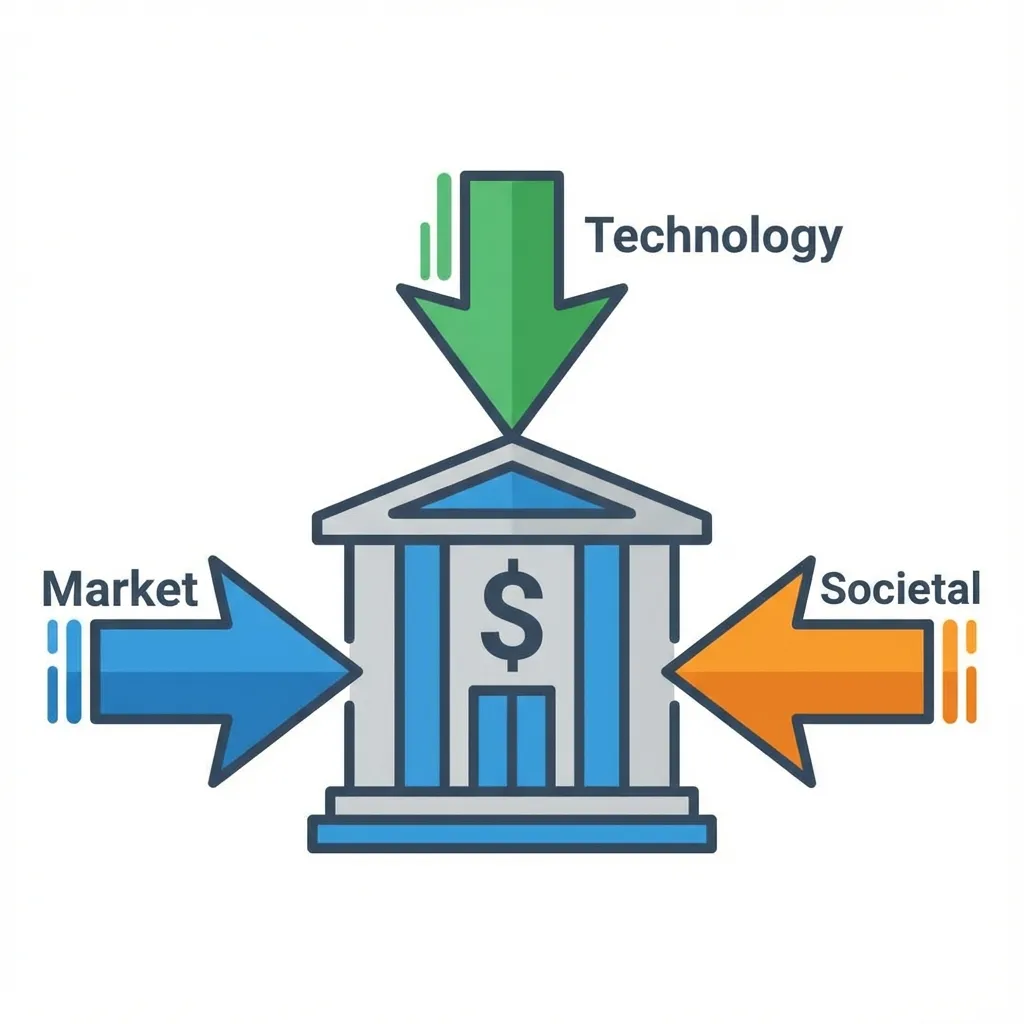
Organizations don't operate in a vacuum. They are constantly influenced by powerful external forces. These business pressures are the primary drivers for implementing and evolving Information Systems.
📊 Market Pressures
The economic and competitive landscape.
⚡ Technology Pressures
The pace of innovation and data growth.
⚖️ Societal / Legal Pressures
Social expectations and government rules.

1. Market Pressures: The Competitive Arena
Globalization
- Competition is no longer just local; it's global.
- The internet levels the playing field for small and large companies.
- Requires extreme efficiency and effectiveness to survive.
Powerful Customers
- The internet provides customers with endless information and choice.
- Customers can easily compare prices, read reviews, and share feedback.
- This leads to high expectations for quality, service, and personalization.
Key Tool: Customer Relationship Management (CRM) systems are essential for managing empowered customers.
Market Pressures: The Changing Workforce
The nature of who works and how they work is transforming business operations.
- Increasing Diversity: Workforce is more varied in gender, age, and ethnicity.
- Telecommuting & Remote Work: A growing trend accelerated by technology and global events.
- IS Response: Organizations need systems to manage, support, and collaborate with a distributed and diverse workforce (e.g., Slack, Zoom, HRIS).

2. Technology Pressures: Innovate or Disappear ⚡
Technological Innovation & Obsolescence
- New technologies emerge at a rapid pace (e.g., AI, IoT, Blockchain).
- Existing technologies quickly become outdated.
- Pressure to constantly adapt and invest to avoid being left behind.
Information Overload
- The amount of data generated is growing exponentially.
- Challenge: How to store, process, and analyze this data effectively?
- Pressure to find meaningful insights ("signal") from the "noise."
Case Study: Responding to Tech Pressure
🔍 Example: The Innovator's Dilemma
Many successful companies have failed by not adapting to technology pressures.
- Kodak: Invented the digital camera but failed to embrace it, clinging to its film business. They missed the shift in technology and market demand.
- Blockbuster: Saw Netflix (DVD-by-mail, then streaming) as a niche market and failed to adapt its business model, leading to bankruptcy.
Lesson: Ignoring technology pressures is a critical strategic error.
3. Societal / Political / Legal Pressures
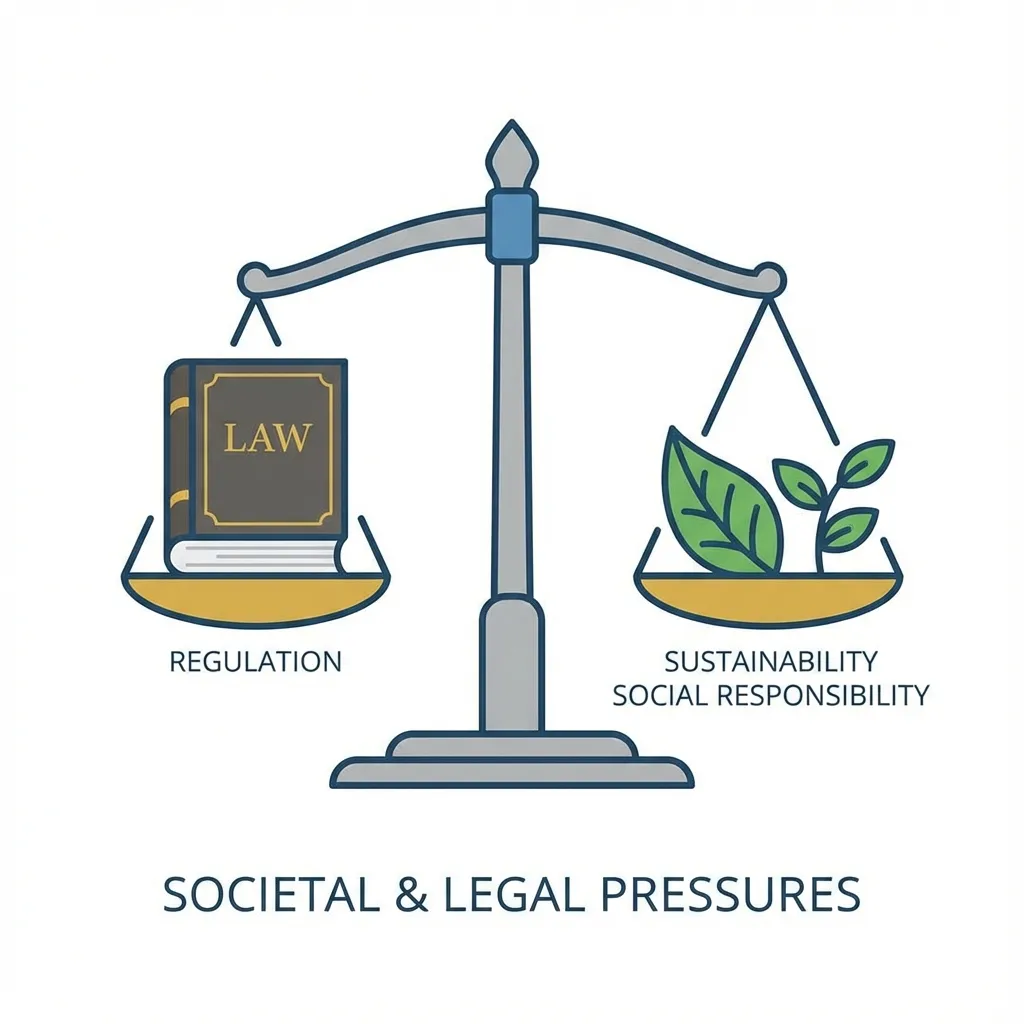
Businesses are expected to be good citizens and comply with the law.
Social Responsibility
- Sustainability ("Green IT")
- Ethical business practices
- Community involvement
- Corporate transparency
Government Regulation
- Data Privacy (e.g., GDPR)
- Financial Reporting (e.g., Sarbanes-Oxley)
- Environmental Protection
- Compliance is mandatory and often costly.
Security & Ethics
- Constant threat of cyberattacks
- Protecting intellectual property & customer data
- Ethical use of AI and data
- Algorithmic bias concerns
Practical Application: Business Pressures in Nepal 🇳🇵
These global pressures have a distinct local impact.
- Market Pressure: The rise of digital payment gateways like eSewa and Khalti forces traditional brick-and-mortar stores to adopt digital payments to stay competitive and meet customer expectations.
- Technology Pressure: Restaurants and cafes must have a strong social media presence and often partner with delivery platforms like Foodmandu to handle the information overload of online orders and reviews.
- Societal/Legal Pressure: All banks and financial institutions in Nepal must comply with Nepal Rastra Bank (NRB) directives on cybersecurity and data protection, a significant legal pressure requiring robust IT systems.
Summary & Key Takeaways
Information Systems are the strategic response to the relentless pressures of the modern business environment.
- 🎯 Businesses face three interconnected pressures: Market, Technology, and Societal/Legal.
- 🎯 Globalization increases competition, while the internet empowers customers, forcing companies to be more customer-centric.
- 🎯 Rapid technological change creates a constant race to innovate and adapt, making IT a core part of strategy, not just support.
- 🎯 Social responsibility, ethics, and government regulations are increasingly powerful forces shaping business decisions and IT requirements.
Thank You!
Questions?