Unit 2.4
Business Process Management (BPM)
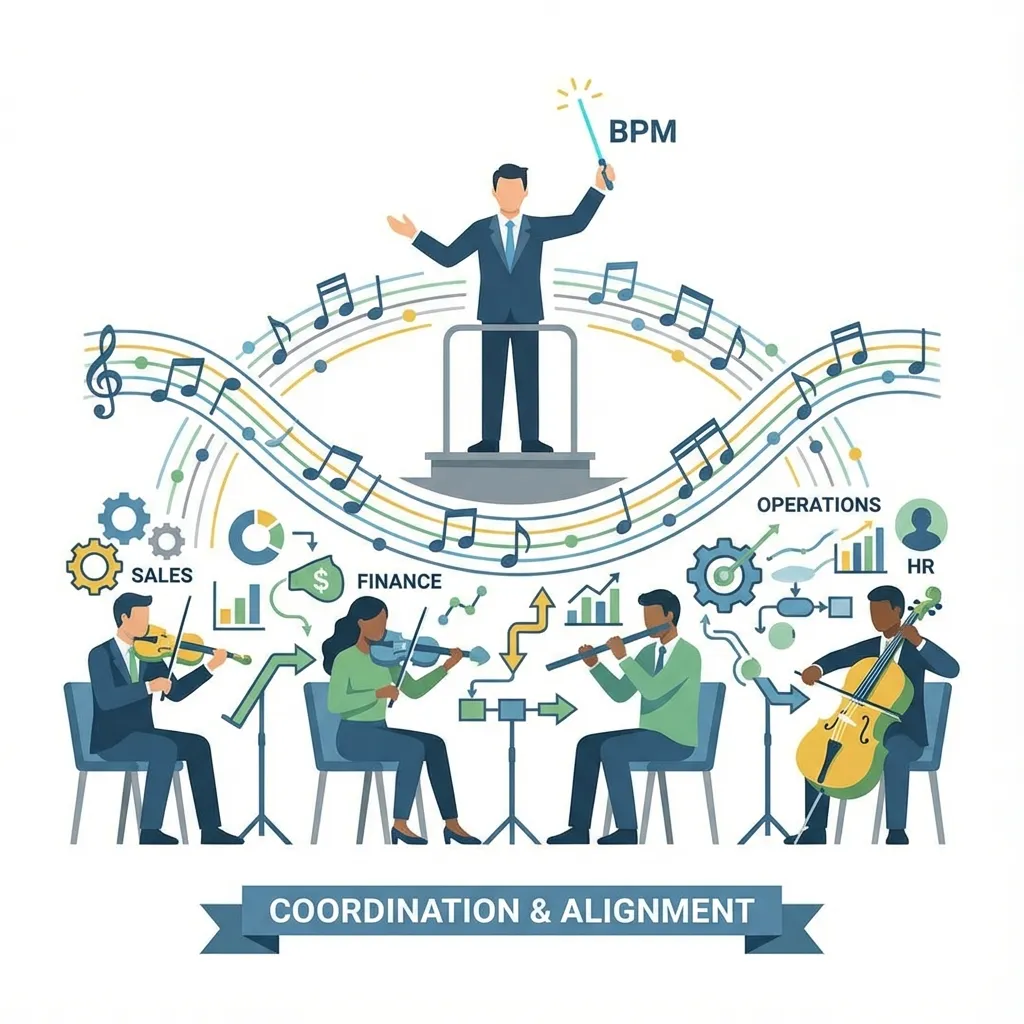
What is BPM?
Business Process Management (BPM) is a management discipline that treats business processes as strategic assets to be continuously improved.
It is not just a technology or a one-time project.
- Systematic Approach: A structured way to manage and optimize.
- Strategic Alignment: Ensures processes support business goals.
- Holistic: Encompasses people, systems, and data ("The Orchestration").
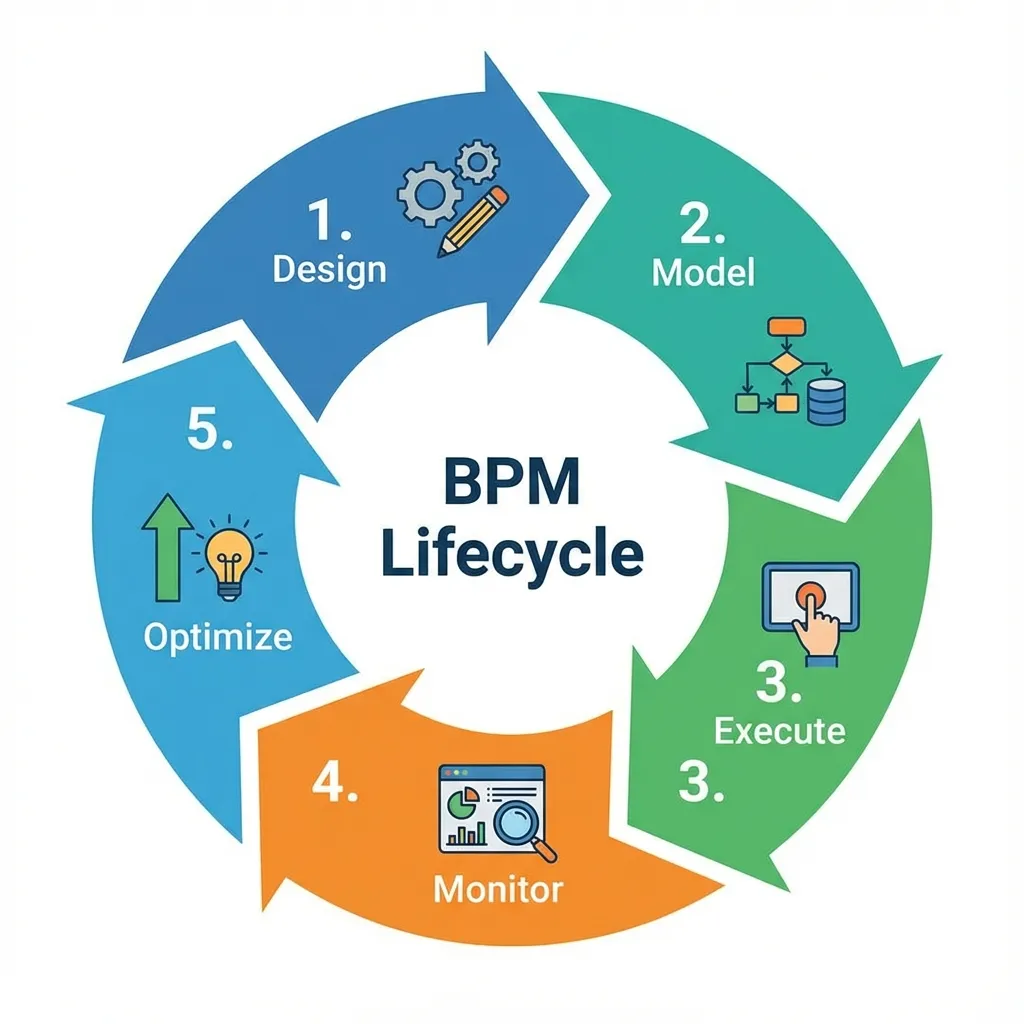
The BPM Lifecycle
BPM is a continuous cycle of 5 phases:
- Design: Defining the ideal process.
- Model: Visualizing and simulating.
- Execute: Implementing (often with software).
- Monitor: Tracking performance in real-time.
- Optimize: analyzing and improving data.
Then the cycle repeats!
Phase 1: Process Design 📝
Before you can improve, you must define.
- Identify: What are the existing processes?
- "As-Is" vs. "To-Be": Map the current state and design the ideal future state.
- Strategic Goals: ensure the process design actually helps the business achieve its objectives (e.g., faster delivery, lower cost).
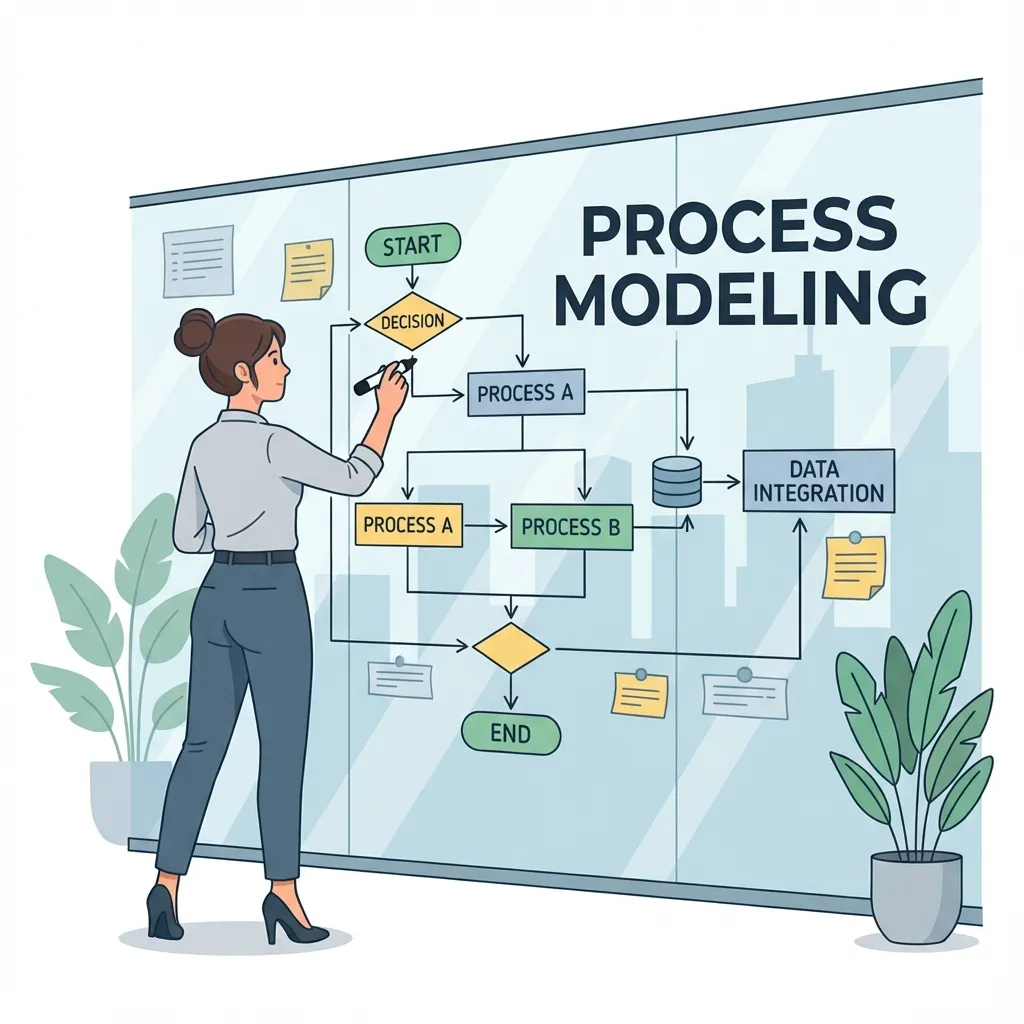
Phase 2: Process Modeling 📊
Visualizing the Flow
- Who does what?
- When does it happen?
- Where are the handoffs?
"What-If" Analysis
- Simulate the process before building it.
- Test different scenarios (e.g., "What if order volume doubles?").
- Ideally done without disrupting actual operations.
Phase 3: Process Execution ▶️
Turning the model into reality.
This phase often relies on a BPMS (Business Process Management Suite).
- Automation: System handles routine tasks automatically.
- Human Intervention: System routes tasks to the right people when human judgment is needed.
- Enforcement: Ensures everyone follows the defined rules.
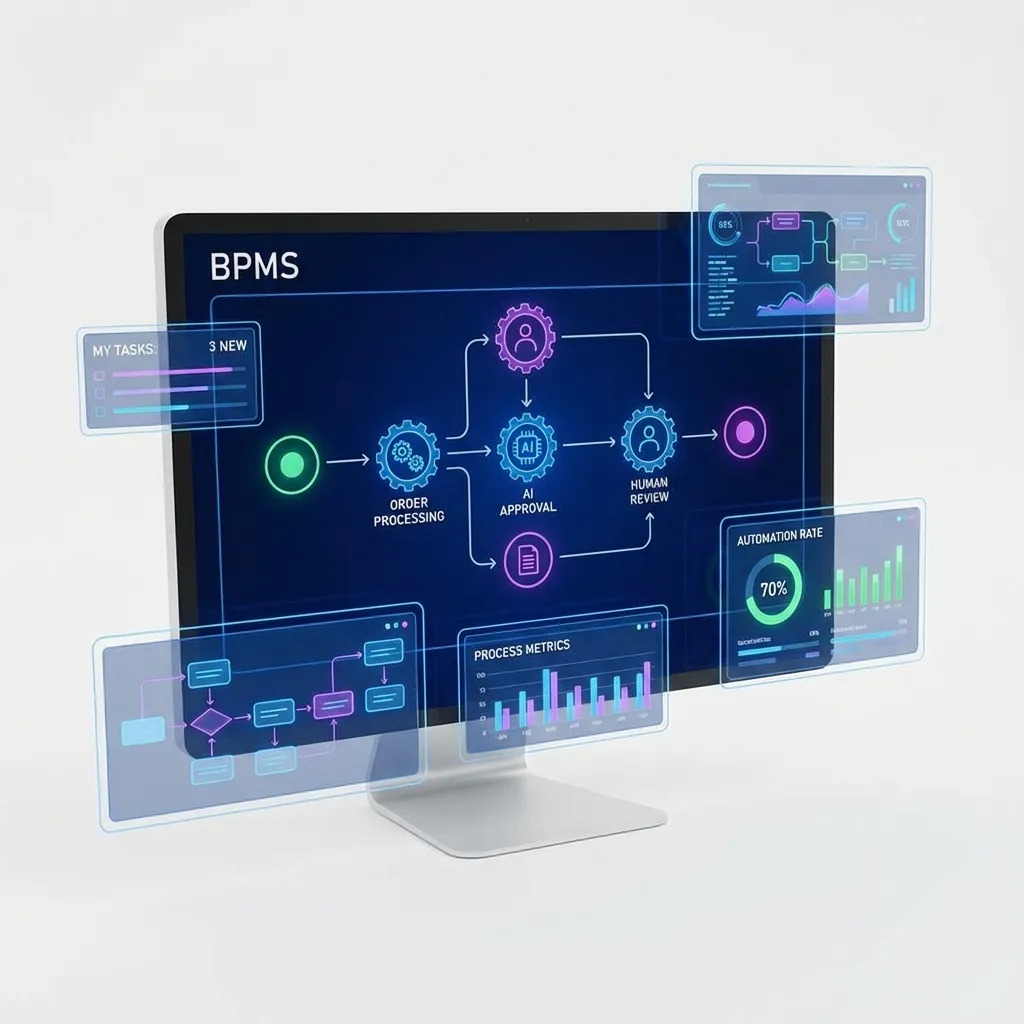
Phase 4: Process Monitoring 📹
You cannot manage what you do not measure.
- Real-time Tracking: Monitor individual cases (e.g., "Where is Order #123?").
- KPIs (Key Performance Indicators):
- Cycle Time (How long does it take?)
- Defect Rate (How many errors?)
- Cost per Transaction
- Dashboards: Visual displays for managers to spot issues immediately.
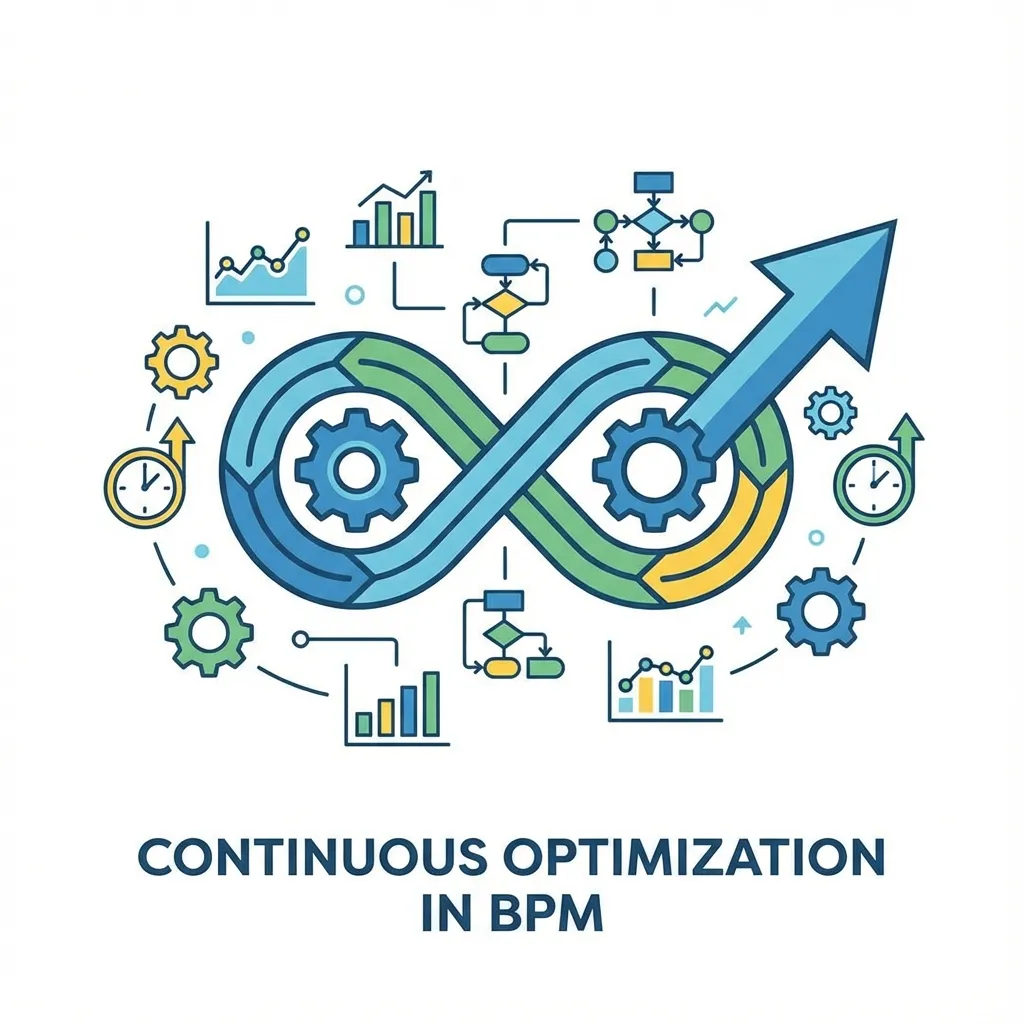
Phase 5: Process Optimization 🔧
Closing the loop.
- Analyze Data: Use the monitoring data to find bottlenecks.
- Identify Improvements: What can be done better/faster/cheaper?
- Feed back to Design: The output of Optimization becomes the input for the next Design phase.
This creates a cycle of Continuous Improvement.
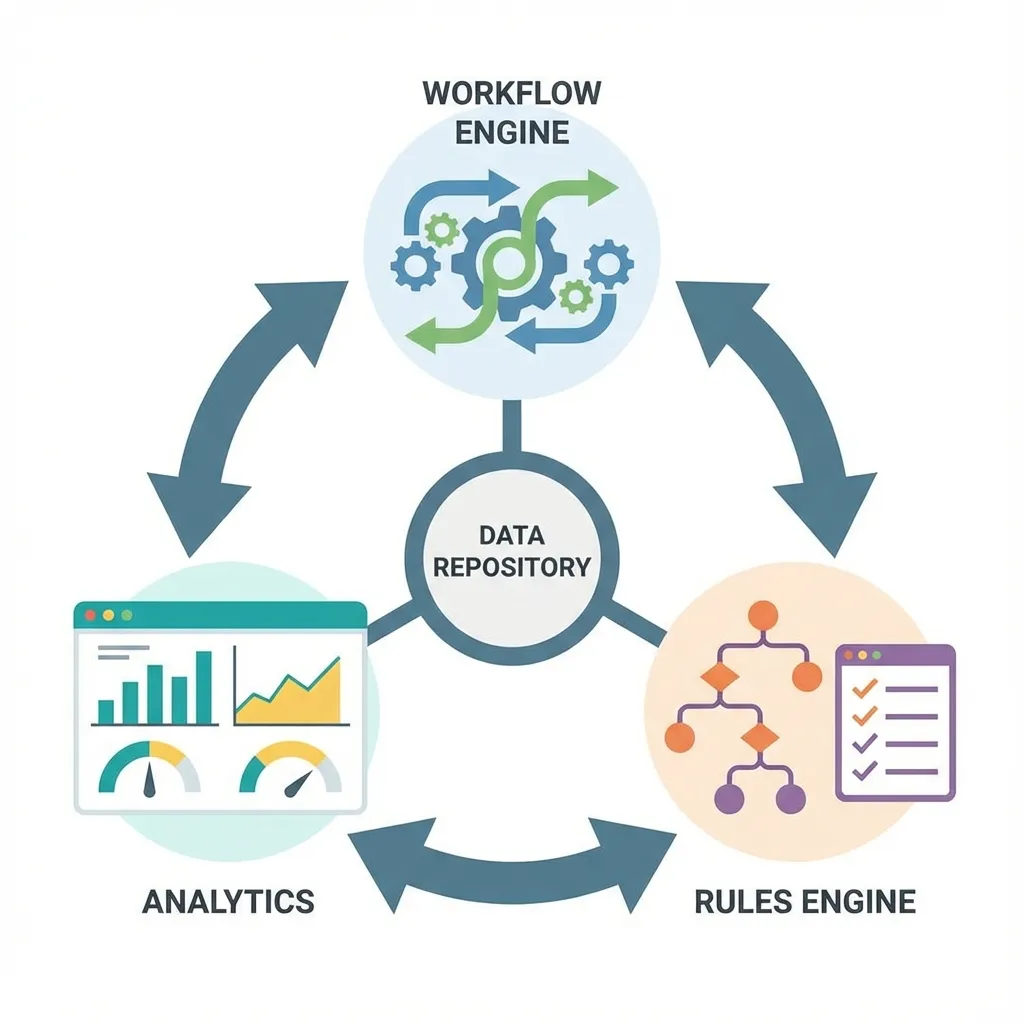
BPM Suites (BPMS)
BPMS is an integrated set of software tools that automates and manages BPM processes.
Core Components
- Modeling Tool: Drag-and-drop designer.
- Workflow Engine: The "brain" that moves tasks.
- Business Rules Engine: "If X, then Y" logic.
BPM vs. BPI vs. BPR
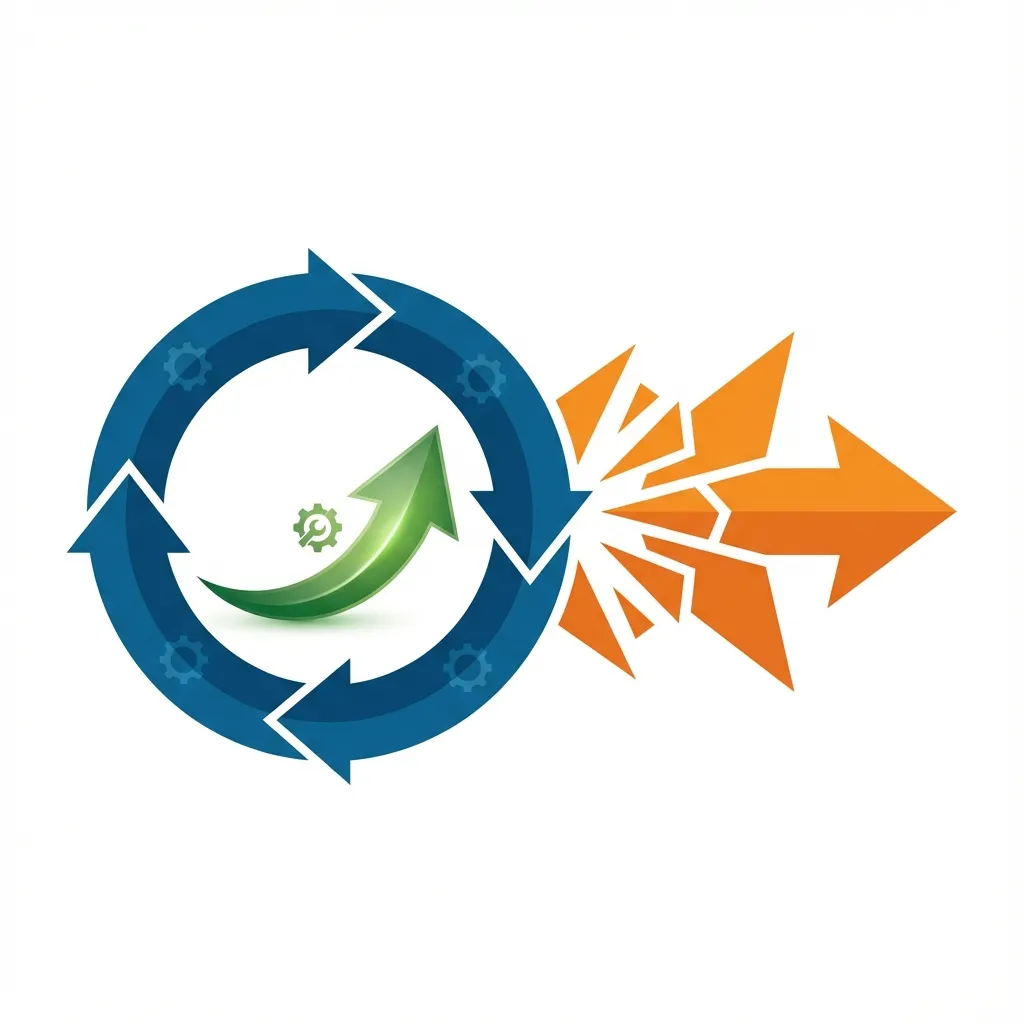
How do they fit together?
| Concept | Focus |
|---|---|
| BPM | Holistic Discipline |
| BPI | Incremental Improvement |
| BPR | Radical Redesign |
Summary & Key Takeaways
- 🎯 BPM is a Discipline: It's a continuous management practice, not a one-off event.
- 🎯 The 5 Phases: Design -> Model -> Execute -> Monitor -> Optimize.
- 🎯 BPMS: Technology that enables scalable BPM by automating workflow and monitoring.
- 🎯 Agility: BPM allows organizations to adapt quickly to change by continuously tweaking their operations.
Discussion
- Why is it important to "Model" a process before "Executing" it?
- Can you have BPM without software (BPMS)? Why or why not?