Unit 2.3
Improving Processes: BPI vs. BPR
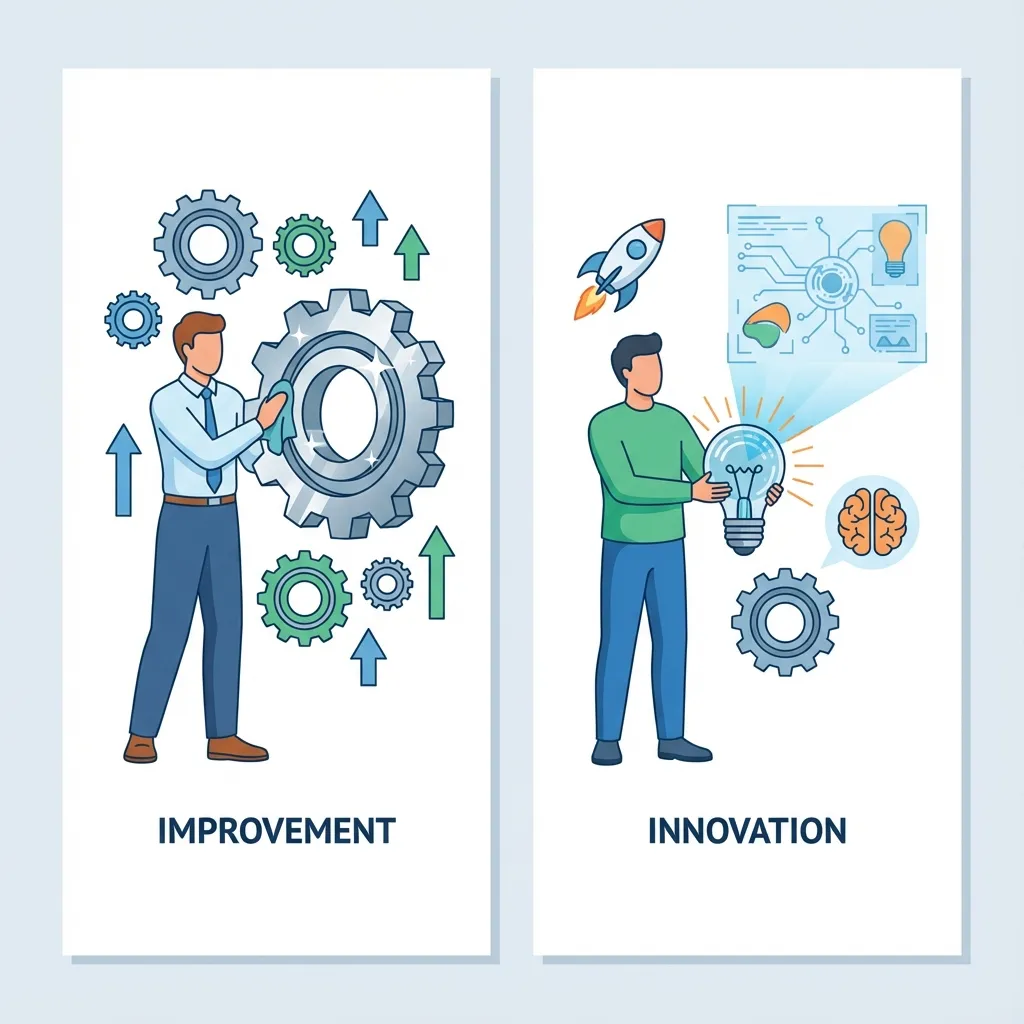
The Need for Change
Organizations must constantly evolve their business processes to remain competitive.
There are two primary approaches to process change:
1. Improvement (BPI)
"Doing things better"
2. Reengineering (BPR)
"Doing things differently"

Business Process Improvement (BPI)
BPI focuses on identifying and eliminating the root causes of defects and inefficiencies in existing processes.
- ✅ Focus: Incremental change (step-by-step).
- ✅ Goal: Reduce variation, eliminate waste.
- ✅ Risk: Low risk, low cost.
- ✅ Example: Six Sigma, TQM (Total Quality Management).

Business Process Reengineering (BPR)
BPR is a radical redesign of business processes to achieve dramatic improvements in critical measures of performance.
- 🚀 Focus: Radical redesign (Clean Slate).
- 🚀 Goal: 10x improvement in cost, quality, speed.
- 🚀 Risk: High risk, high cost, high failure rate.
- 🚀 Motto: "If we were starting today, how would we do this?"
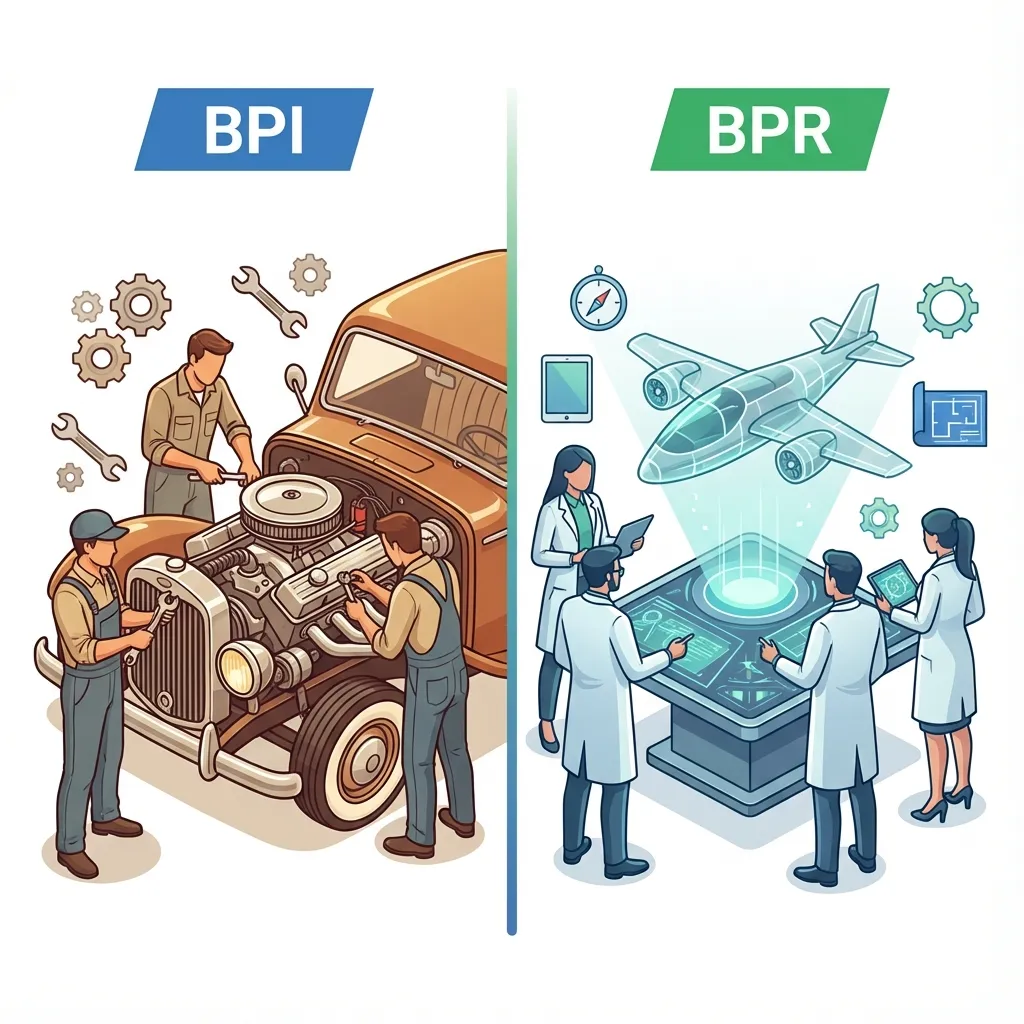
Comparison: BPI vs. BPR
| Feature | BPI (Improvement) | BPR (Reengineering) |
|---|---|---|
| Level of Change | Incremental | Radical |
| Starting Point | Existing Process | Clean Slate |
| Participation | Bottom-up | Top-down |
| Risk | Low | High |
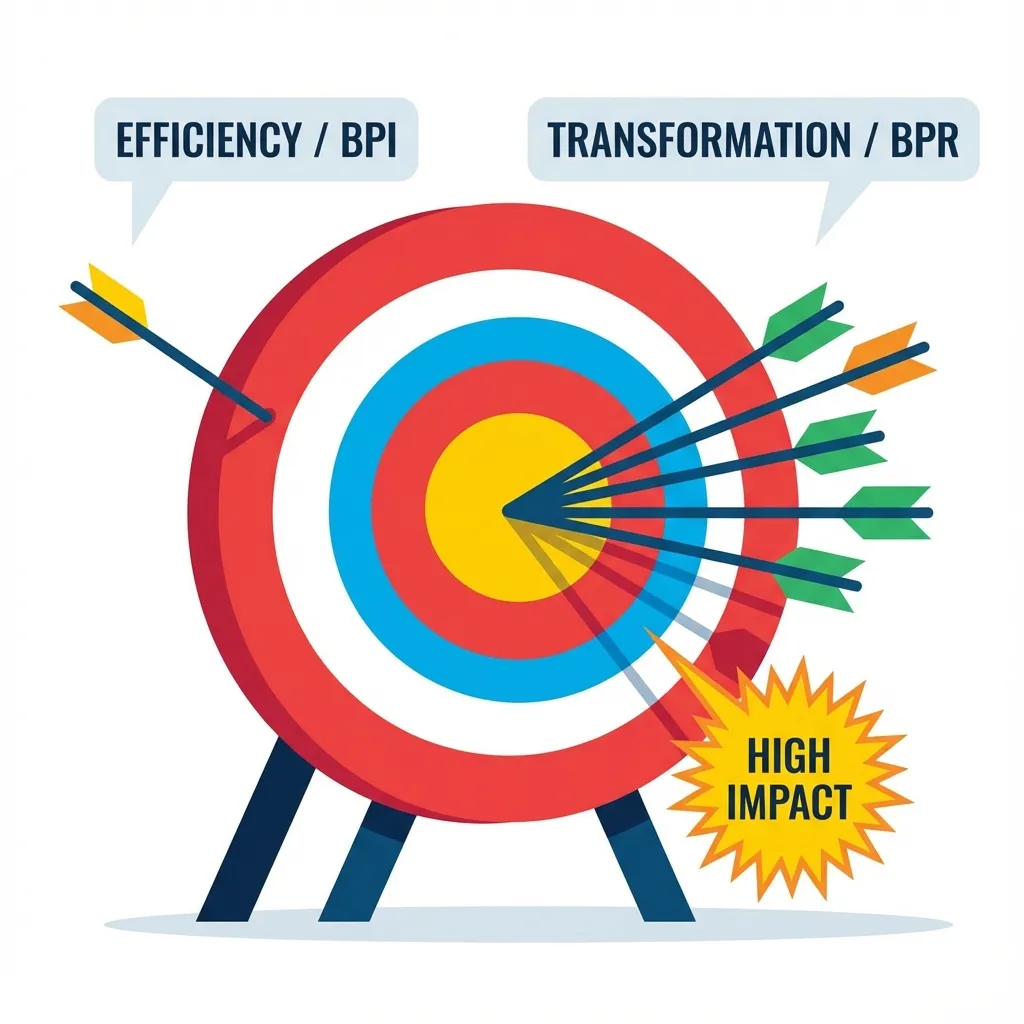
Key Takeaways
- Use BPI for continuous, low-risk optimization of stable processes.
- Use BPR when a process is broken or when a major strategic shift is required.
- Technology works best when processes are optimized first. Automating a bad process just makes it fail faster.