Unit 2.2
Business Processes
IT 233: Business Information Systems
Learning Objectives
By the end of this chapter, you will be able to:
- ✅ Define what a business process is and its role in creating value.
- ✅ Identify the three key components of any business process.
- ✅ Provide examples of common business processes across an organization.
- ✅ Explain why understanding processes is crucial for business improvement.
What is a Business Process? ⚙️
A business process is a collection of linked tasks which find their end in the delivery of a service or product to a client.
In simple terms, it's the specific, ordered set of steps a company takes to create value for its customers.
Think of it as the organization's recipe for success.
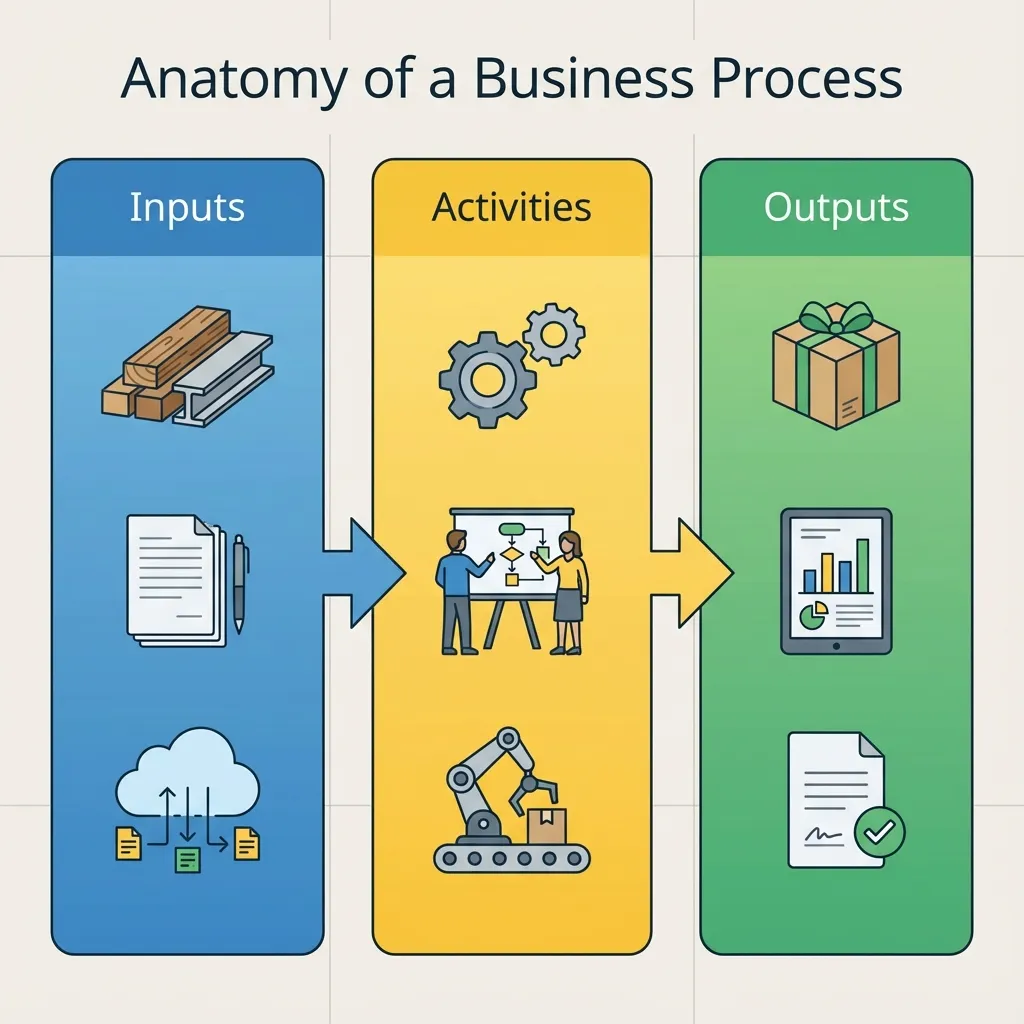
The 3 Core Components
1. Inputs
The resources required to start the process.
(e.g., data, materials, customer request)
2. Activities
The series of steps that transform the inputs.
(e.g., actions by people or systems)
3. Outputs
The final product or service of value.
(e.g., a delivered product, a report, a solved issue)
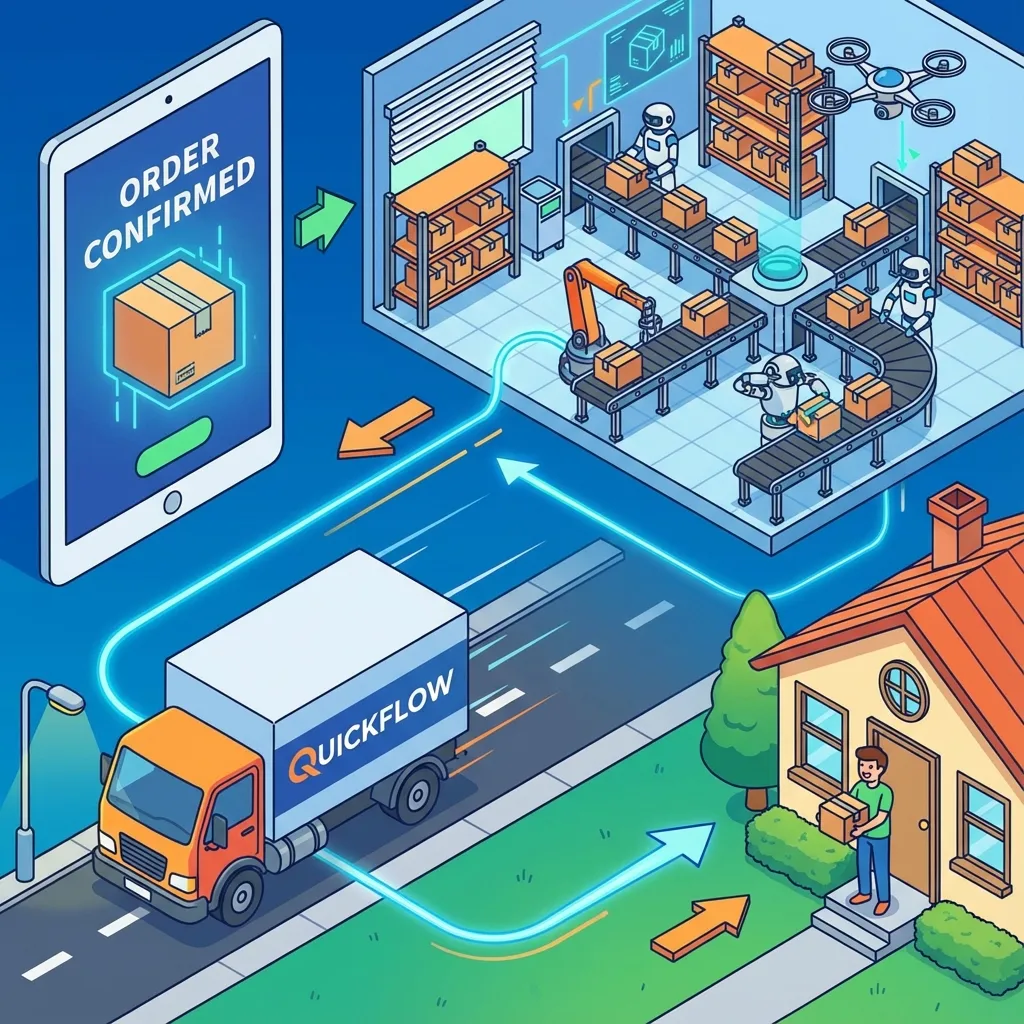
Anatomy of a Process: Order Fulfillment 📦
Example: Fulfilling an online order
INPUT
Customer's online order
ACTIVITIES
- Pick items from warehouse
- Pack items in a box
- Arrange for shipping
OUTPUT
Delivered package to the customer
Processes Across the Business 📊
Sales & Marketing
- Lead Generation
- Order Fulfillment
Finance & Accounting
- Invoicing Customers
- Procure-to-Pay
Human Resources
- Employee Onboarding
- Payroll Processing
Operations
- Product Assembly
- Quality Control

Practical Application in Nepal 🇳🇵
Example: Mobile Wallet Top-Up (e.g., eSewa/Khalti)
- Input: User request to load funds from a linked bank account.
- Activities:
- User enters amount.
- App sends secure request to bank via ConnectIPS.
- Bank verifies credentials (PIN/Biometrics).
- Bank debits user's account and confirms transfer.
- Wallet provider credits the user's wallet balance.
- Output: Updated wallet balance, ready for payment.

Why Document Processes? 🔍
An organization cannot effectively manage what it does not understand.
- 🎯 Identify Inefficiencies: Find and eliminate bottlenecks, redundant steps, and waste.
- 🎯 Ensure Consistency: Standardize tasks for predictable quality and outcomes.
- 🎯 Simplify Training: Create clear, repeatable instructions for new employees.
- 🎯 Enable Improvement: Provide a baseline for process re-engineering and automation with IT.
The Foundation for Improvement ⚡
You cannot improve what you do not understand.
Documenting and analyzing a business process is the first and most critical step toward making it better, faster, or cheaper.
Chapter 2.2: Key Takeaways
- A business process is a structured set of activities that transforms inputs into valuable outputs for a customer.
- Processes are the fundamental building blocks of how any organization operates and creates value.
- Every functional area of a business (Sales, HR, Finance) relies on a set of core processes to function.
- Documenting processes is essential for consistency, training, identifying inefficiencies, and enabling improvement through technology.
Discussion & Application
Group Activity (5 mins)
Choose a simple, everyday activity at a local Nepali business (e.g., ordering momo at a restaurant, withdrawing cash from an ATM).
Describe it as a business process:
- Identify the Inputs.
- List the key Activities in sequence.
- Define the final Output.
Thank You!
Next Up: Chapter 3 - Information Systems & Strategy