Unit 2 · Session 1
IT and Business in the Information Age
Today's focus
- Information Systems in Business
- Business in the Information Age
🎯 Learning Objectives
By the end of this session, you will be able to:
- ✅ Define the Information Age and explain why information is a critical business asset.
- ✅ Differentiate between Information Technology (IT) and Information Systems (IS).
- ✅ Describe the role of a knowledge worker.
- ✅ Describe how technology's role in business evolved from operational support to strategic tool.
- ✅ Identify the major types of business information systems, including enterprise systems and e-business.
Information Systems in Business
Welcome to the Information Age 💾
We've fundamentally shifted from an industrial economy to one driven by information.
- In this new era, the ability to gather, process, and analyze data is paramount.
- Data is no longer just a record of what happened; it's a key asset used to predict the future and make strategic decisions.
Key Idea: Companies that effectively leverage data and information systems gain a significant competitive advantage.
Quick Check: The Information Age
Click True or False for each statement.
IT vs. IS: What's the Difference?
These terms are often used interchangeably, but they have distinct meanings.
Information Technology (IT) 💻
Refers to the tools: hardware, software, and networks that enable information processing.
- Servers & Computers
- Operating Systems
- Databases & Networks
Information Systems (IS) 📊
A broader concept that includes IT, people, and processes working together to manage information.
- University Enrollment System
- E-commerce Website
- Hospital Management System
IT or IS? Sort Each Example
Click the correct category for each item below.
The Strategic Role of IS 🎯
Information Systems have evolved from a back-office utility to a core strategic driver.
Then: Operational Support
- Automating basic tasks
- Record keeping (accounting)
- Improving efficiency
Now: Strategic Weapon
- Creating new products/services
- Informing critical decisions
- Enhancing customer relationships
- Gaining competitive advantage
Then or Now? Classify Each Activity
Was this a role IS played Then (operational support) or does it play Now (strategic weapon)?
A Spectrum of Business Systems 🔍
Businesses utilize a range of information systems tailored to different needs and scales.
Departmental Systems: Serve the specific needs of a single department, like Marketing or HR. They are often isolated in "silos."
Enterprise Systems: Integrate data and processes across the entire organization, breaking down silos and providing a unified view.
E-Business Systems: Use the internet to connect with external stakeholders like customers, suppliers, and partners.
Match the Scenario to the System Type
Read each business scenario and pick the correct system type.
Focus: Enterprise Systems
Enterprise systems act as the central nervous system for a modern organization.
Goal: To create a "single source of truth" by integrating all major business functions into one unified system.
- Example 1: ERP (Enterprise Resource Planning)
Manages core business processes: finance, HR, manufacturing, supply chain, etc. - Example 2: CRM (Customer Relationship Management)
Manages all interactions with current and potential customers.
🎬 From Five Disconnected Tools to One ERP
Software Connect, "ERP Systems Explained in Under 8 Minutes" (1:45 to 3:10)
ERP or CRM? Match the Function
Each feature or use-case belongs to either ERP or CRM. Click to assign it.
The Rise of E-Business ⚡
E-Business is more than just selling things online (e-commerce).
Definition: The use of internet technologies to conduct business, including internal processes and external connections with customers and partners.
It has revolutionized how companies:
- Interact with customers (24/7 support, personalized marketing)
- Collaborate with suppliers (real-time inventory management)
- Manage internal operations (employee portals, remote work)
IS in Action: The Nepali Context
Information Systems are transforming business and daily life in Nepal.
Digital Payments & E-Commerce
Companies like eSewa and Daraz rely on complex IS for secure transactions, inventory management, and logistics, enabling a thriving digital economy.
Ride-Sharing Services
Pathao and inDrive use integrated systems combining GPS, user data, driver management, and real-time payment processing to deliver their services.
Banking and Financial Services
Core Banking Systems (CBS) are large-scale enterprise systems that allow banks like Nabil Bank or NIC Asia to offer services like mobile banking and inter-branch transactions seamlessly.
Key Takeaways
Let's summarize the core concepts from this introduction.
- Data is the New Oil: We are in an Information Age where data is a primary asset for business success.
- IT vs. IS: IT are the tools; IS are the systems of tools, people, and processes that create value.
- From Silos to Integration: The trend is moving from isolated departmental systems to integrated enterprise systems for a holistic business view.
- E-Business is Transformative: The internet has fundamentally reshaped business operations, customer interactions, and partnerships.
Business in the Information Age
The Information Age
Definition: The period in human history characterized by the shift from traditional industry to an economy based on information technology.
Also known as the Digital Age or Computer Age.
The primary source of economic value is no longer manufacturing, but the creation, processing, and distribution of information.
Check Your Understanding
Which statement best describes the Information Age?
A Fundamental Economic Shift 📊
Industrial Age
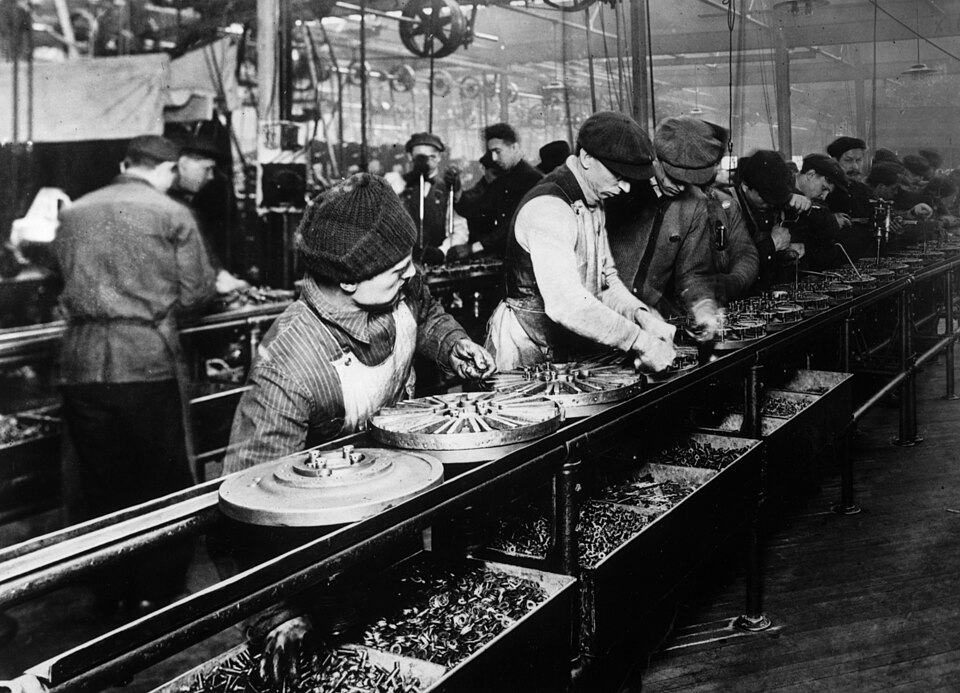
- Focus on manufacturing
- Value in physical goods
- Manual labor is key
- Capital: Machines, Factories
Information Age

- Focus on services & tech
- Value in information & data
- Knowledge work is key
- Capital: Information, Knowledge
Sort It Out!
Click a card, then click a column to classify it.
Industrial Age
Information Age
The Rise of the Knowledge Worker
Knowledge Worker: A professional whose main capital is their knowledge.
- Their primary job is to "think for a living."
- They deal with information, not physical objects.
- Valued for their ability to analyze, interpret, and apply information to solve complex problems.
Who are Knowledge Workers?
Their work is based on specialized knowledge and expertise.
- Doctors
- Lawyers
- Scientists
- Engineers
- Financial Analysts
- Architects
- Software Developers
- Data Scientists
- UX Designers
Knowledge Worker or Not?
Read each job description. Is this person a knowledge worker?
Information: The New Strategic Asset ⚡
In the Information Age, data is no longer just a byproduct of business.
Information is a core strategic asset. Companies that effectively collect, manage, and analyze it gain a significant competitive advantage.
This leads to better decisions, optimized processes, and new revenue streams.
Strategic or Not? Select ALL that apply.
Which actions show information being used as a strategic asset? Select all correct answers.
Practical Application: Amazon
Case Study: Amazon uses data as a strategic asset.
- Collects Data: Tracks every click, search, and purchase.
- Analyzes & Acts:
- Recommends products ("Customers who bought this also bought...").
- Optimizes its supply chain and warehouse logistics.
- Creates entirely new services based on its internal data infrastructure (e.g., Amazon Web Services - AWS).
🎬 Amazon: "Customers Who Bought This…"
Amazon Science, "The history of Amazon's recommendation algorithm" (0:00 to 1:05)
The Information Age in Nepal 🇳🇵
Nepal's economy is also shifting, with a growing IT and service sector.
Local Example: Digital Wallets like eSewa or Khalti.
- How do they use information?
- They collect data on user transaction habits.
- This data can be used to:
- Offer personalized promotions and services.
- Analyze economic trends in digital payments.
- Partner with businesses that users frequently pay.
Apply It: eSewa's Data Decision
What is the BEST strategic use of this information?
Key Takeaways 🎯
- The Information Age is an economic era where information, not industry, is the key asset.
- Knowledge workers are professionals who create value by working with information.
- Successful modern businesses use information as a strategic tool to gain a competitive advantage.
Discussion Questions 🔍
- How does the job of a knowledge worker (like a software developer) differ from that of a manual worker (like a factory operator)?
- Besides Amazon, what is another company that uses information effectively to succeed? How do they do it?
- What are some challenges for businesses in Nepal trying to compete in this information-based economy?
Image Credits
- Ford assembly line, 1913: unknown author, public domain, via Wikimedia Commons
- Data centre: BalticServers.com, CC BY-SA 3.0, via Wikimedia Commons
Exam Practice 📝
Short answer
- Differentiate between IT and IS with examples.
- What is the Information Age?
- Differentiate between data and information.
- Who is a knowledge worker? Give four examples.
Long answer
- Explain the components and activities of an information system with a suitable diagram and business example.
- Compare the agricultural, industrial, and information ages.
Revise the answers in the full notes linked on the last slide.
Thank You
Questions before we wrap this hour?
Next: Unit 2 · Session 2 — Information Systems and Organization
📖 Read the full notes: Information Systems in Business · Business in the Information Age