Unit 6.3
Mobile Marketing
Learning Objectives
By the end of this chapter, you will be able to:
- ✅ Define mobile marketing and identify its core channels.
- ✅ Compare and contrast different mobile marketing strategies like SMS, MMS, and mobile advertising.
- ✅ Analyze the strengths and weaknesses of each mobile marketing channel.
- ✅ Describe the application of mobile marketing in the context of Nepal.
What is Mobile Marketing? 🎯
Definition: A multi-channel, digital marketing strategy aimed at reaching a target audience on their smartphones, tablets, and other mobile devices.
It's about connecting with people where they spend a significant amount of their time: on their phones.
The core principle is to deliver personalized, time- and location-sensitive information that promotes goods, services, and ideas.
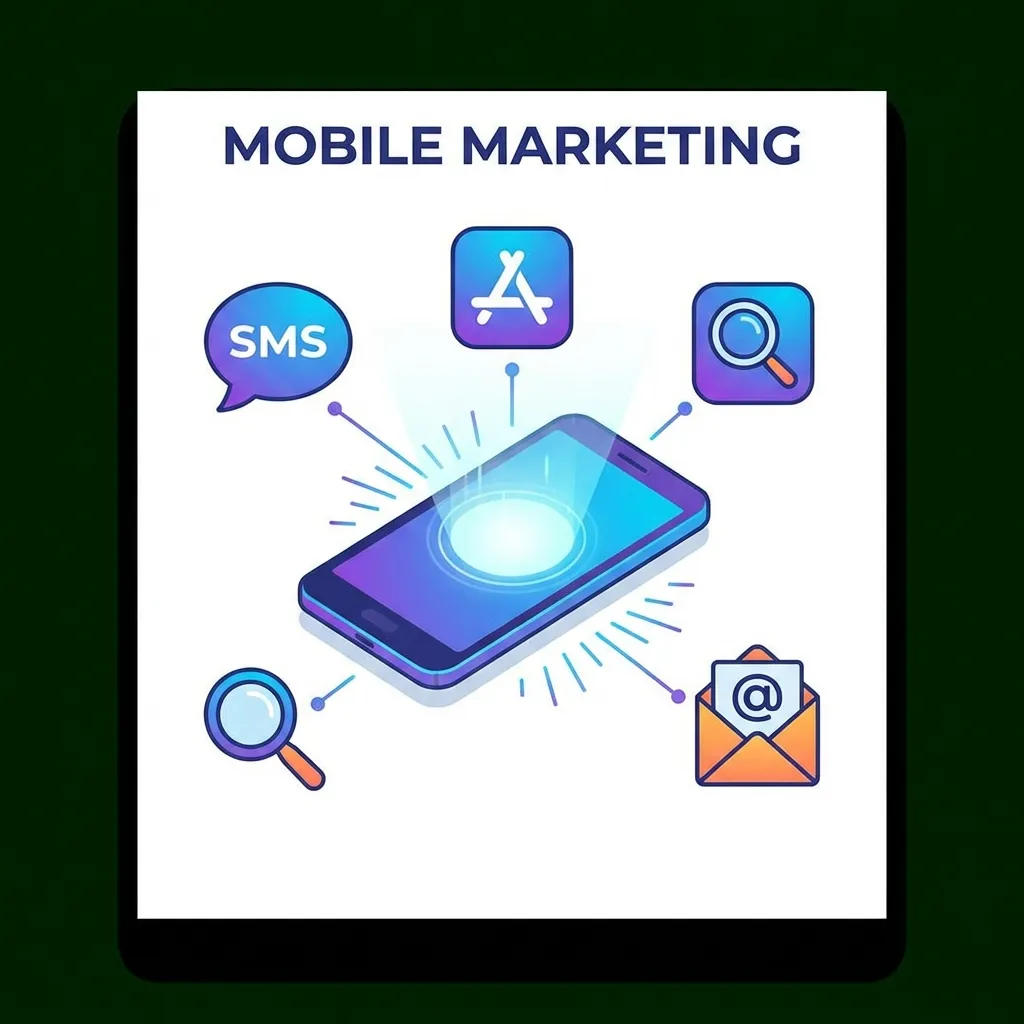
Key Mobile Marketing Channels
Businesses can reach customers through various mobile avenues:
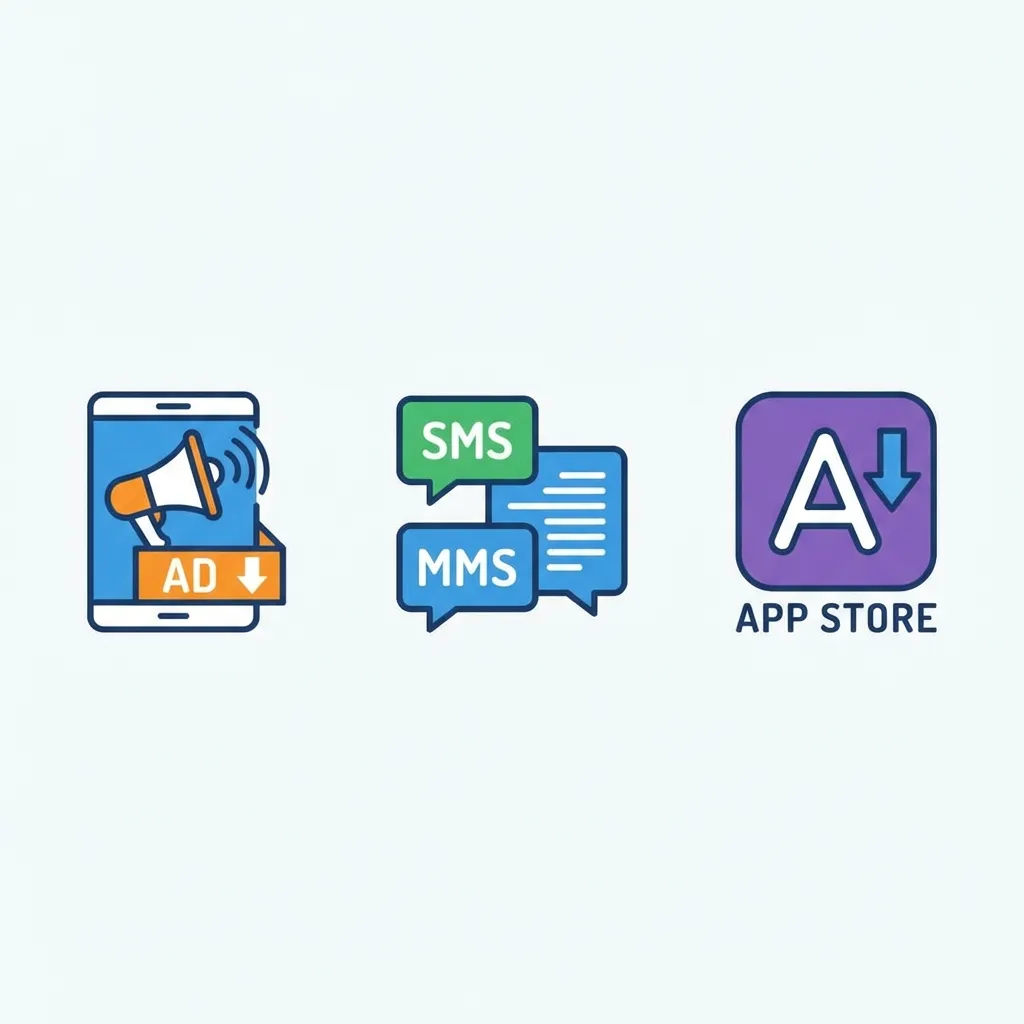
📱 Mobile Advertising
Ads within apps, websites, and videos.
💬 SMS & MMS Marketing
Direct messaging via text or multimedia.
📲 Mobile Apps
Branded applications for deeper engagement.
Other channels include mobile-friendly websites, email, social media, and QR codes.
Channel 1: Mobile Advertising
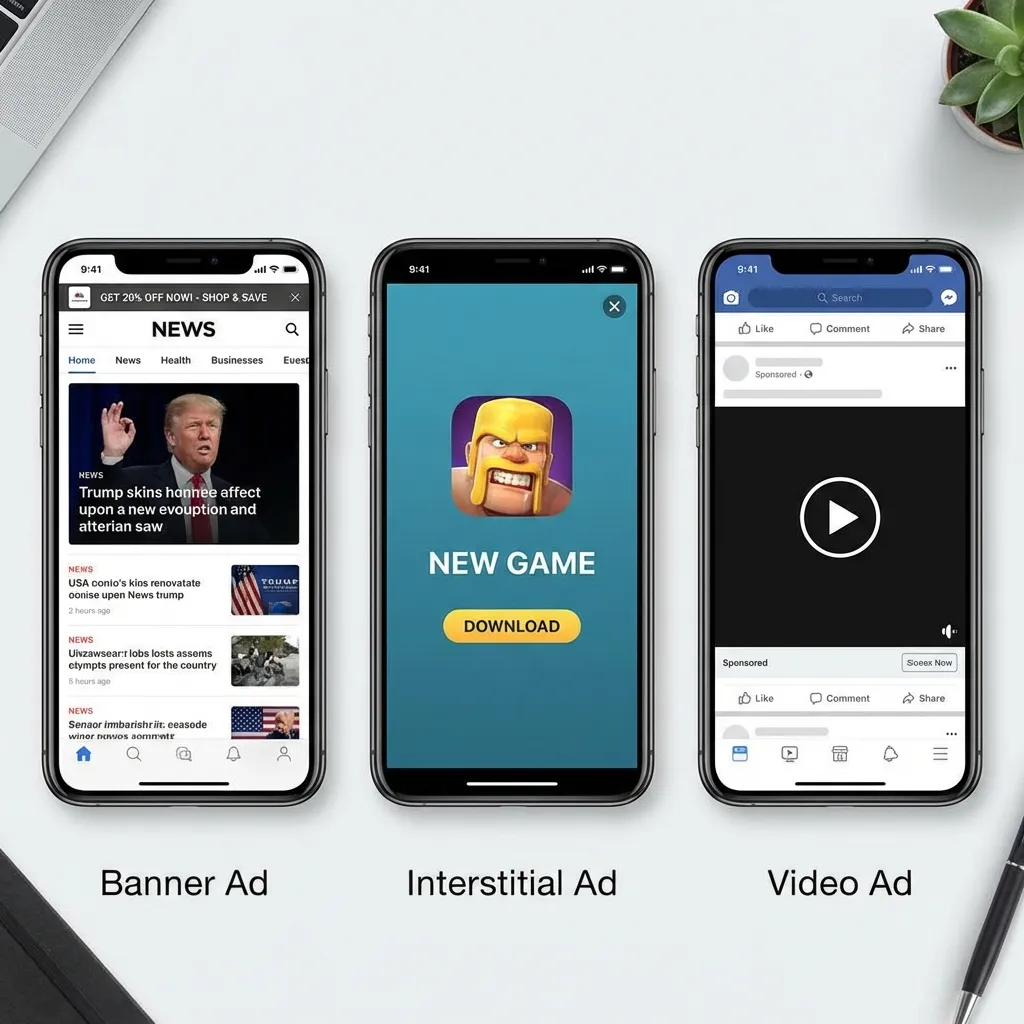
Delivering promotional content to mobile devices. It's a dominant force in the digital ad space.
Common Formats:
- Banner Ads: Displayed at the top/bottom of a screen.
- Interstitial Ads: Full-screen ads at transition points (e.g., between game levels).
- Video Ads: Short video clips (pre-roll, mid-roll).
- Native Ads: Ads that match the look and feel of the platform.
Key Advantage 📊
Vast reach and sophisticated targeting capabilities (demographics, location, behavior).
Challenge:
Can suffer from "ad blindness" and may be perceived as intrusive.
Channel 2: SMS Marketing ⚡
SMS (Short Message Service) Marketing: Sending text-only promotional messages directly to customers who have opted in.
Strengths:
- Incredible Open Rates: Often cited as high as 98%.
- Immediate Delivery: Reaches the audience in seconds.
- High Reach: Works on any mobile phone, no internet required.
Real-World Example
A local restaurant sends a text: "TGIF! Show this message to get 20% off your pizza order tonight. Valid until 9 PM."
Channel 3: MMS Marketing 🖼️
MMS (Multimedia Messaging Service) Marketing: An enhanced version of SMS that allows for sending multimedia content.
- Includes images, short videos, audio clips, and GIFs.
- Higher character limit compared to SMS (typically 1,000+).
- Visually more engaging and can lead to higher conversion rates.
Think of it as SMS with storytelling power. Perfect for product showcases, event flyers, or animated coupons.
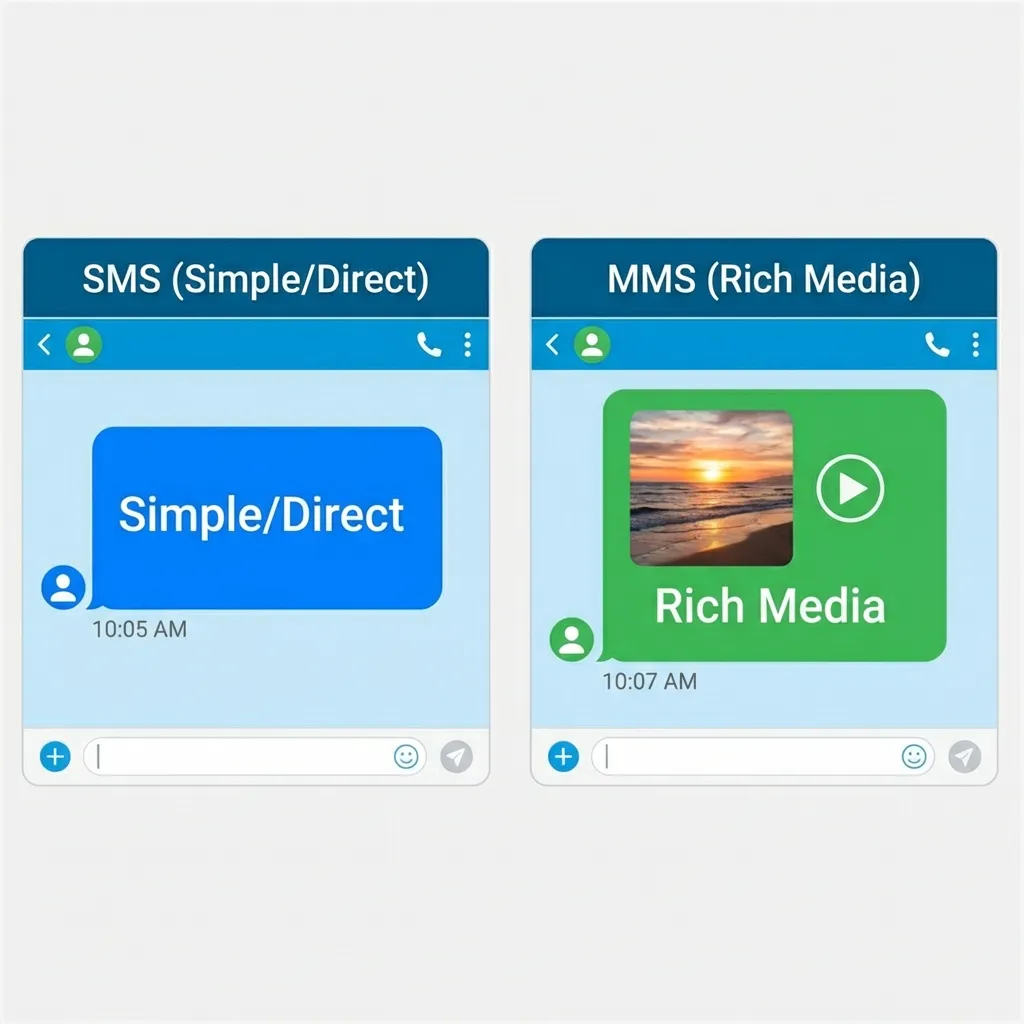
Comparison: SMS vs. MMS
SMS Marketing
- Content: Text-only, 160 characters
- Cost: Lower per message
- Best For: Quick alerts, reminders, simple offers, confirmations
- Example: "Your appointment is confirmed for 2 PM."
MMS Marketing
- Content: Images, video, GIFs, audio
- Cost: Higher per message
- Best For: Rich promotions, branding, product visuals, engaging content
- Example: An image of a new menu item with a discount code.
Application in Nepal 🇳🇵
With high smartphone penetration, mobile marketing is a vital tool for Nepali businesses.
Popular Channels in the Nepali Market:
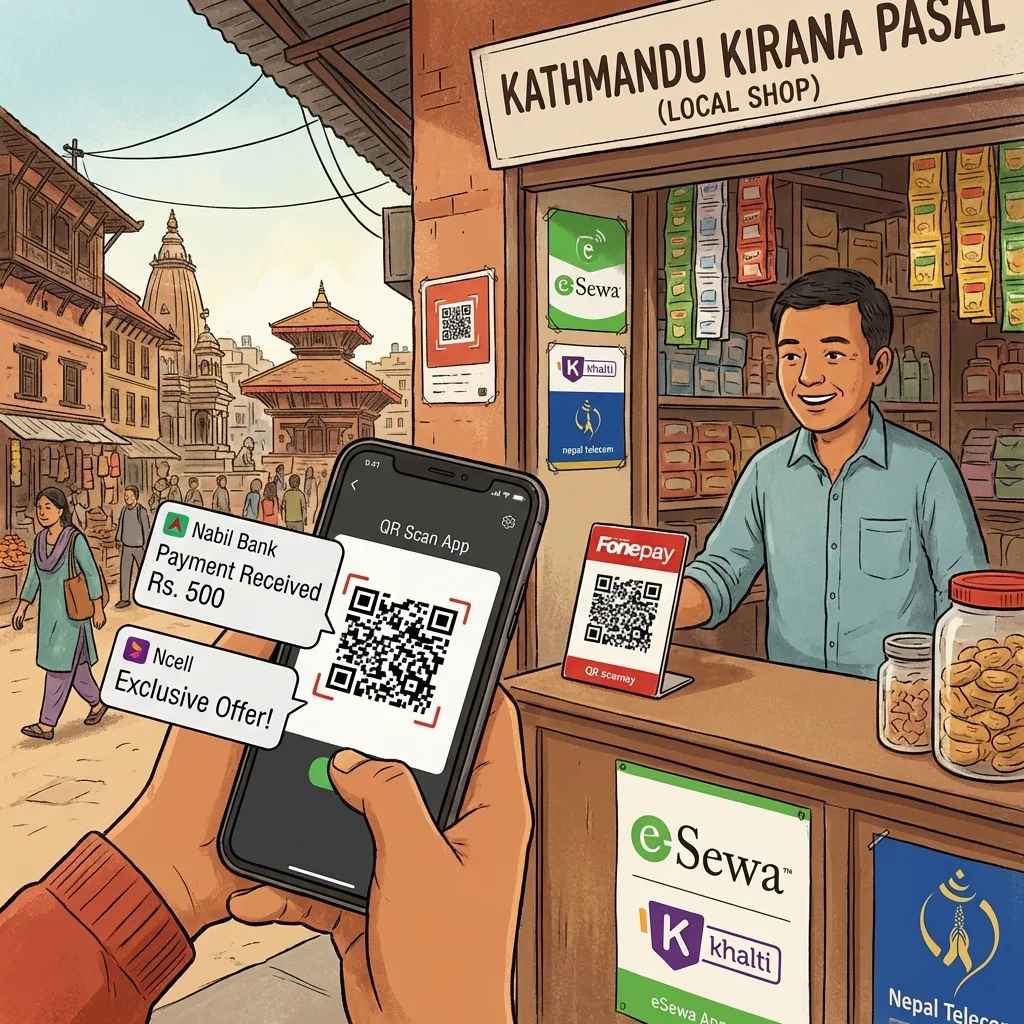
- SMS Marketing: Widely used by banks (e.g., Nabil Bank alerts), ISPs (e.g., WorldLink payment reminders), and retailers for mass communication.
- Mobile Apps: Companies like eSewa, Daraz, and Foodmandu use apps to build customer loyalty, offer services, and run promotions.
- Mobile Advertising: Growing trend on platforms like Facebook, Instagram, and popular Nepali news portals to reach a wider audience.
- QR Codes: Exploded in popularity via digital wallets like Fonepay and eSewa for payments, information access, and special offers.
Key Takeaways 🔍
- Mobile marketing is a direct and personal way to engage with customers on the devices they use most.
- Channels vary in richness, cost, and reach. SMS is fast and direct, while MMS offers greater engagement through multimedia.
- Mobile advertising provides broad reach and targeting, while mobile apps foster long-term customer relationships.
- In Nepal, SMS, apps, and QR codes are particularly powerful and widely adopted mobile marketing tools.
Thank You!
Any questions?