Unit 5.case
Case Study: SEO Content Strategy for a Tourism Operator
Learning Objectives
By the end of this case study, you will be able to analyze how a targeted content strategy can transform an e-commerce business model.
- ✅ Analyze the role of keyword intent and topic clustering in attracting qualified traffic.
- ✅ Explain how pillar pages and E-E-A-T signals build authority and trust.
- ✅ Connect SEO efforts directly to business outcomes like increased direct bookings and lead quality.
- ✅ Evaluate the interplay between on-page SEO, link acquisition, and conversion rate optimization (CRO).
The Challenge: Agent Dependency
A mid-size trekking company faced a common e-commerce problem:
- Heavy reliance on 3rd-party booking agents & portals.
- Low volume of direct, high-margin bookings.
- Weak online presence; not seen as an authority.
- Scattered, inconsistent blog posts with no clear strategy.

High competition and low brand visibility were key issues.
The Strategic Shift: Content Hubs ⚡
Core Idea: Instead of random blog posts, the team built interconnected "content hubs" to establish topical authority.
These hubs were structured around user needs, not just keywords:
- 🏔️ Routes: Detailed guides for each trek.
- 🗓️ Seasons: What to expect in Spring vs. Autumn.
- 📜 Permits: Navigating the required paperwork.
- 🎒 Gear: Checklists and recommendations.
Strong internal linking connected all related content, guiding both users and search engines.
Key Move 1: Keyword Clustering by Intent 🎯
Keywords were grouped based on the user's stage in the buyer's journey.
Informational (Plan)
- "best time to trek nepal"
- "everest base camp difficulty"
- "what to pack for trekking"
Commercial (Compare)
- "trekking company reviews"
- "annapurna circuit vs ebc"
- "guided vs independent trek"
Transactional (Book)
- "book everest base camp trek"
- "trekking packages nepal"
- "trekking guide cost"
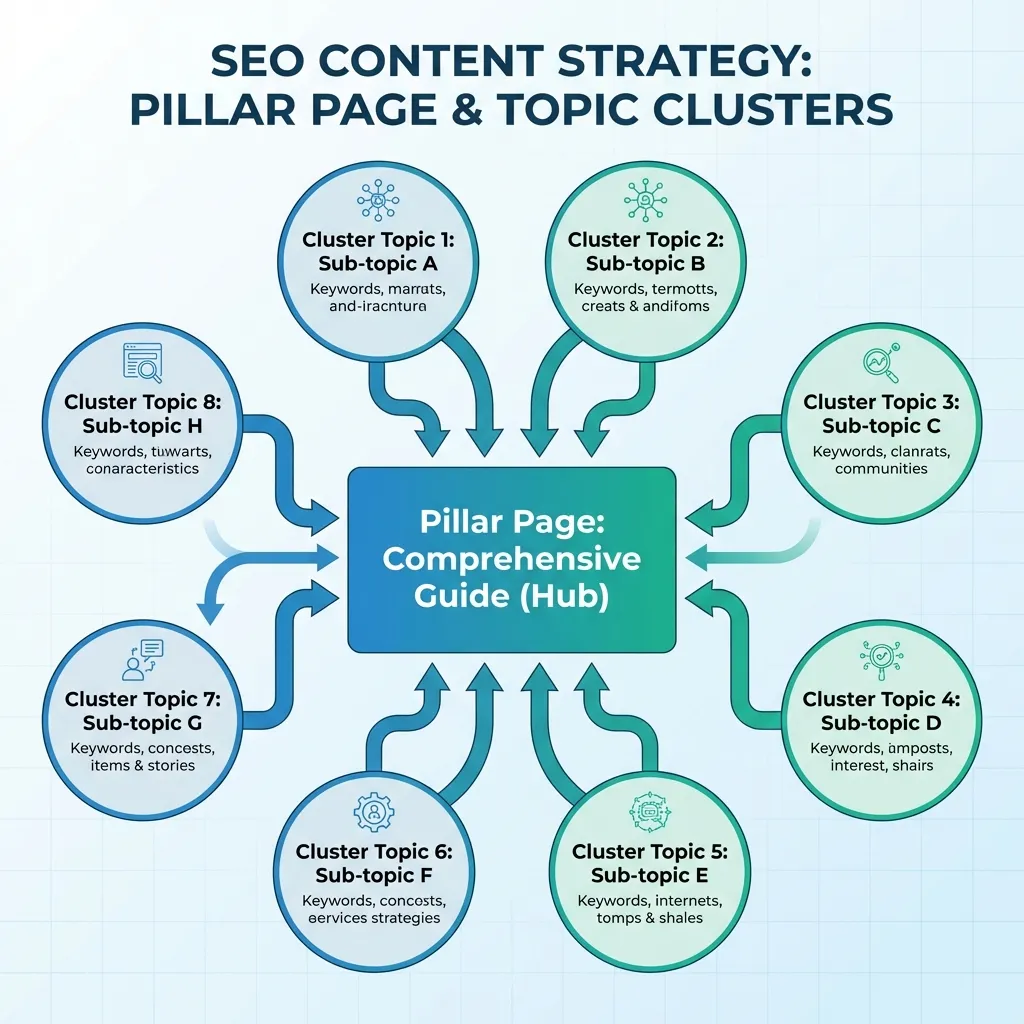
Key Move 2: Pillar Pages & Topic Clusters
Pillar Page
A comprehensive, central page covering a broad topic (e.g., "The Ultimate Guide to Everest Base Camp Trek").
Supporting Posts
Detailed articles on sub-topics (e.g., "EBC Packing List," "Acclimatization on EBC Trek") that all link back to the pillar page.
Enriching Content with E-E-A-T & Schema
E-E-A-T stands for: Experience, Expertise, Authoritativeness, and Trustworthiness. It's a key factor in Google's quality assessment.
The team enriched trek pages to build trust:
- FAQs: Answered common user questions directly on the page.
- Itinerary Schema: Used structured data to help Google understand the day-by-day plan.
- E-E-A-T Signals:
- Author bios for guides (Experience, Expertise).
- Safety certifications and protocols (Trust).
- Testimonials and reviews (Authoritativeness).
Key Move 3: Link Acquisition & CRO
🔗 Link Acquisition
Building authority required earning links from reputable sources.
- Partnerships with local hotels and gear shops.
- Guest posts on authoritative travel blogs.
- Getting listed on official tourism resource pages (e.g., Nepal Tourism Board).
📈 Conversion Rate Optimization (CRO)
Getting traffic is only half the battle. They needed to convert visitors into leads.
- Clear comparison tables for different packages.
- Prominent "Refundable Deposit" messaging to reduce friction.
- "Request a Callback" chat feature for personalized advice.
The Outcomes: Measurable Success 📊
The integrated strategy produced significant, quantifiable results.
+120%
Increase in organic search sessions year-over-year.
+80%
Increase in direct booking inquiries during peak season.
- Higher Lead Quality: Inquiries came from well-informed users who had read the detailed guides.
- Reduced Dependency: Less reliance on high-commission aggregator portals, improving profit margins.
Practical Application: Annapurna Circuit
🔍 Exercise: Your Turn
Imagine you are creating the pillar page for the "Annapurna Circuit Trek". Based on this case study, what 3 supporting blog posts would you create?
- Example 1 (Planning Intent): "Best Teahouses on the Annapurna Circuit"
- Example 2 (Comparison Intent): "Annapurna Circuit vs. Everest Base Camp: Which is Right for You?"
- Example 3 (Trust Building): "Safety and Altitude Sickness Guide for the Annapurna Trek"
Lessons & Unit 5 Connections
This case connects directly to our course topics (5.1, 5.4, 5.5).
Lesson 1: Structure Trumps Volume
A well-structured content hub with deep topic coverage and strong internal linking outperforms hundreds of scattered, unrelated blog posts.
Lesson 2: Trust is a Conversion Factor
In high-consideration purchases like tourism, signals of trust and clarity (E-E-A-T, refund policies, safety info) are decisive in driving conversions.
Key Takeaways
- 🎯 A successful SEO strategy aligns content with user intent at every stage of the customer journey (plan, compare, book).
- 🏗️ Building topical authority through pillar pages and topic clusters is a long-term asset that reduces reliance on paid advertising.
- 🤝 Trust signals (E-E-A-T) and conversion-focused design (CRO) work together to turn website traffic into valuable business leads.
- 📈 SEO is not just a marketing function; it's a core business strategy that can directly impact profitability and reduce dependency on intermediaries.
Thank You
This case study demonstrates the power of a holistic SEO content strategy in e-commerce.
Next Topic: Unit 5: "Case Study: Google Ads for a Kathmandu Electronics Retailer