Unit 5.4
Understanding E-commerce Marketing Costs and Benefits
Learning Objectives
By the end of this chapter, you will be able to:
- ✅ Identify the major costs associated with e-commerce marketing.
- ✅ Define Customer Acquisition Cost (CAC).
- ✅ Define Customer Lifetime Value (LTV).
- ✅ Understand the crucial relationship between CAC and LTV for profitability.
The Reality of Digital Marketing
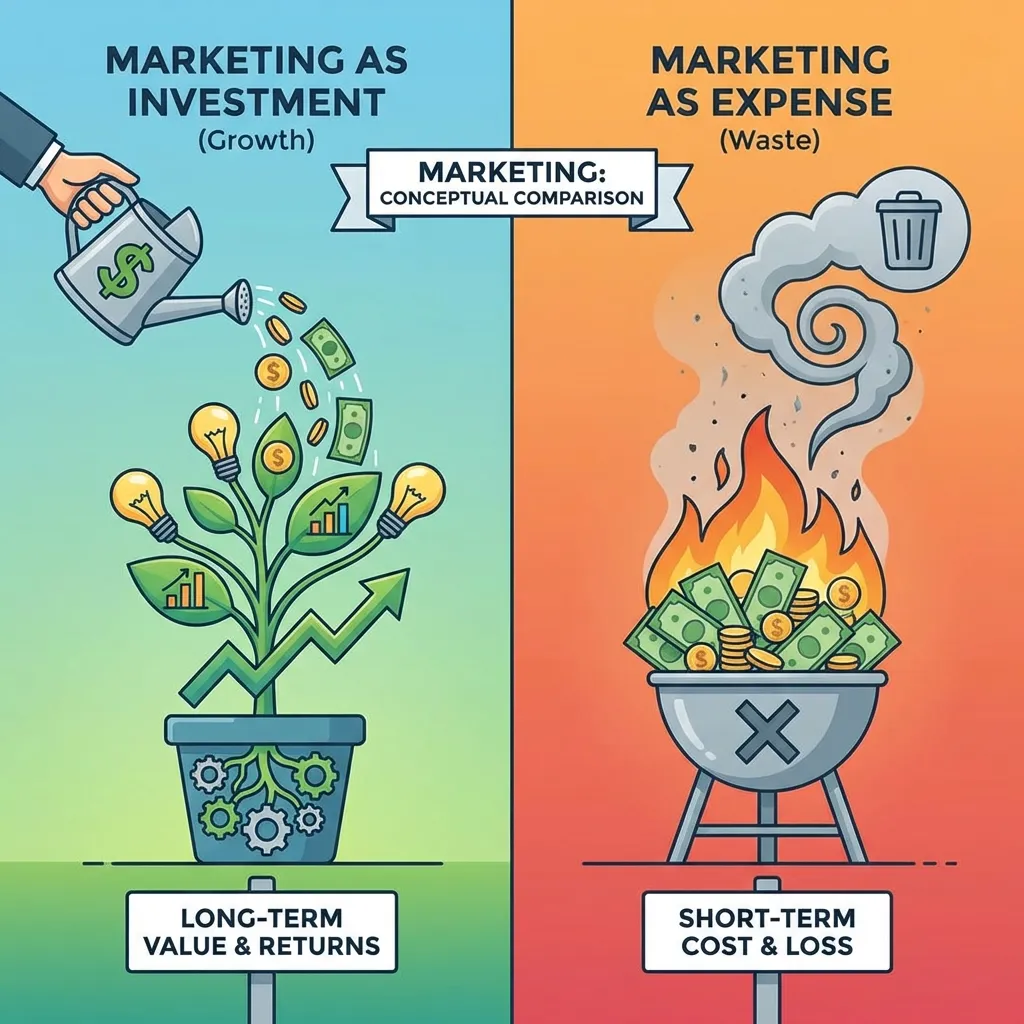
"Effective marketing is an investment, not an expense."
While digital marketing offers incredible reach and targeting, it is not free.
The key is to understand the costs involved and to meticulously measure the return on that investment (ROI).
⚡ If you can't measure it, you can't improve it.
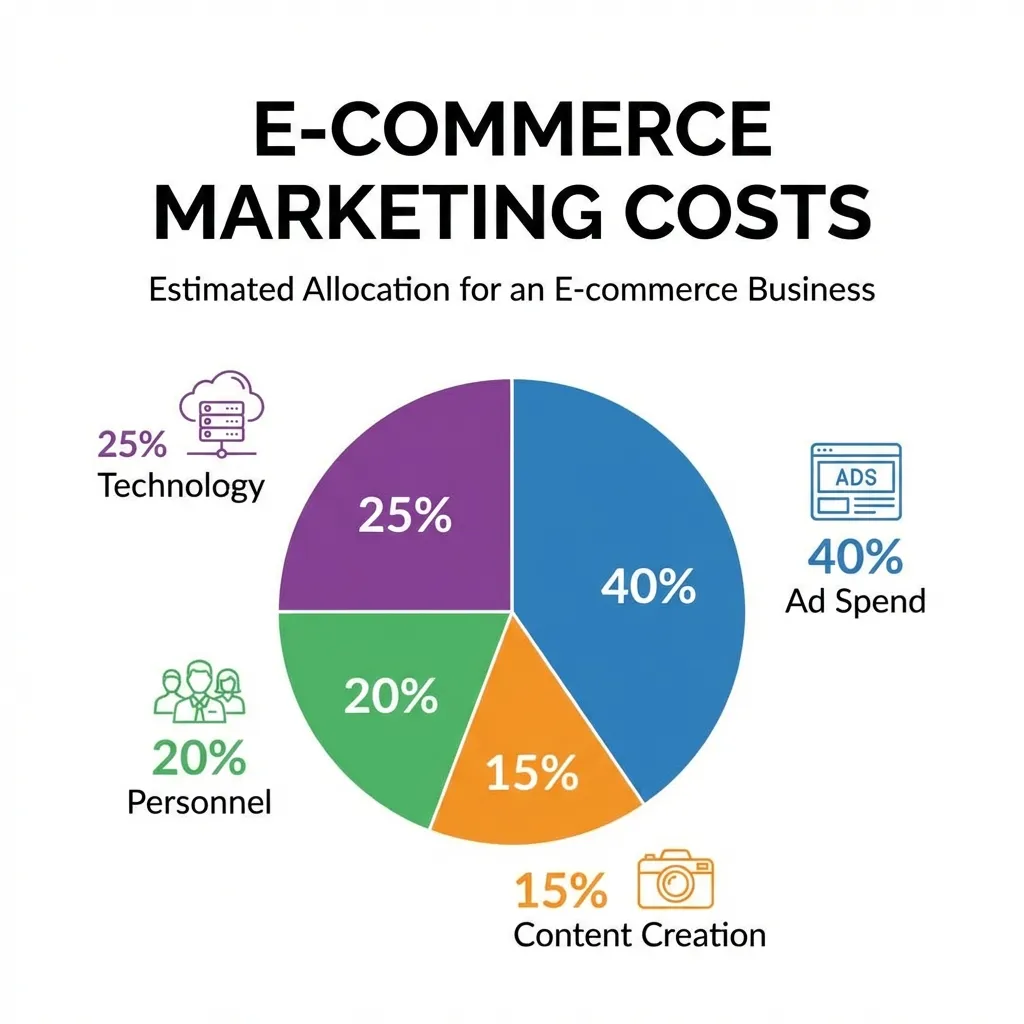
Core E-commerce Marketing Costs 📊
Advertising Spend
Direct cost of running paid ads on platforms like Google, Facebook, Instagram, and TikTok.
Technology Costs
Software and tools that power your marketing, like CRM, email marketing platforms, and analytics software.
Personnel Costs
Salaries and benefits for your marketing team, including managers, specialists, and content creators.
Breaking Down the Costs Further
- Website Development: Design, hosting, and maintenance.
- SEO: Improving organic search rankings.
- PPC Advertising: Paying per click on search engines.
- Social Media Marketing: Content creation and paid ads.
- Email Marketing: Service provider costs and campaign creation.
- Content Creation: Blog posts, videos, graphics.
Measuring the Benefits: Key Metrics
To determine if your marketing investments are paying off, we focus on two critical metrics:
🎯 Customer Acquisition Cost (CAC)
How much does it cost to get ONE new customer?
📈 Customer Lifetime Value (LTV)
How much profit will that customer generate over their entire relationship with you?
🔍 Defining Customer Acquisition Cost (CAC)
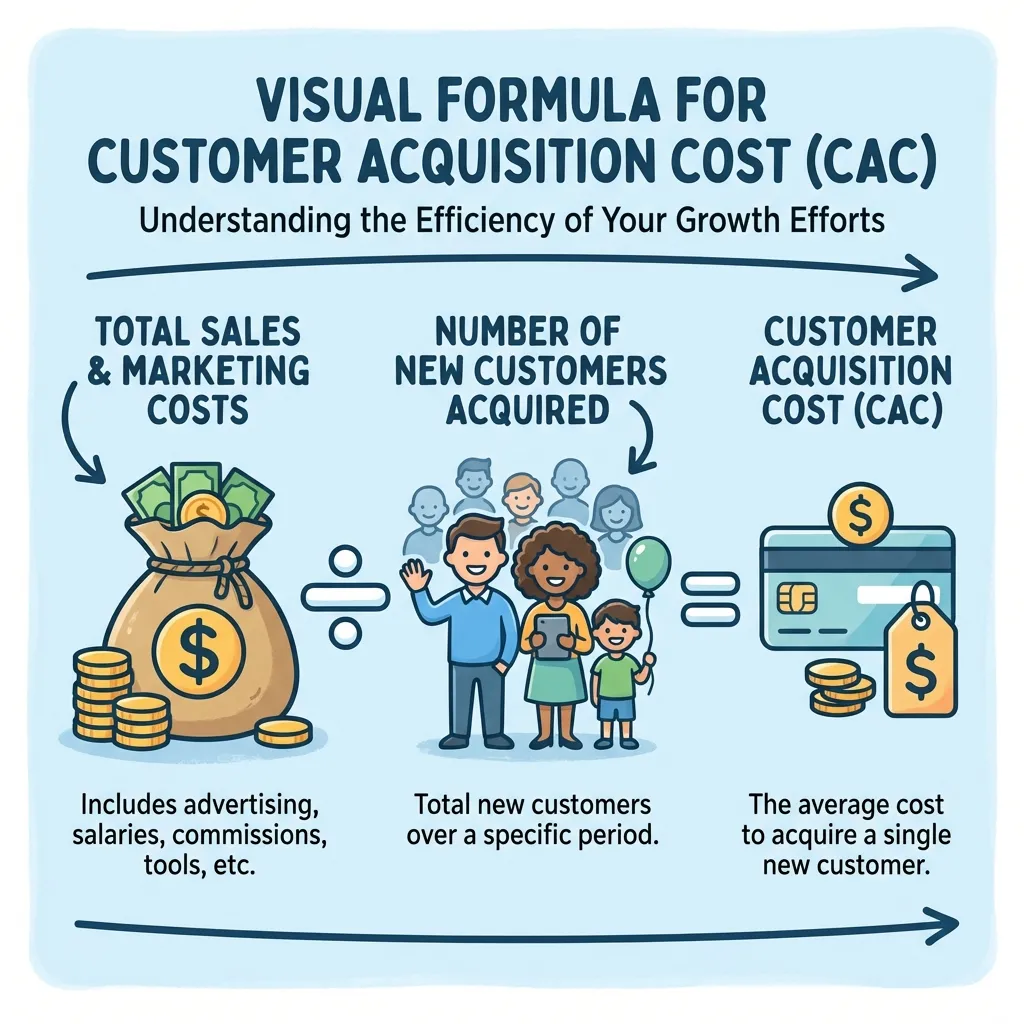
CAC is the total cost of your sales and marketing efforts needed to acquire a single new customer.
The Formula:
CAC = (Total Marketing & Sales Costs) / (Number of New Customers Acquired)
This includes ad spend, salaries, software costs, etc., over a specific time period.
🔍 Defining Customer Lifetime Value (LTV)
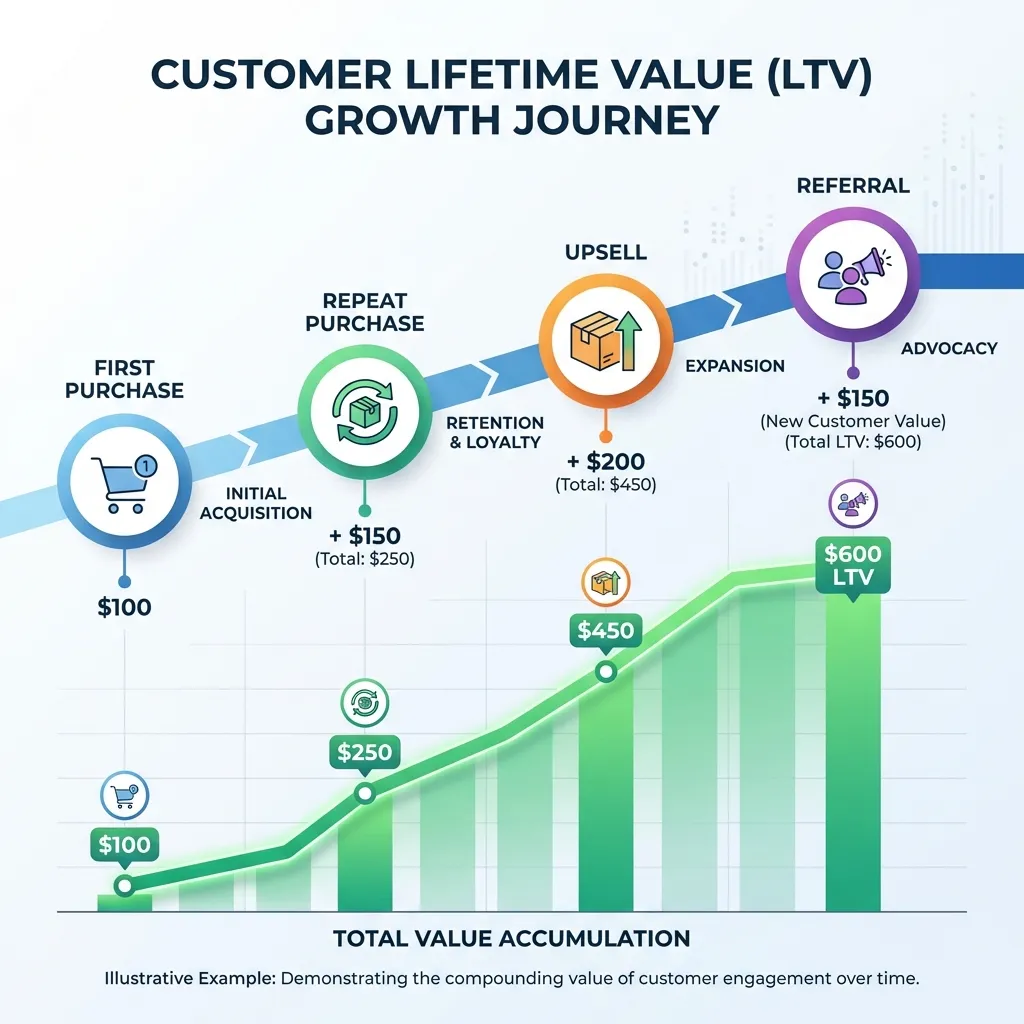
LTV is a prediction of the total net profit your business will make from any given customer.
It answers the question: "What is the long-term financial value of this customer?"
LTV considers:
- Average purchase value
- Purchase frequency
- Customer lifespan
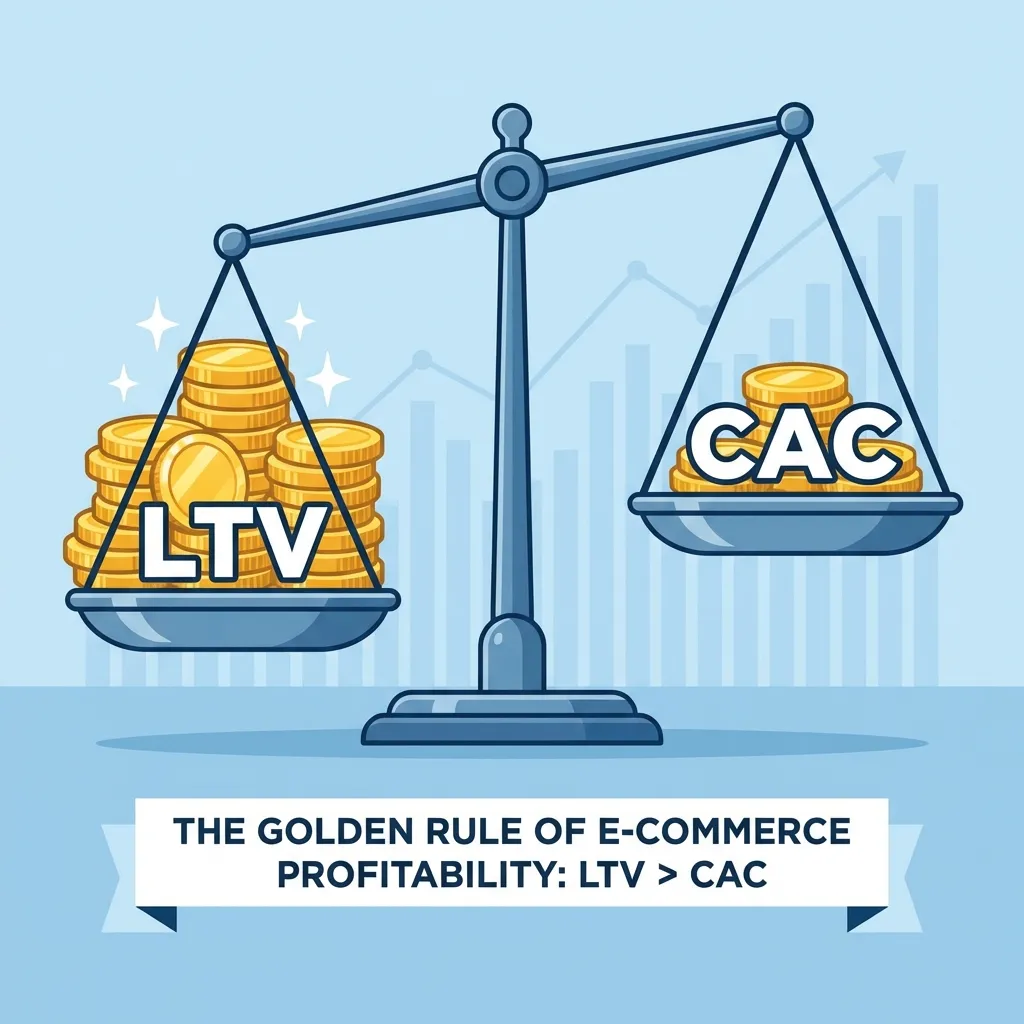
The Golden Rule of E-commerce Profitability
For a business to be sustainable and profitable:
LTV > CAC
The value a customer brings must be greater than the cost to acquire them.
A healthy ratio is often considered to be 3:1 (LTV is 3x CAC).
Practical Application: Online Marketing in Nepal
Costs & Strategies
- Social media marketing (Facebook, Instagram) can be very cost-effective for reaching a large audience.
- Search Engine Marketing (SEM) can be more expensive but highly targeted.
- Hiring a digital marketing agency has a wide range of costs.
Challenges & Opportunities
- Challenge: Measuring ROI can be difficult due to a lack of reliable, localized data and tools.
- Opportunity: Businesses that effectively track metrics like CAC and LTV gain a significant competitive advantage.
Strategic Levers: Improving Your Ratio
How to 🔻 Lower CAC?
- Improve conversion rates (CRO)
- Optimize ad targeting
- Invest in organic channels (SEO, Content)
- Implement a referral program
How to 🔼 Increase LTV?
- Focus on customer retention
- Implement email marketing & loyalty programs
- Upsell and cross-sell relevant products
- Provide excellent customer service
Key Takeaways
- E-commerce marketing is a significant but necessary investment, with costs in advertising, technology, and personnel.
- Customer Acquisition Cost (CAC) measures the cost to gain one new customer.
- Customer Lifetime Value (LTV) predicts the total profit a customer will generate.
- The fundamental goal for a profitable e-commerce business is to ensure that LTV > CAC.
Thank You
Any questions?
Next Topic: Unit 5: "Case Study: SEO Content Strategy for a Tourism Operator