Unit 5: Database Management System
Data Storage and Retrieval
Today's Learning Objectives
- ✅ Explain how different types of data are stored for efficient business operations.
- ✅ Describe data retrieval methods and their use in decision-making across ALL departments.
- ✅ Analyze the role of data storage in Finance, HR, Operations, and Marketing.
- ✅ Differentiate between structured and unstructured data and their business value.
The Digital Filing Cabinet: Why Storage Matters
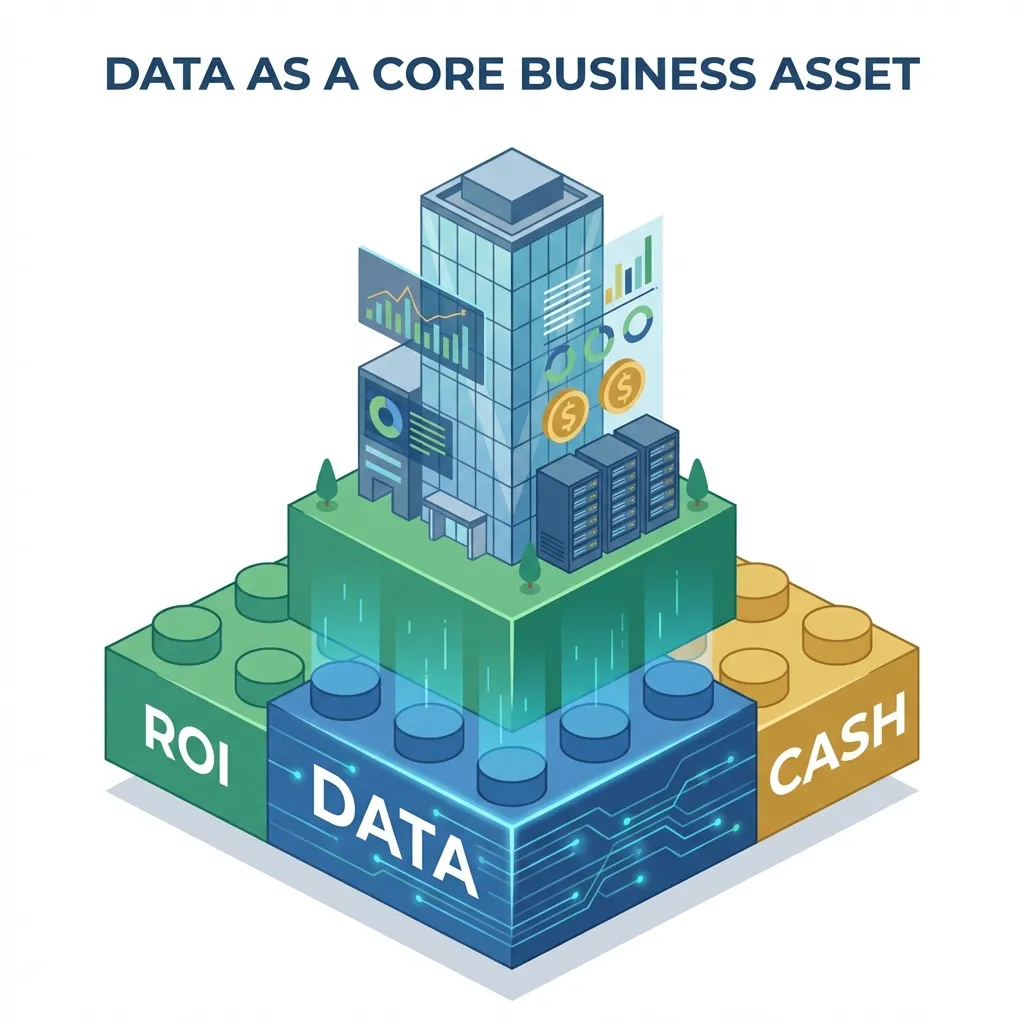
Data is a core business asset, just like cash, buildings, or inventory. How you store it determines its value.
Proper storage ensures data is:
- Available when needed (Accessibility)
- Correct and trustworthy (Integrity)
- Safe from unauthorized access (Security)
It's the foundation for all business intelligence, reporting, and strategic decision-making.
Evolution of Data Storage
Traditional Storage 🗄️
- Paper Files
- Local Hard Drives
- On-Premise Servers
Challenge: Difficult to access, share, and analyze. High risk of data loss.
Modern Storage ☁️
- Databases (SQL, NoSQL)
- Data Warehouses
- Cloud Storage (AWS, Azure)
Advantage: Scalable, accessible from anywhere, and enables powerful analytics.

Two Faces of Business Data
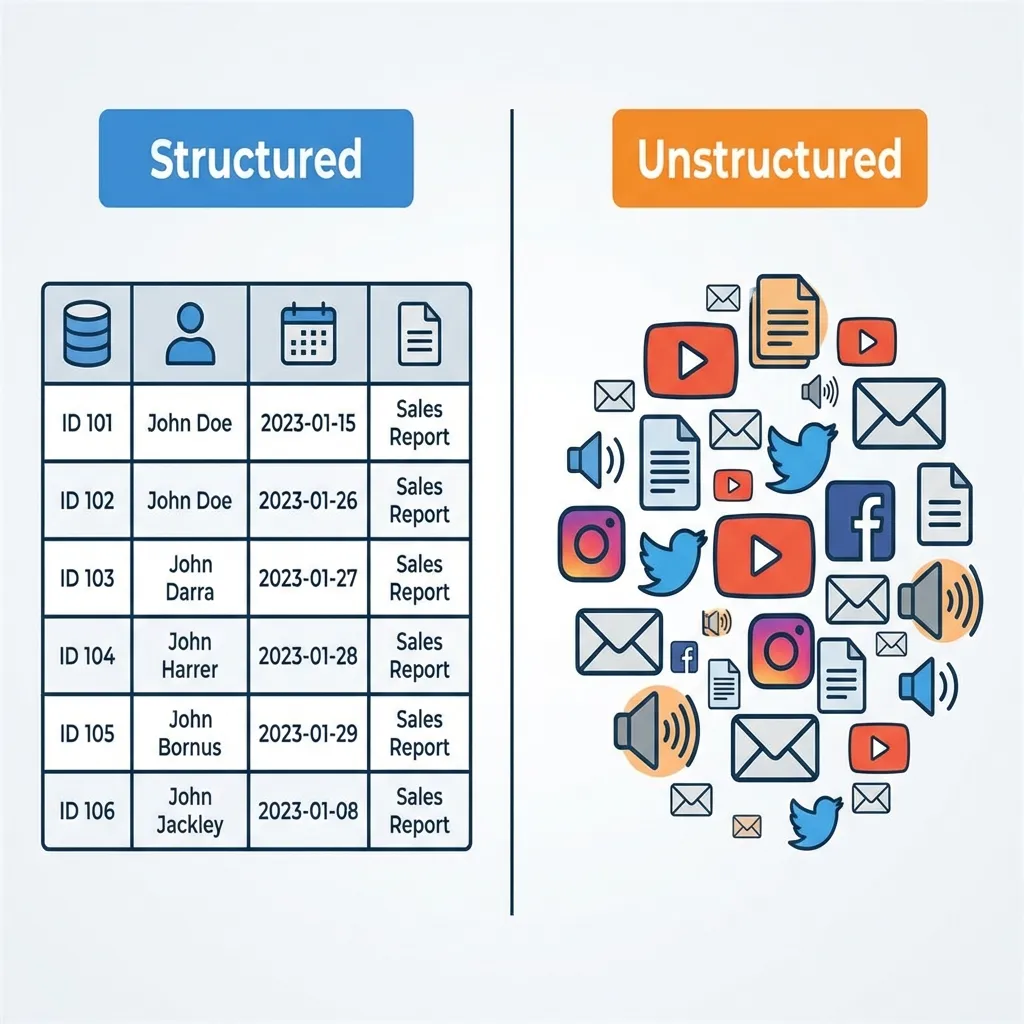
Structured Data 📊
- Finance: Transaction records in an accounting system.
- HR: Employee details (ID, name, salary) in a payroll database.
- Operations: Inventory levels (SKU, quantity, location).
Unstructured Data 📄
- Marketing: Customer reviews from a website.
- HR: Resumes (CVs) submitted for a job opening.
- General: Internal emails and meeting recordings.
The Engine Room: The Database
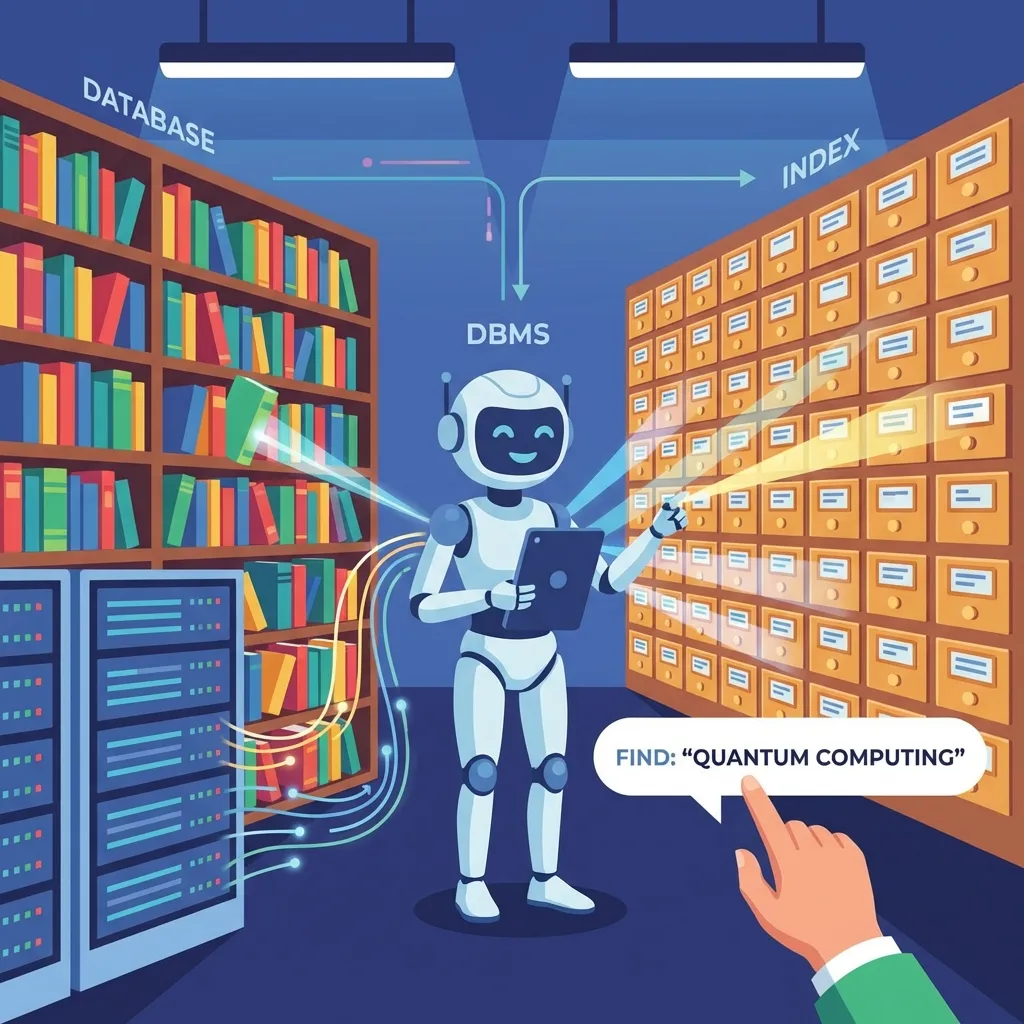
A Simple Analogy: A University Library
- The Library is the database (it holds all the books/data).
- The Card Catalog is the index (it tells you where to find things quickly).
- The Database Management System (DBMS) is the Librarian (manages, secures, and retrieves everything).
🔍 How We "Ask" the Database for Information
Introduction to SQL (Structured Query Language)
SQL is the standard language for communicating with databases. Business managers don't need to write it, but they must understand what's possible to ask the right questions.
Business Question: "Show me all employees in the 'Operations' department with a salary over NPR 90,000."
Illustrative SQL Query:
SELECT Name, Salary
FROM Employees
WHERE Department = 'Operations' AND Salary > 90000;Data Retrieval in Action: Finance & Accounting 💰
Fueling Financial Decisions
- Quarterly Reporting: Retrieving all transactions from the last quarter to create a Profit & Loss statement.
- Budgeting & Forecasting: Pulling 3 years of historical spending data to forecast next year's department budgets.
- Auditing & Compliance: Querying for all transactions over NPR 1,000,000 to check for compliance with internal policies.
- Financial Analysis: Retrieving sales data and expense data to calculate profit margins for each product line.
Data Retrieval in Action: Operations & Supply Chain ⚙️
Optimizing the Core Business
- Inventory Management: A system retrieves current stock levels every hour. If an item is low, it automatically triggers a re-order request. (e.g., Bhat-Bhateni)
- Logistics: Tracking shipment data from India to Kathmandu to predict delivery times and identify bottlenecks at the border.
- Production Planning: Querying sales data from last month to decide which Wai Wai noodle flavor to produce most of this month. (e.g., CG Foods)
- Quality Control: Retrieving defect data from the production line to identify faulty machinery.
Data Retrieval in Action: Human Resources 🤝
Managing the Most Valuable Asset
- Recruitment: Searching the applicant database for candidates with an "MBA" and "3+ years of marketing experience".
- Payroll Processing: Retrieving employee attendance records, salary grades, and tax information to accurately process monthly salaries.
- Performance Management: Pulling performance review scores and training completion data to identify employees ready for promotion.
- Workforce Planning: Analyzing employee turnover data by department to identify potential management issues.
Beyond the Database: Data Warehouses
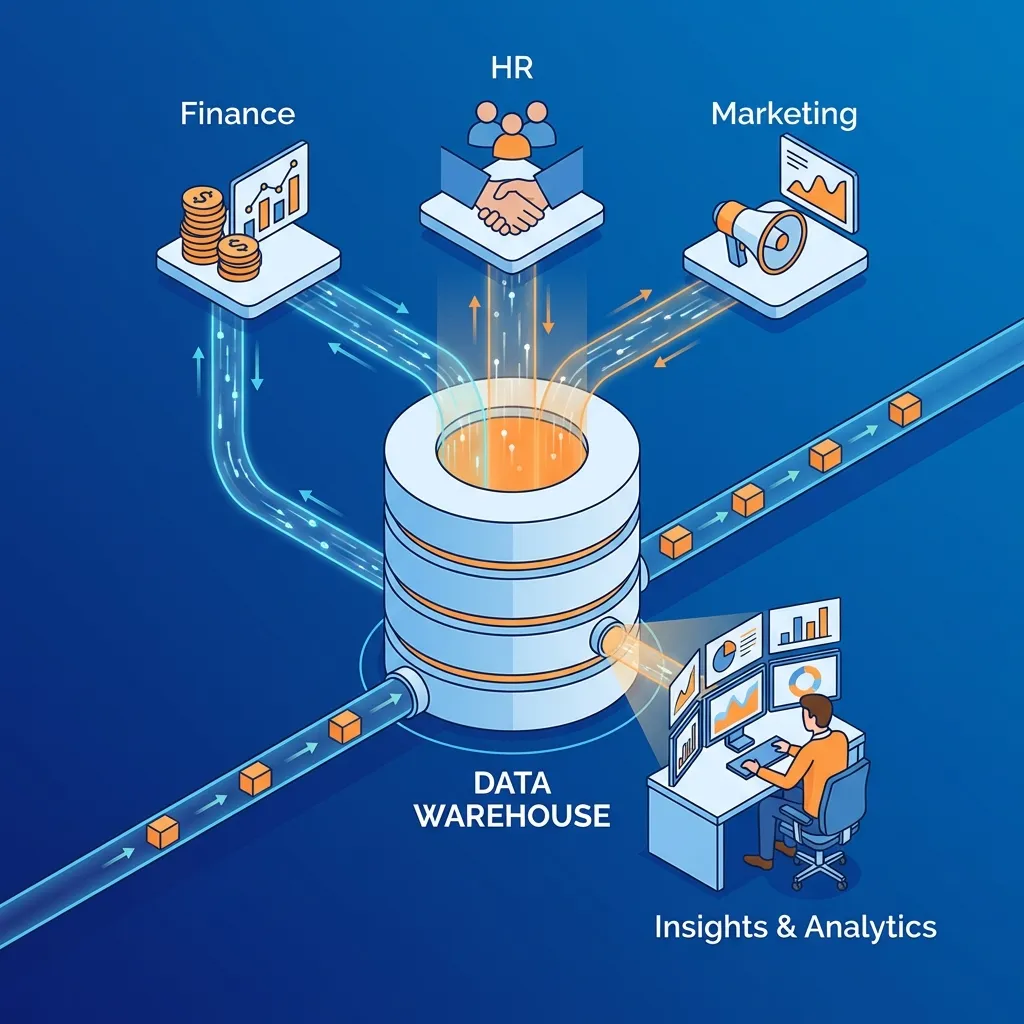
Storing Data for Strategic Analysis
A Data Warehouse could combine:
Business Insight: Identify customers who have a savings account but no loan, and have recently visited the "Home Loan" page on the website. 🎯
Practical Application in Nepal 🇳🇵
Data Powers Nepali Businesses
FinTech 📱
(eSewa / Khalti)
Stores millions of daily transaction records. Retrieves data to detect fraud, analyze user spending for new service offerings, and report to Nepal Rastra Bank.
E-commerce 🛍️
(Daraz Nepal)
Stores vast product catalogs, customer profiles, and order histories. Retrieves data to power recommendation engines and manage inventory for thousands of sellers.
Manufacturing 🍜
(CG Foods)
Stores production data, supply chain logistics, and distributor sales info. Retrieves data to optimize production schedules and manage nationwide distribution efficiently.
Summary & Key Takeaways
What This Means for You as a Future Business Leader
- 💼 Effective data storage is not an "IT problem"—it's a fundamental business requirement for every single department.
- 💡 Understanding how to retrieve data (the art of asking the right questions) empowers better, faster decision-making.
- 📊 Both structured (sales figures) and unstructured (customer feedback) data hold immense value and must be managed.
- 🚀 Modern tools like databases and the cloud make powerful data management accessible to businesses of all sizes, from startups to large corporations.