Introduction to Databases and Business Data
Today's Learning Objectives
- ✅ Define what a database is and why it's a critical business asset.
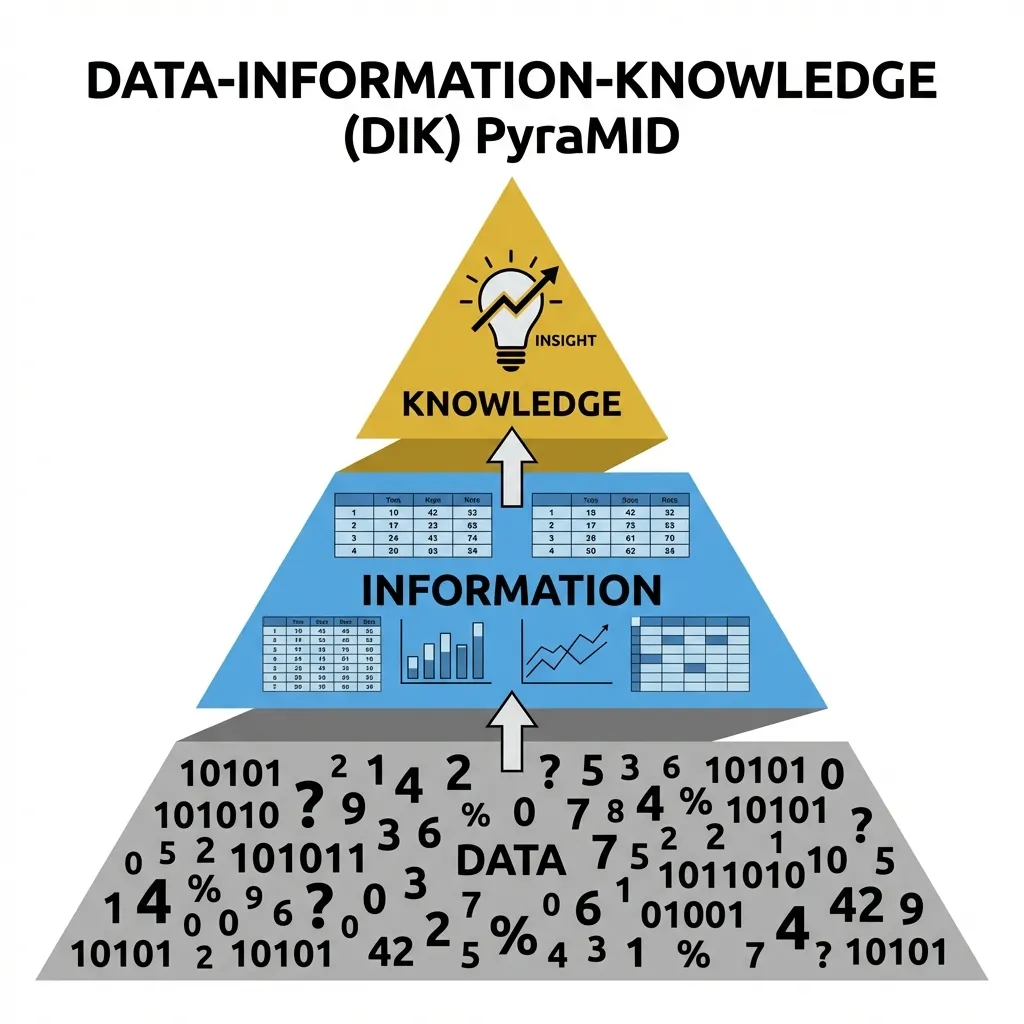
- ✅ Differentiate between raw data, useful information, and actionable business knowledge.
- ✅ Identify how various business functions (Finance, HR, Operations) use data to operate and make decisions.
- ✅ Recognize the limitations of traditional file systems and the advantages of a database approach.
The Building Blocks: From Data to Knowledge
📊 Data
Raw, unorganized facts and figures. It has no context on its own.
250, "Wai Wai", 2024-10-26, "Bhatbhateni", 15000
🔍 Information
Data that has been processed, organized, and given context to make it useful.
An order of 250 cartons of Wai Wai noodles, worth NPR 15,000, was placed by Bhatbhateni on Oct 26, 2024.
⚡ Knowledge
Actionable insights derived from information. It helps in decision-making.
Bhatbhateni is our top customer for noodles, with sales peaking in the last week of each month. We should plan our inventory accordingly.
Why is Business Data a Critical Asset? 💼
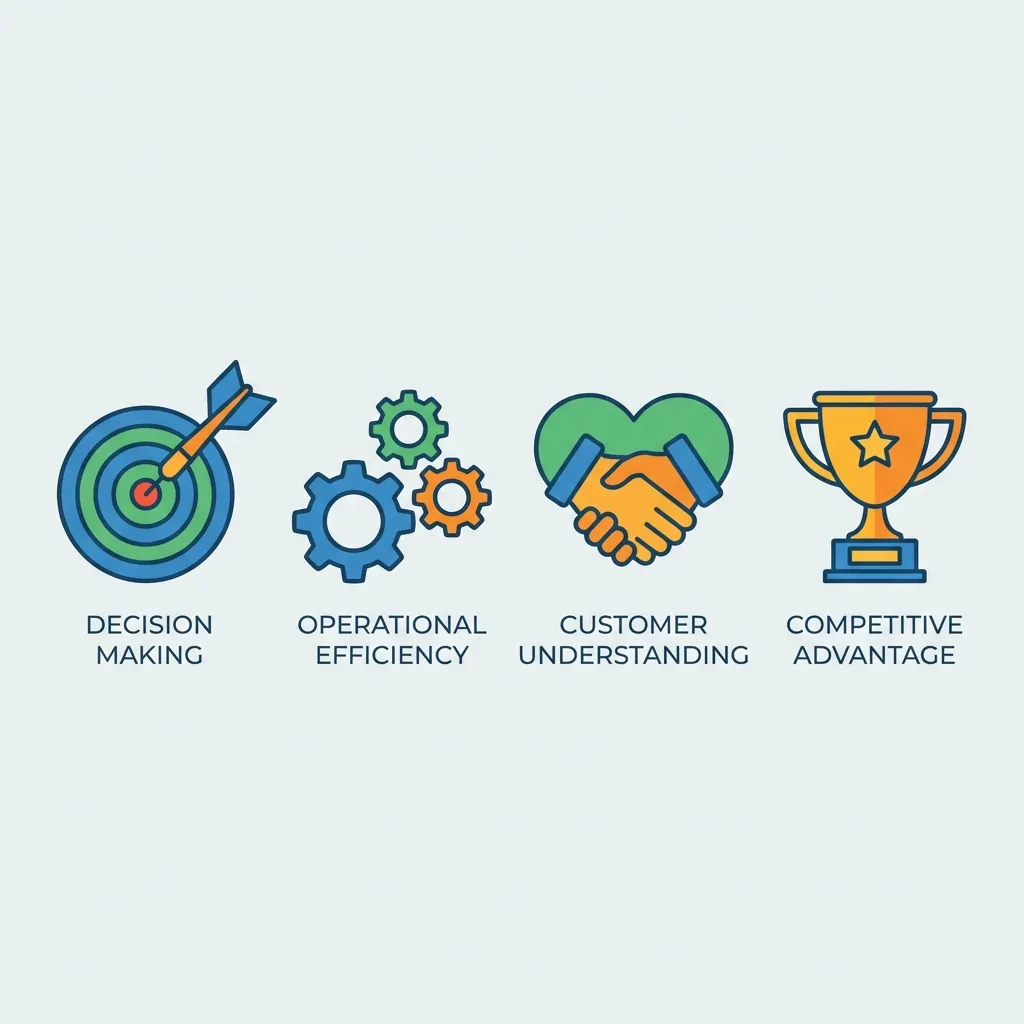
Data isn't just for the IT department. It's a strategic asset for the entire organization.
- 🎯 Informed Decision-Making: Move from "gut feelings" to data-driven strategies across all departments.
- ⚙️ Operational Efficiency: Streamline processes like supply chain management, payroll, and financial closing.
- 🤝 Enhanced Customer Understanding: Analyze purchase history and feedback to improve products and services.
- 💰 Competitive Advantage: Identify market trends and new opportunities before your competitors do.
The "Old Way": Problems with Spreadsheets & Files
Imagine every department has its own set of Excel files...
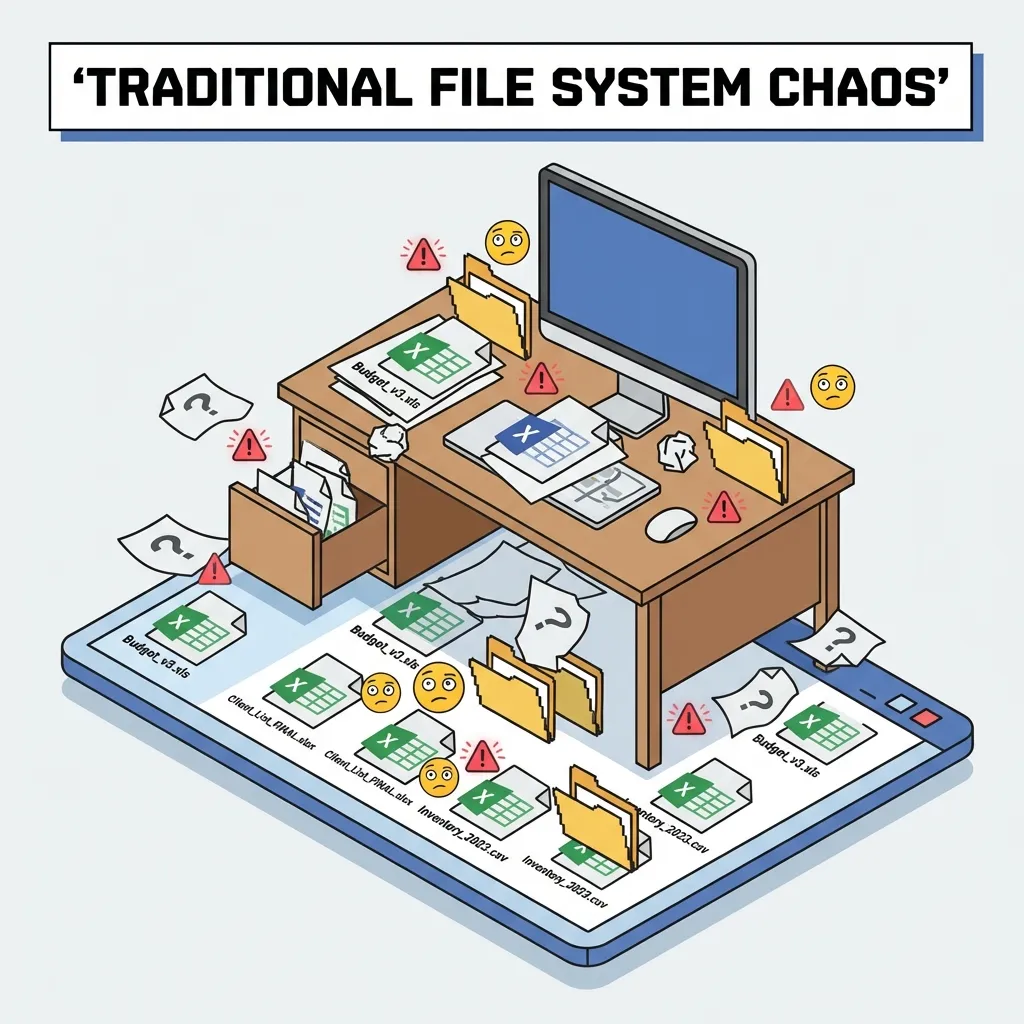
This leads to chaos:
- Data Redundancy: The same customer's address is stored in Finance, Marketing, and Operations files.
- Data Inconsistency: If a customer moves, which file gets updated? All of them? What if one is missed?
- Data Isolation: It's extremely difficult for the Marketing team to analyze sales data from the Finance team's files.
- Security Risks: Who has access to the sensitive payroll spreadsheet on the shared drive?
The Solution: What is a Database?
A database is an organized collection of structured data, stored electronically and managed by a Database Management System (DBMS).
Think of it as a highly organized, secure, and shared digital filing cabinet for the entire company.
Data in Action: Finance & Accounting 💰
How the Finance team uses a central database:
- Transaction Records: Every sale, purchase, and expense is recorded in a central ledger, ensuring accuracy.
- Financial Reporting: Generating an accurate Balance Sheet or Profit & Loss statement is as simple as running a query. No manual consolidation of spreadsheets.
- Budgeting & Forecasting: Analyzing historical spending data from the database to create realistic future budgets.
- Auditing: Providing auditors with a clear, verifiable, and tamper-proof trail of all financial activities.
Data in Action: Human Resources 🤝
How the HR team uses a central database:
- Employee Management: A single, secure record for each employee containing contact info, salary, performance reviews, and leave balance.
- Payroll Processing: Automatically calculating salaries, taxes (TDS), and benefits by pulling data from employee records and attendance systems.
- Recruitment Tracking: Managing applicant data, interview schedules, and hiring status in one place (Applicant Tracking System).
- Compliance: Ensuring all employee data management complies with labor laws and company policies.
Data in Action: Operations & Supply Chain ⚙️
How the Operations team uses a central database:
- Inventory Management: Real-time tracking of stock levels. When a sale is made, the inventory count is automatically updated.
- Supplier Management: Storing information on suppliers, purchase orders, pricing, and delivery times to optimize procurement.
- Production Planning: Using sales forecast data (from the same database) to plan manufacturing schedules and raw material orders.
- Logistics: Tracking shipments from the warehouse to the final customer, providing visibility to the entire company.
Data in Action: Marketing & Sales 📊
How the Marketing team uses a central database:
- Customer Relationship Management (CRM): A central database of all customer interactions, purchase history, and contact details.
- Campaign Analysis: Measuring the Return on Investment (ROI) of a campaign by linking marketing spend to actual sales data from the same system.
- Market Segmentation: Grouping customers based on purchase behavior (e.g., "high-value customers," "frequent buyers") for targeted promotions.
- Sales Reporting: Real-time dashboards showing sales performance by product, region, or salesperson.
Tying It All Together: A Unified Business View
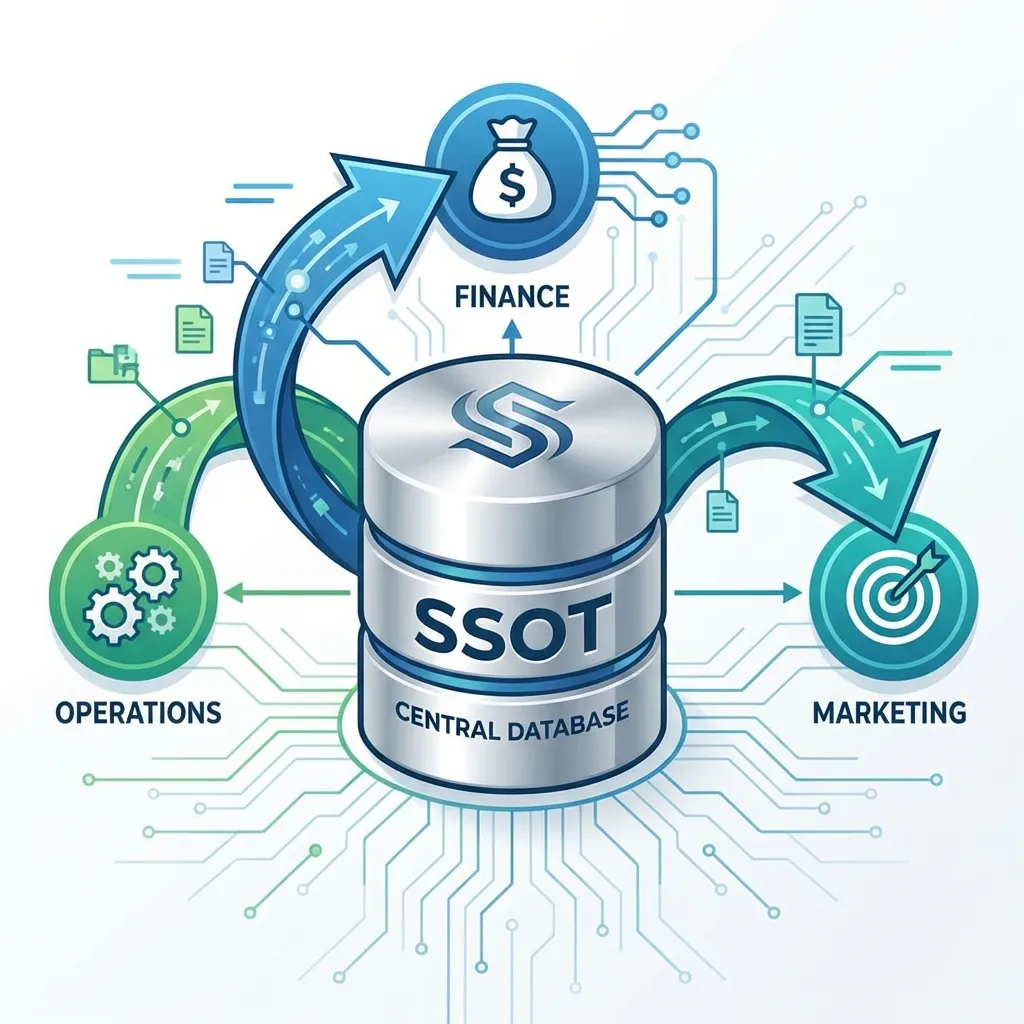
A central database breaks down departmental silos and enables collaboration.
Central Business Database
↑↓
Finance pulls real-time sales data for revenue reports.
↑↓
Operations uses sales data to update inventory and plan production.
↑↓
Marketing analyzes customer purchase history to personalize campaigns.
Databases in Action: The Nepali Context
eSewa (FinTech)
Manages millions of user accounts, transaction histories, and merchant details. The database is critical for ensuring secure, fast, and reliable financial data processing.
Daraz (E-commerce)
Its database tracks customer orders, product inventory from thousands of sellers, and user browsing behavior. This powers the recommendation engine and entire logistics network.
CG Foods (Manufacturing)
Uses databases to manage raw material inventory, production schedules (e.g., for Wai Wai), distribution networks, and sales data from thousands of distributors across the country.
Key Takeaways
- Data is a strategic business asset, not just an IT concern. It must be managed effectively to create value.
- Databases solve the chaos of traditional file systems by providing a centralized, consistent, and secure "single source of truth."
- ALL business functions—Finance, HR, Operations, and Marketing—depend on databases for day-to-day efficiency and strategic decision-making.
- The ultimate goal is to transform raw data into actionable knowledge that drives business growth and innovation.
Thank You
Questions?