Unit 8.4
E-commerce Marketing and Omnichannel Strategies
Today's Learning Objectives
By the end of this session, you will be able to:
- ✅ Define e-commerce marketing and its core purpose.
- ✅ Identify the key components of a successful e-commerce marketing strategy.
- ✅ Explain the concept and importance of an omnichannel approach.
- ✅ Differentiate between multichannel and omnichannel strategies.
Defining E-commerce Marketing 🛒
E-commerce marketing is the practice of promoting your online store to attract new customers and drive sales. It encompasses a wide range of strategies, from search engine optimization to social media marketing.
The primary goals are to:
- Attract relevant traffic to your online store.
- Convert visitors into paying customers.
- Retain customers for repeat business and loyalty.
The E-commerce Marketing Funnel 📊
We guide customers through a journey from awareness to purchase.
Top of Funnel (Awareness)
- SEO
- Content Marketing (Blogs)
- Social Media Ads
Middle of Funnel (Consideration)
- Email Marketing
- Product Comparison Guides
- Customer Reviews
Bottom of Funnel (Conversion)
- Retargeting Ads
- Strong Call-to-Action
- Abandoned Cart Emails
Component 1: A User-Friendly Website 🌐
Your website is your digital storefront. It must be impeccable.
Key Principles:
- Easy Navigation: Clear menus and search functionality.
- Fast Loading Speed: Pages should load in under 3 seconds.
- Mobile-First Design: Optimized for smartphones and tablets.
- Secure Checkout: Trust signals (SSL, payment logos).
Think & Analyze
Explore Daraz.com.np on your mobile device. What specific elements make its user experience (UX) effective or ineffective?
Components 2 & 3: Products That Sell 📸✍️
Visuals and text work together to persuade the customer.
High-Quality Product Photos
- Show multiple angles.
- Use high-resolution images with zoom.
- Include "in-context" or lifestyle shots.
- Consider 360° views or video.
Compelling Product Descriptions
- Focus on benefits, not just features.
- Use persuasive, sensory language.
- Include key specifications clearly.
- Use bullet points for readability.
Component 4: A Strong Call-to-Action (CTA) ⚡
A Call-to-Action (CTA) is an instruction to the audience designed to provoke an immediate response, usually using an imperative verb.
Effective CTAs ✅
- Shop Now & Save 20%
- Add to Cart
- Claim Your Free Sample
Ineffective CTAs ❌
- Click Here
- Submit
- Learn More
Effective CTAs are specific, create urgency, and communicate value.
From a Great Store to a Great Experience
Having a perfect website is only one piece of the puzzle.
Today's customers interact with brands across dozens of touchpoints before making a purchase.
This requires an Omnichannel Strategy.
The Omnichannel Approach 🔄
An omnichannel approach is a marketing strategy that provides a seamless and integrated customer experience across all channels, from your website to your social media pages to your physical store.
Key Idea: The customer is the center of the strategy, not the channels.
- Builds stronger customer relationships and loyalty.
- Increases customer lifetime value (LTV).
- Provides valuable data from all touchpoints.
Multichannel vs. Omnichannel 🔍
Multichannel
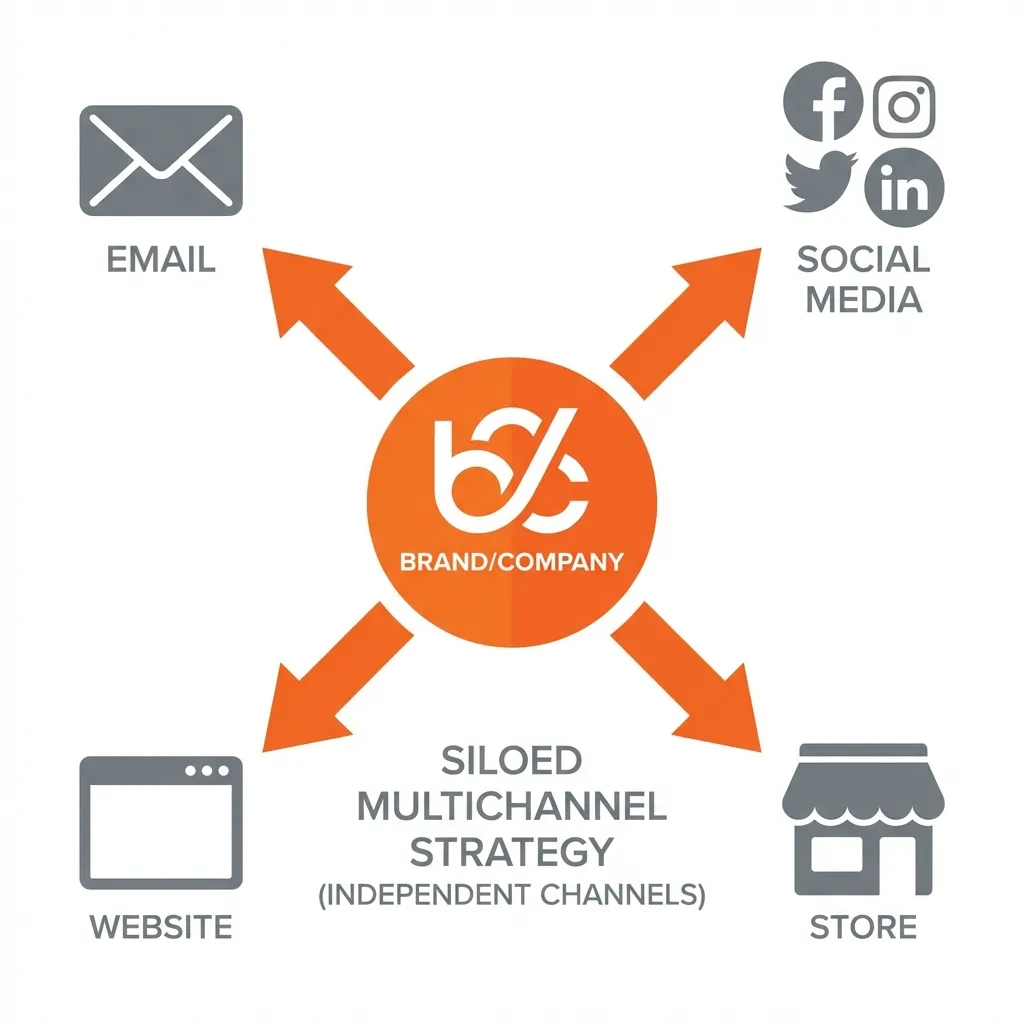
Company-focused. Channels work in silos and don't share data. The customer experience is fragmented.
Omnichannel
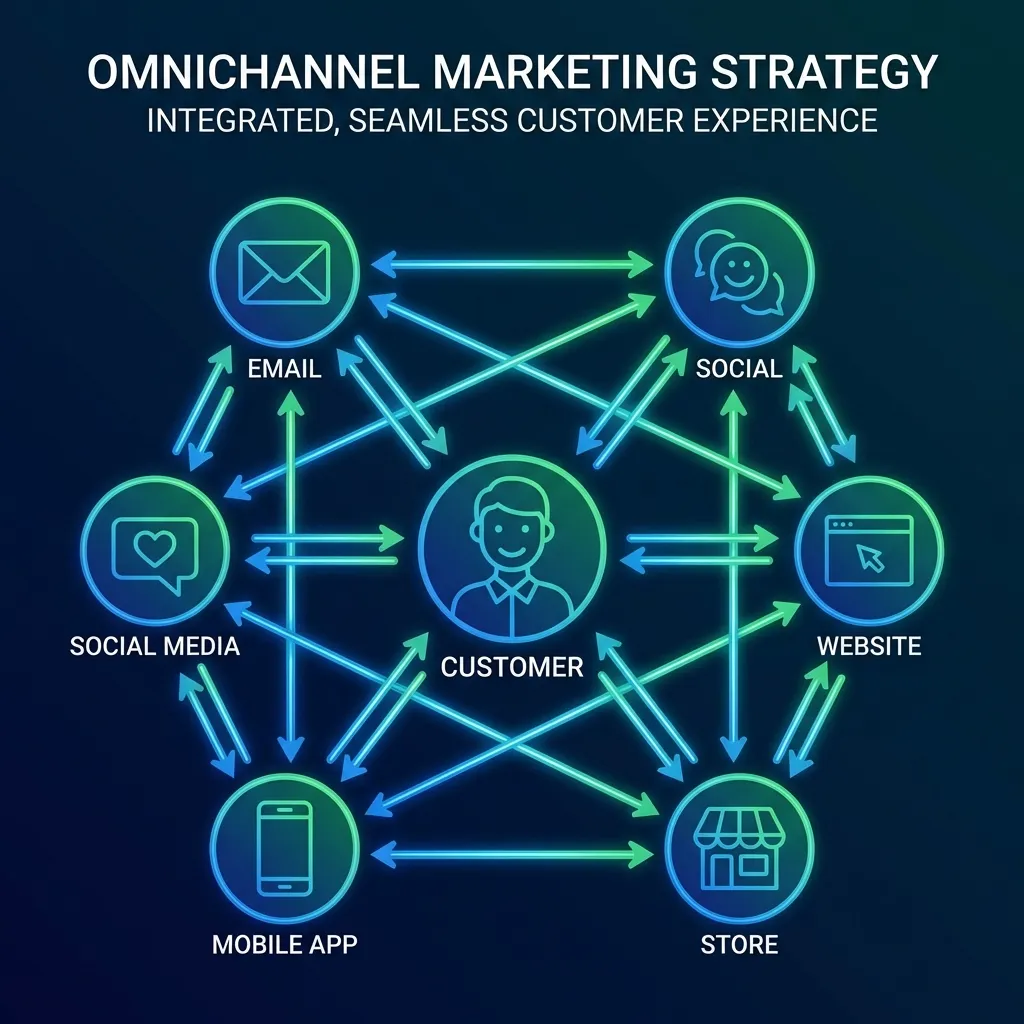
Customer-focused. Channels are interconnected and share data. The customer experience is seamless.
Omnichannel in Action: A Nepali Example 🇳🇵
Customer Journey: Buying a new phone from a retailer like Hukut Store.
- Facebook Ad: Customer sees an ad for the new Samsung phone.
- Website: Clicks the ad, browses the product page, and adds it to the cart but doesn't check out.
- Email: Receives an automated "You left something in your cart!" email a few hours later.
- Physical Store: Visits the store in New Road. A sales associate, using their CRM, sees their abandoned cart and offers a hands-on demo of that exact phone.
- Mobile App: The customer decides to buy. The associate helps them complete the purchase on the store's mobile app to get an exclusive 5% app-only discount.
Key Takeaways 🎯
- E-commerce marketing uses a full funnel of digital strategies to attract, convert, and retain online customers.
- A successful foundation rests on a user-friendly site, compelling product presentation, and clear calls-to-action.
- An omnichannel approach integrates all channels (online and offline) to create a single, seamless customer experience.
- The future of retail is not just having many channels (multichannel), but connecting them intelligently (omnichannel).
Thank You
Any questions?
Next Topic: Unit 8.5: Ethics and Data Privacy in Digital Marketing